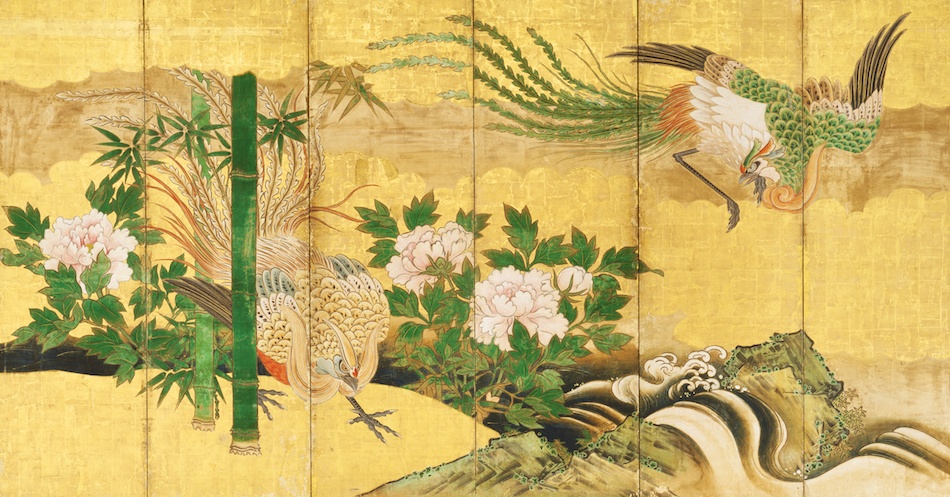
Holy Beasts and Mythical Creatures
Legendary creatures in the art of Japan
Legends of mythical creatures have been passed down and incorporated into the designs of Japan's art over generations. Representative examples of these include the dragon, the phoenix, the qilin, the Chinese lion, and the kalavinka. They have been the objects of reverence and have been depicted in paintings and crafts containing various purposes and dreams of people. This section introduces works of art and crafts featuring holy beasts and imaginary creatures, and looks at how each of these creatures has been imagined and formed in Japan.
Dragon (Ryū)
A mythical creature that is widespread in the East. It is said to have a body like a snake, antlers like a deer, fish-like scales on its back, a long mustache, and three to five claws on each of its four legs. The image of the Japanese dragon is thought to have been formed by merging foreign beliefs and legends, such as the dragon of the Way of Yin-Yang, which came from China, and the Indian snake deity Naga, in addition to the ancient Japanese snake deities, including the big snake Yamata-no-orochi. In Japan, the dragon god was believed to have power over water, and was the object of prayers for rain as the country was based on rice cultivation. Furthermore, people saw the shape of dragons in floods. Dragons were also deeply connected with thunder, and were said to summon rain, clouds, and lightning. Along with the phoenix, qilin, and tortoise, the dragon is one of the four holy beasts of China.
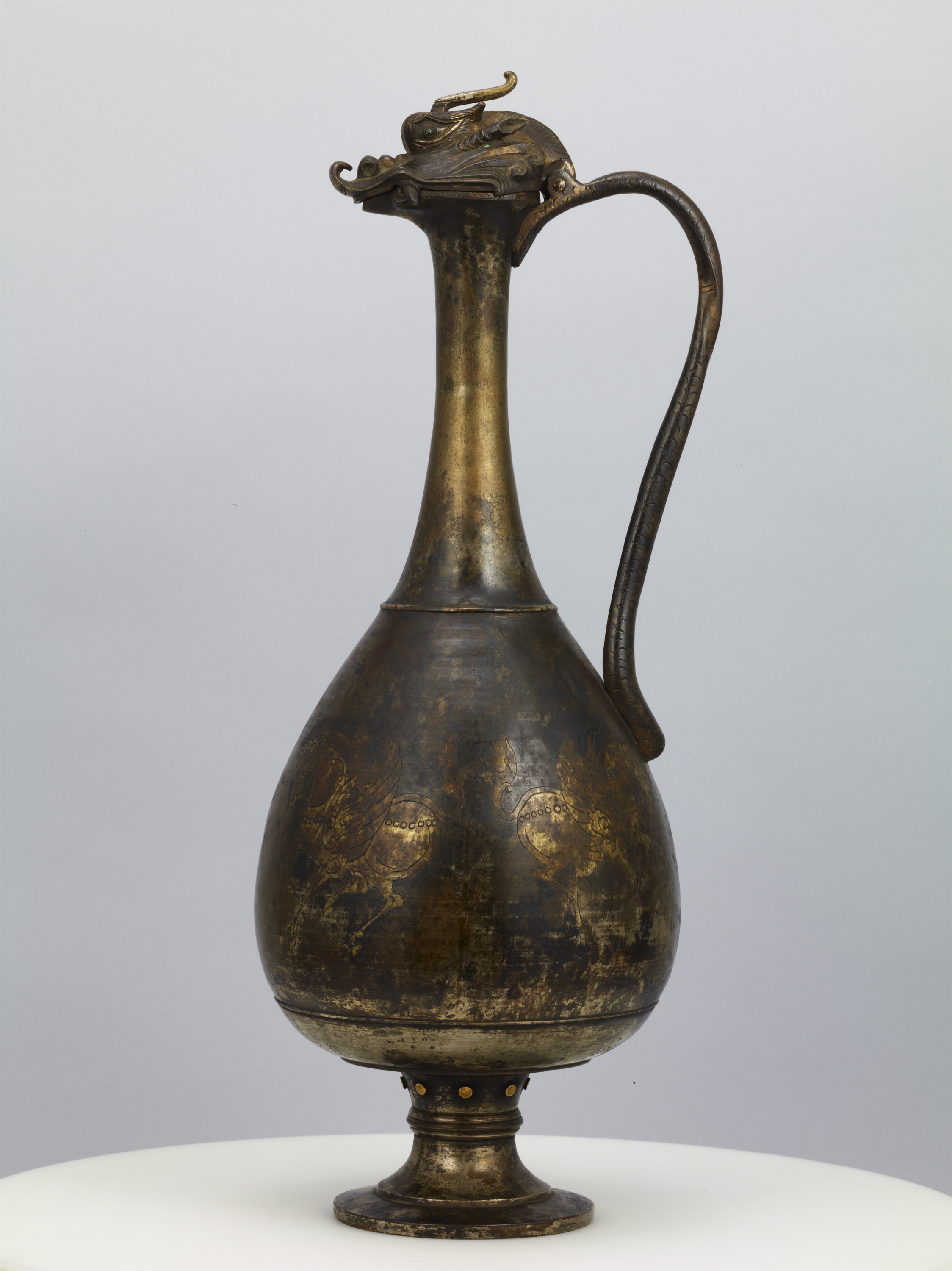
Pitcher with Dragon Head
Mandala of the Great Cranial Protuberance
Box for Buddhist Services (Sessōbako) with Dragons
Dragonhead Pole Finial
妙見寺の鳴竜
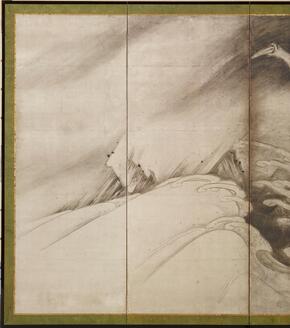
Dragon and Tiger
Pair of Dragons
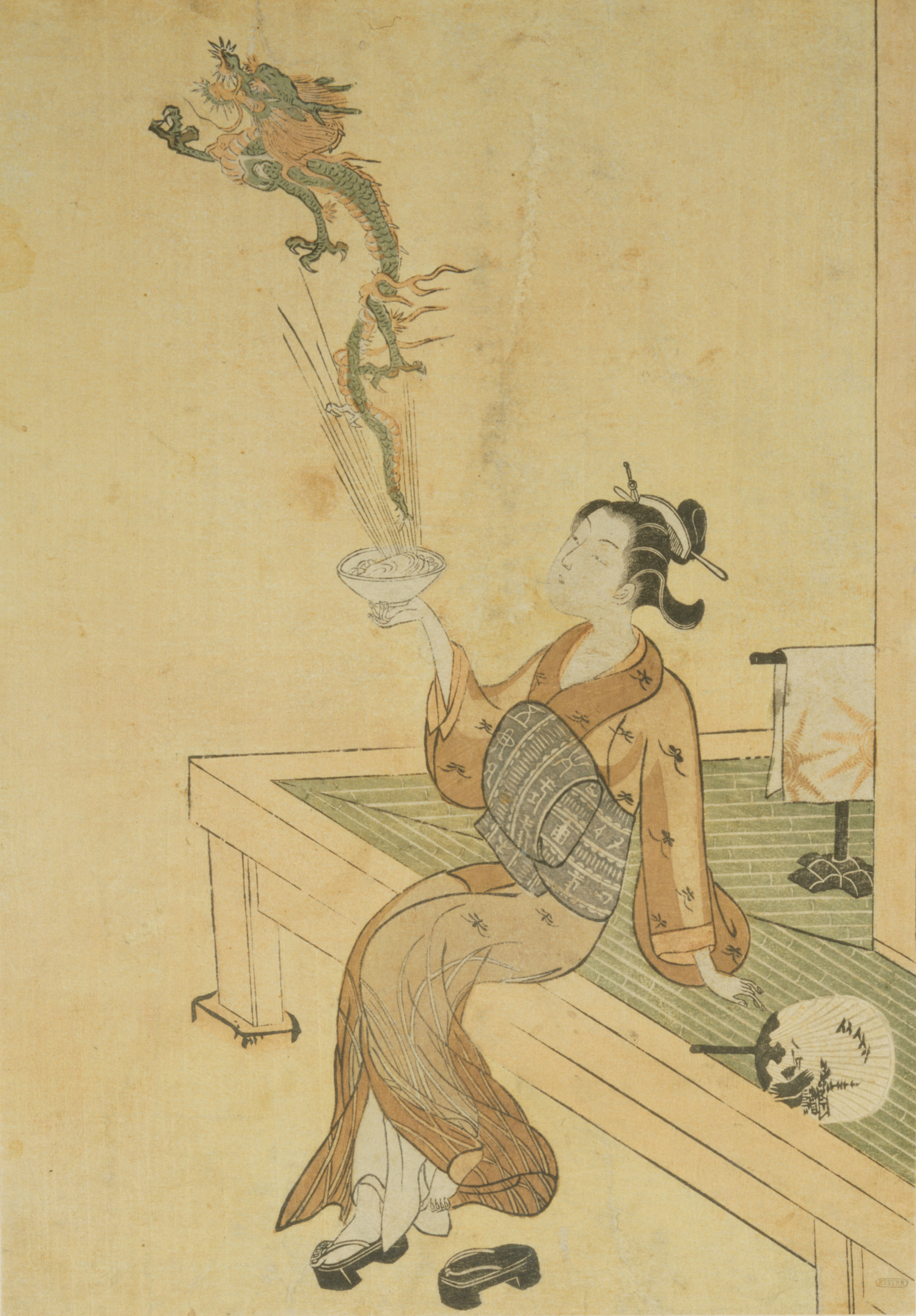
Mitate (Parody) of Panthaka, Ascending dragon and beautiful woman
Articulated Dragon
Chrysanthemum-shaped Dish, Dragon and cloud design in underglaze blue
Carved Cinnabar Lacquer Inro Medicine Case with Design of Dragon and Clouds
Kabuki Costume (Jinbaori Jacket) with Winged Dragons in Waves
Phoenix (Hō-ō)
An imaginary bird that came from China. In China, it is thought to be a bird of good omen that appears in the reigns of a virtuous emperor. In the Chinese dictionary of the Later Han "Setsumonkaiji", it is described as having a neck like a snake, a tail like a fish, a throat like a swallow, a beak like a rooster, a back like a tortoise, and feathers with five different color patterns. The phoenix was said to live in Chinese parasol trees, eat the seeds of bamboo trees, and drink sweet spring water. The male is called hō and the female is called ō. In Japan, the phoenix pattern has been used for decoration of textiles, lacquer works, mirrors, etc. since ancient times. In the Heian period (794-1185), the paulownia-bamboo-phoenix pattern was designated as the woven pattern for emperors' dresses, and was respected as a highly dignified pattern symbolizing the emperor. Since then, throughout the early modern and middle ages, the phoenix design has been favored as an auspicious motif, and incorporated into various paintings and crafts. Along with the dragon, qilin, and tortoise, it is one of the four holy beasts of China.
Japan (Ukiyoe woodblock prints)
Fragment of a Banner ("Ban") with Lion and Phoenixes
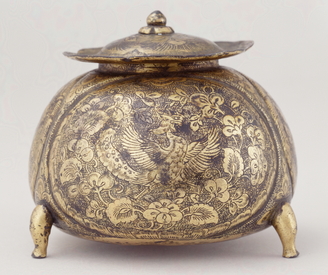
Water Dropper
Octofoil Mirror with Auspicious Flowers and Paired Phoenixes
Box (Karabitsu) with Phoenix Roundels
Writing Box with Design of Paulownia and Phoenix in Maki-e Lacquer
Saddle, Paulownia and phoenix design in maki-e lacquer
Robe-Shaped Comforter with a Phoenix and Vines
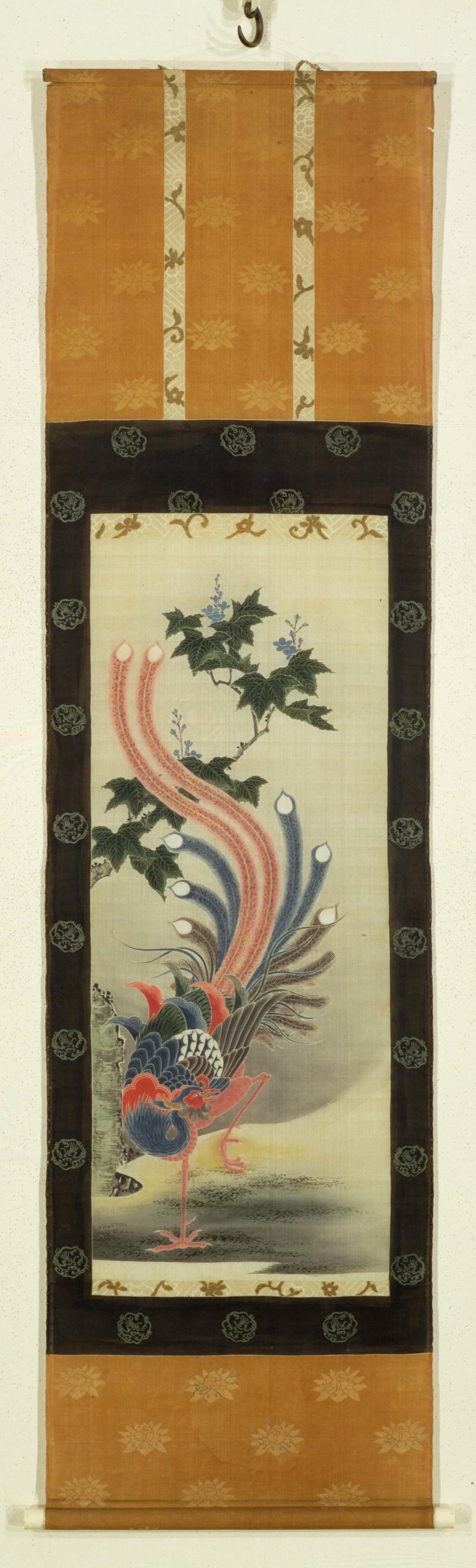
Yūzen-Dyed Fabric with Paulownias and Phoenixes
Katabira (Summer garment), Paulownia and phoenix design on white plain-weave ramie ground
Jingasa Helmet with Gold Lacquered Paulownia and Chinese Phoenix
Robe with Peonies and Phoenixes
Jar with a Pair of Phoenixes
Qilin (kirin)
An imaginary animal that came from China. There are various opinions about its form, but some say that it has a body like a deer, a single antler on its head, horse-like hooves, a tail like a cow, and its entire body covered with five different shades of light. In China, it was said that qilin was able to fly and appeared in the reigns of a holy emperor, and was regarded as an auspicious beast. According to some, the male is called ki and the female is called rin. Along with the dragon, phoenix, and tortoise, it is one of the four holy beasts of China.
Overseas
瑞花鳳凰麒麟猊紋鏡
Flying Birds and Running Beasts: Running Beasts Volume
絵本庭訓往来
南畝莠言
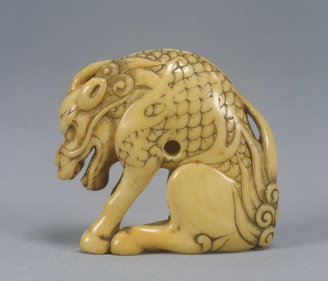
Toggle (Netsuke) Shaped Like a Qilin (Beast)
Large Flower Vases with Scenes of the Samurai Minamoto no Raikō at Mt. Ōe
Chinese lion (Karajishi)
An imaginary animal that came from China. It is thought to have been based on the lion, and is depicted with a large spiral tail, and a mane, like flames, and sometimes with patterns scattered on its body and limbs. It is believed to have been introduced to Japan along with Buddhism, and became a sacred animal. It often appears in Buddhist paintings and statues as being ridden by Manjusri Bodhisattva. During the Heian period (794-1185), the lion was treated as a charm against evil, and a lion with an open mouth and a guardian dog with a closed mouth and a horn on its head, were placed in front of the micho (curtained sitting and sleeping platform) of the Seiryo-den (emperor's main residence). In the medieval period, the lion was favored as the decoration on weapons for its fierce appearance, especially the design of the lion and peonies which came into style as a lucky motif. In the Muromachi and Azuchi-Momoyama periods, it was used as the subject for fusuma-e (sliding door paintings) and byōbu-e (folding screen paintings) in castle buildings, and was also favored by samurai families in the Edo period.
Ritual Incense Burner with a Handle and Lion-Shaped Counterweight
Pair of Lions
Shishi (Lion)
The Bodhisattva Monju Riding His Lion, Accompanied by Followers
Mirror Box with a Chinese Lion and Peonies
Reliquary in the Shape of Flaming Jewel on a Lion
Saddle with a Lion and Peonies
Chinese Lions
Noh Costume (Atsuita) with Chinese Lions
Kalavinka (Karyōbinga)
A bird that lives in the Pure Land of Perfect Bliss of Buddhism. It is a transliteration of the Sanskrit word "Kalavinka". It is said to have a head like a beautiful woman and a lower body like a bird, and preach on Buddha's teaching with a beautiful voice. The figure can be seen in Buddhist art such as the Pure Land and Nirvana paintings, and there are many examples of it holding a flower vase with both hands on its chest or playing a musical instrument. It gains recognition as an entity that praises the teachings of Buddha and holds memorial services for him, and is often depicted on sutra boxes or in the decoration of Buddhist architecture in Japan.
Japan (Other paintings)
Mirror Box of Silver-and-Gold Mud-Decorated Lacquered Leather
Booklet Box with Hōsōge Flowers and Kalavinka (Copy)
Keman (Pendant ornament in Buddhist sanctuary)
Shaka (Śākya) and Amida (Amitābha)
“Flower Garland” with Kalaviṅka
仏像図彙 四
Related People, Things and Events
Dragons
The dragon is a legendary creature that is well-known throughout Asia. In Japan, images of dragons were created as a combination of ancient Japanese snake gods, such as Yamata no Orochi and the snake gods of India and China.
Maki-e
A lacquering technique, representative of Japan, that uses fine particles of gold and silver to decorate lacquerware
Nishiki-e
Nishiki-e is the generic term for the Ukiyo-e multi-colored woodblock prints which were developed and popularized during the Edo era.
Kinkaku Temple
Common name of Rokuon Temple, built in Kitayama, Kyoto, by Shogun Yoshimitsu Ashikaga; includes the glittering-gold Shari reliquary hall
Buddhist Statues in Japan (Asuka 〜 Kamakura periods)
Transition of Buddhist statues in Japan
References
- 『改訂新版 世界大百科事典』(コトバンク)「鳳凰」「麒麟」「獅子」「迦陵頻伽」の項目
- 『日本大百科全書(ニッポニカ)』(コトバンク) 「龍」「麒麟」の項目
- 『マイペディア マルチメディア百科事典』「鳳凰」の項目日立デジタル平凡社,平凡社
- 『日本の図像 : 神獣霊獣』狩野博幸, 湯本豪一 執筆,ピエ・ブックス
- コトバンク所収コンテンツの最終アクセス日は、いずれも2024/2/16。