Jump to main content
/

Portrayed Children

Figures of children featured in paintings and crafts.

Japan (Medieval Ages)

If you take a close look at medieval (12th-16th century) paintings, including e-maki (picture scrolls) and byobu-e (folding screen paintings), you will see lively images of children shown among adults. These paintings are valuable resources to learn about the customs and manners of children at that time, who typically do not appear on the center stage of history. Let us see how children lived, played, and worked in the Middle Ages through these paintings.

伴大納言絵巻(模本)中巻

平安時代(12世紀)。『伴大納言絵巻』は、866年(貞観8)春に起きた応天門の放火事件を題材にした平安後期の絵巻。子どもの喧嘩に親が介入したことがきっかけで、伴大納言の政治的陰謀が露見してしまう場面。二人の子どもの喧嘩に一人の親が駆け付け(上)、水色の服の子を足蹴にした(下)という一連の事件の経過が一つの画面に描かれている。

Detached Segment of Illustrated Scroll of Diary of Lady Murasaki

Murasaki Shikibu was the author of The Tale of Genji, said to be the pinnacle of ancient Japanese literature. This is a segment from an illustrated-scroll version of her diary. Lady Murasaki served as lady-in-waiting to Empress Shoshi. The diary recounts in detail the events of the years surrounding the birth of Prince Atsuhira, the son of the Empress and Emperor Ichijo. It describes the scene of the Prince's birth, for example, and the ceremony to celebrate his birth that took place thereafter. As well as its literary merit, this work is also valuable for what it reveals about the lives of the nobility during the Heian period, which lasted from 794 to 1192.This segment was mounted on a hanging scroll. It depicts a ceremony celebrating 50 days since the birth of Prince Atsuhira. The woman with her back to us on the right side of the scroll is Empress Shoshi. The man at the bottom of the picture is her father, Fujiwara no Michinaga, a great power in the imperial court at that time. To the left is his wife and Shoshi's mother, who is cradling the infant prince as he approaches his 50th day on earth.Incidentally, this scroll was painted during the Kamakura period, over 200 years from Lady Murasaki's day. Though this may seem like a traditional Heian-period yamato-e painting with its conventional representations of human figures, if you look closer you notice the individuality and distinct features of each person. This sense of expression is typical of the Kamakura period, an age that cherished realism. Michinaga is also sporting a straight-cut garment that was popular during the Kamakura period.It could be fair to describe this as a courtly illustrated scroll altered to reflect the tastes of the Kamakura period.

Volume 7 of "The Biography of the Traveling Preacher Ippen"

This illustrated scroll traces the life of Ippen, the priest who founded the Ji sect of Buddhism. Ippen taught that anyone, even non-believers, could ascend to the Buddhist Pure Land if they chanted “Namu Amida-butsu,” or “I put my faith in Amitabha Buddha.”Unusually for an illustrated scroll, this work is painted on silk. It is also vertically wider than average. It consists of 12 volumes. This is the 7th volume and it depicts Ippen and several other priests travelling through several regions and arriving in Kyoto.Members of the Ji sect would dance in a circle while chanting and ringing portable gongs. The priests in this scroll are also dancing this way on a stage set up in Kyoto. The conspicuously-large figure at the front of the stage is Ippen. His serious expression conveys his strong devotion to Amitabha Buddha.Though the scene is viewed from far above and the assembled characters appear quite small, they are still infused with a sense of individuality and are differentiated by their clothing and expressions. The extraordinary talent of the artist is on full display in the vivid portrayals of the different scenery from each region and the deportment of each person.

Legend about Origin of Ishiyama-dera Temple

鎌倉時代(14世紀)。石山寺創建の縁起と本尊観音菩薩の霊験を描いた絵巻。本資料は、第1巻の模写。石山寺建立時の建築工事を描いたもので、よく見ると、大人の職人たちに混じって子どもの姿が見える。建築現場で仕事を手伝っているのだろうか。

慕帰繪々詞(模本) 10巻 巻5

南北朝時代(14世紀)。本願寺発展の基礎を築いた第3世覚如の伝記を描く、南北朝時代の絵巻。本資料は、藤原隆章が描いたといわれる第5巻の模写。当時の風俗が細かく描きこまれている。掲図は、京の町中の場面で、3人の子どもたちがコマ回しに熱中している姿。脇に立つ女性は、幼児を抱きながらその様子を見ている。

Genre Scenes of the Twelve Months

Scenes of festivals, customs, and beautiful landscapes throughout the twelve months of the year were common features of Yamato-e, or classic paintings of distinctively Japanese themes, a genre popularized from the mid-Heian period, from the late 9th century to the 10th century. It became prevalent alongside Japanese waka poetry, and the paintings often featured themed poems for each month. Some works also depicted seasonal landscapes at famous locations. These included utamakura, or places commonly used in poetry to cultivate allusions or moods.This work follows in these traditions, though it was painted in the 16th century, during the Muromachi period. It depicts the manners and customs of each social stratum, from the nobility and the warrior class down to the general public.From right to left, the screen to your right depicts a New Year scene under the old lunar calendar, with people playing Japanese-style badminton or a ball game on horseback. The second panel portrays cherry blossom viewing in the third month, while the third and fourth panels feature scenes of rice planting in the fifth month. Panel five also depicts scenes associated with the fifth month in which people are horseracing or changing clothes for the new season. It is unclear which month panel six depicts, but it shows inu-ou-mono, a contest where mounted archers try to hit dogs with arrows, and kemari, a type of football. Panel seven brings us to the eighth month, where a party is hunting under a full moon at the base of Mount Fuji. In panel eight, meanwhile, people are playing in the snow in the twelfth month.Each panel offers up vivid scenes of people living life to the full throughout the year.

Japan (Early Modern Times)

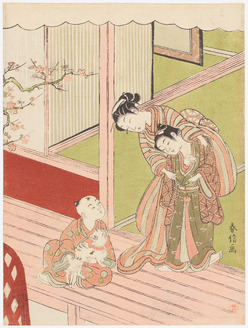
During the Edo period (1603-1867), many paintings featuring children in everyday life were produced. In the latter half of the 18th century, when Suzuki Harunobu and others started to produce nishiki-e (multi-colored ukiyo-e), kodomo-e (pictures depicting children) appeared in the early stages and continued to be created until the end of the Edo period. The society was based on households in the Edo period, and children, the heirs to the family fortune, were called "treasured children" and were cherished as such. Nishiki-e depict all manners and customs surrounding children, such as events, home, play, and education, and shows the lively appearance of children in those days.

Japan (Ukiyoe woodblock prints)

Courtesan and Attendant

A lavishly-attired courtesan leans in to whisper something to her young attendant. Ando won great acclaim for paintings like this, produced in large numbers at his studio around 1704–1711.A woman twists backwards towards the girl next to her. From the way she presses her arm against the girl's shoulder and draws her face near, she appears to be whispering something in her companion's ear. The woman's elegant clothing features a stylized depiction of bamboo grass covered in snow. She is a courtesan and the girl is her attendant. While the faces, hair and limbs are drawn in meticulous fashion, the kimonos are depicted with pronounced outlines and bold colors and designs.These are all characteristic features of works by Kaigetsudo Ando, an artist who specialized in paintings of beautiful women against plain backgrounds. Ando was active at the start of the 18th century, during the mid-Edo period. Pupils from his atelier churned out many portraits of women in this style, though portraits featuring several people together are very rare. This painting's value is also enhanced by the fact we can verify it as a work by Ando himself.Perhaps this courtesan is whispering a message meant for a familiar client, or maybe the pose is merely drawing attention to the fact they are having a secret conversation. Whatever the reason, this composition succeeds in captivating the attention of the painting's viewers too.

<i>Children at Play</i>

曽我蕭白筆/江戸時代(18世紀)。近年まで秘蔵されていた幻の曾我蕭白の屏風絵。柳樹や牛、川などの背景を左右に配し、戸外に遊ぶ子どもたちと二人の女性(もう一双の屏風に描かれる)を描いた作品の特徴は、珍しく銀地をバックにする奇矯な人物の描写である。人物の服装が彩色や水墨、金泥を自由にもちいて描かれている。

Children Playing with a Cat and Mouse
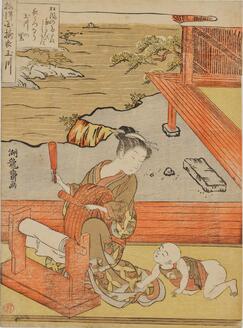
This woodblock print shows a domestic scene of children playing with a pet cat and mouse.

Children Playing with Silhouette Pictures
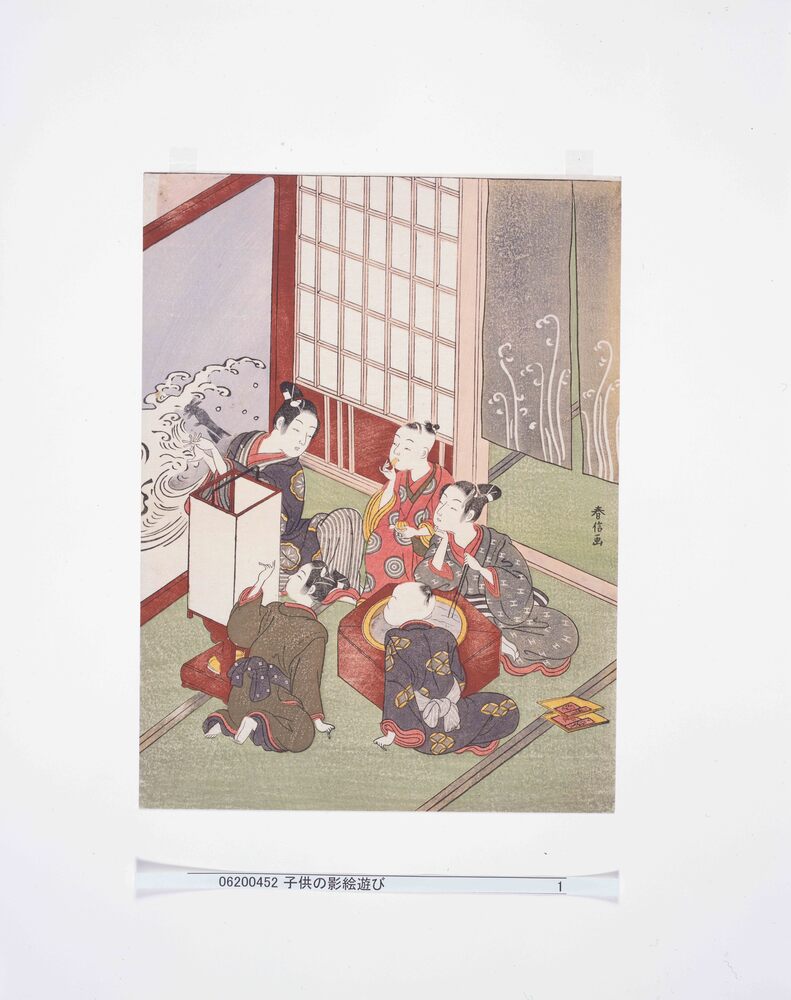
鈴木春信筆/江戸時代(18世紀)。5人の子どもが火鉢の周りに集まり、影絵遊びをしている様子を描く。一番左の子が手で兎の形を作り、行燈の光を使ってその影を背後の波の絵の衝立に映し出している。

Cloth Fulling at the Jewel River in Settsu Province

An early print by the artist Isoda Koryusai created in the youthful style of Suzuki Harunobu, it shows a woman fulling cloth with a child tugging at her robes.

“The Boys' Festival” from the Series Children during the Five Seasonal Festivals
The picture depicts children playing at the Boys’ Festival. The banners behind them feature Kintaro and other figures from Japanese folklore.

Customs of Eastern Japan: Merchant's First Hakama (Formal Pleated Trousers) Ceremony

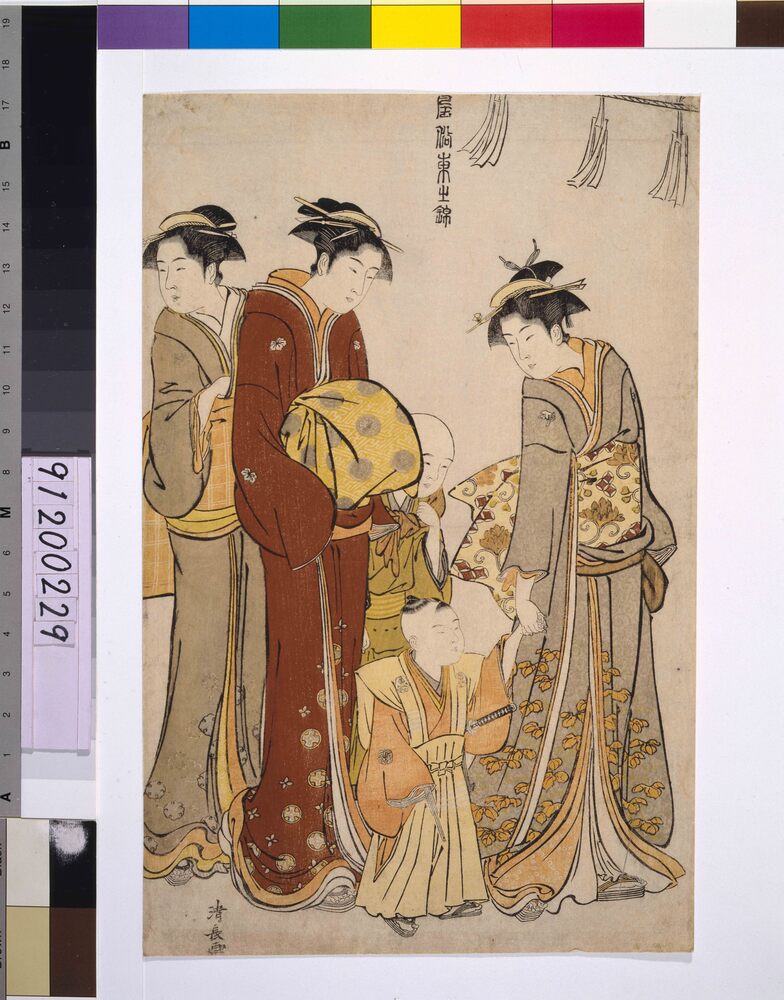
鳥居清長筆/江戸時代(18世紀)。商家の子が七五三の宮参りに出かける様子。七五三の儀式は公家や武家の習慣として古くから行われていたが、江戸時代に町人層にも広まった。商家では、母親に叔母たちが介添えし、乳母や丁稚小僧、出入りの職人などがそろって神社に参詣した後、親戚の家を挨拶廻りし、夜は宴を催した。  

頭剃り

喜多川歌麿筆/江戸時代(19世紀)。江戸時代 、子どもは生後7日目に頭髪を剃り、それ以後、3歳の「髪置き」の行事まで頭髪を剃っていた。本図は、母親に抱かれた幼い子どもの髪を髪結師が丁寧に剃り上げている様子を描く。床には水を張ったたらいが置かれている。

An Elegant Collection of Children: The Peepshow

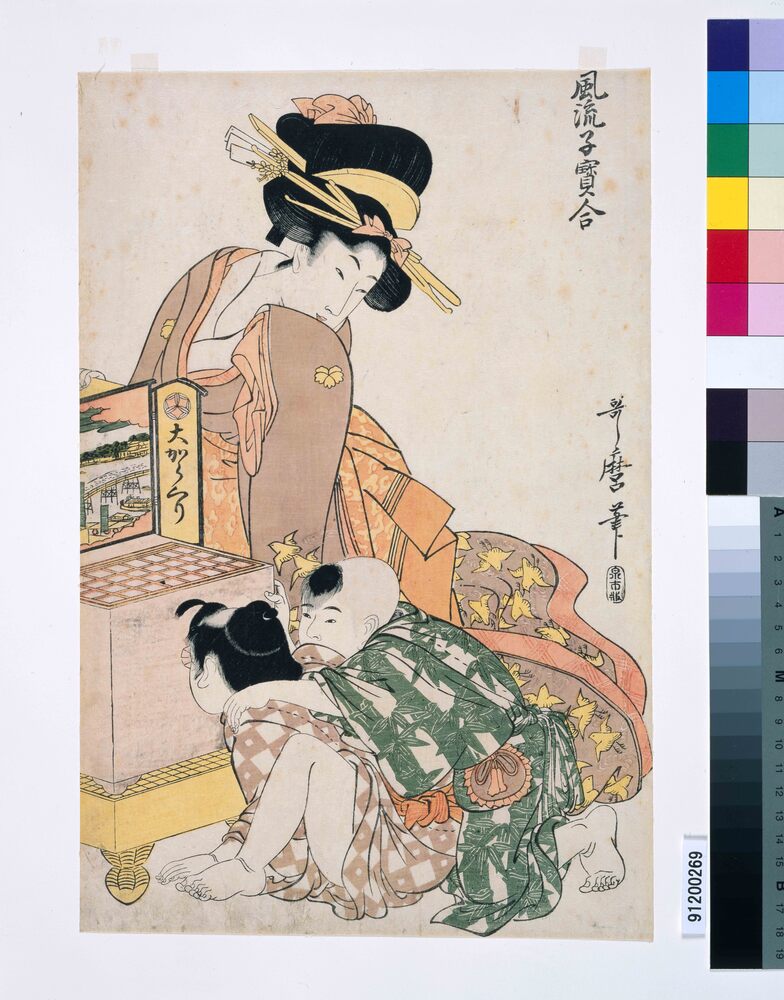
喜多川歌麿筆/江戸時代(19世紀)。歌麿による母子絵の揃物の一つ。兄弟が夢中になっているのは、姉が操る「のぞきからくり」。箱の前面にのぞき穴があり、内部の絵を見て楽しむおもちゃで、ひもを引くと絵が入れ替わる。左側の兄は7~8歳、右側の弟は3~4歳と見られる。

「風流をさなあそひ」

歌川広重筆/江戸時代(19世紀)。江戸時代のさまざまな遊びを描いた、遊びづくし絵。凧揚げ、竹馬、相撲、じゃんけん、こま回し、水鉄砲など、16種類の子どもの遊びが描かれている。

幼童諸芸教草

歌川国芳筆/江戸時代(19世紀)。子どもに教えるべき諸芸を解説した揃物の一つ。この絵は「膳」がテーマで、女性が子どもの口元にお椀を運んでいる。上部の文章には、「幼い頃から飲食のしつけをすることが大切である」と書かれている。

幼童席書会

歌川国芳筆/江戸時代(19世紀)。江戸時代、庶民の子どもは寺子屋で「読み書き算盤」を習った。席書会(せきがきかい)は子ども達が日頃の書の上達ぶりを披露する日。部屋の入り口に清書された作品が吊され、男の子は羽織袴を着け、女の子は精一杯に着飾っている。

Japan (Recent Times)

In the Meiji era (1868-1912), the modern system of education was introduced, and it was stipulated that all children of 6 and older should attend school. In addition, during the Taisho era, influenced by the new educational movements that began in Europe and America, a movement for more liberal education (the liberal education movement) that respected children's personalities and independence arose. It spread throughout the country under the influence of the Taisho democracy. Thus, during the Meiji and Taisho eras when interest in children's education increased, many works related to education, such as paintings depicting schools or created for the purpose of children's education, can be seen. In the field of art, as Western paintings were introduced to Japan, portraits of children started to be painted using ordinary children as models, following the trend of Western portraiture of the time.

Japan (Other paintings)
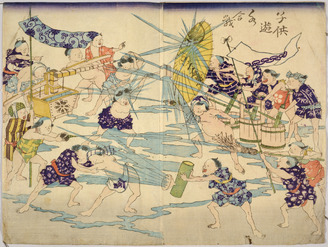
Children's Water Fight

明治時代(19世紀)。二軍に分かれて楽しそうに水合戦をするこどもたち。実は旧幕府(右)と新政府(左)の戦いをこどもの喧嘩として描いた、明治元年(1868)出版の錦絵である。傘を楯にする徳川慶喜や、旗に菊紋を入れ、強力な武器を持った新政府側など、当時の政情を巧みに伝える。       

小学入門教授図解

鮮斉永濯筆/明治時代(19世紀)。明治初期に東京の師範学校で編集された下等小学校用の入門教材図を収録した書『小学入門』の教授方法を示した解説書。『小学入門』の掛け図を使った教授風景で、西洋建築の教室で一斉授業を行う近代教育における授業の形が紹介されている。

子供あそび おもちゃの勝負

山本昇雲筆/明治時代(19世紀)。山本昇雲は『風俗画報』の表紙や挿絵などで活躍した画家。明治の子どもや女性の風俗をたくみに描いた。昇雲の子ども絵の代表作「子供あそび」は、子どものさまざまな遊びを描いたシリーズ。本図は、当時人気があった相撲人形で勝負する男の子たちの様子。

Non-Self

By expressing the concept of emptiness in this work, the artist Yokoyama Taikan attempted to create a new style of Japanese painting.

Autumn Garden

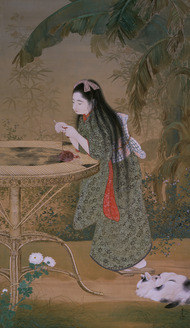
寺崎廣業筆/明治時代(19世紀)。芭蕉、萩、菊などが秋の気配を画面に満たす。少女の容姿は、当時、雑誌の口絵などで大流行した当世の美少女の典型である。幼い少女とも、編み物をする姿に恋心を寄せる年頃の娘にもみえる不思議な描写となっている。

少女像

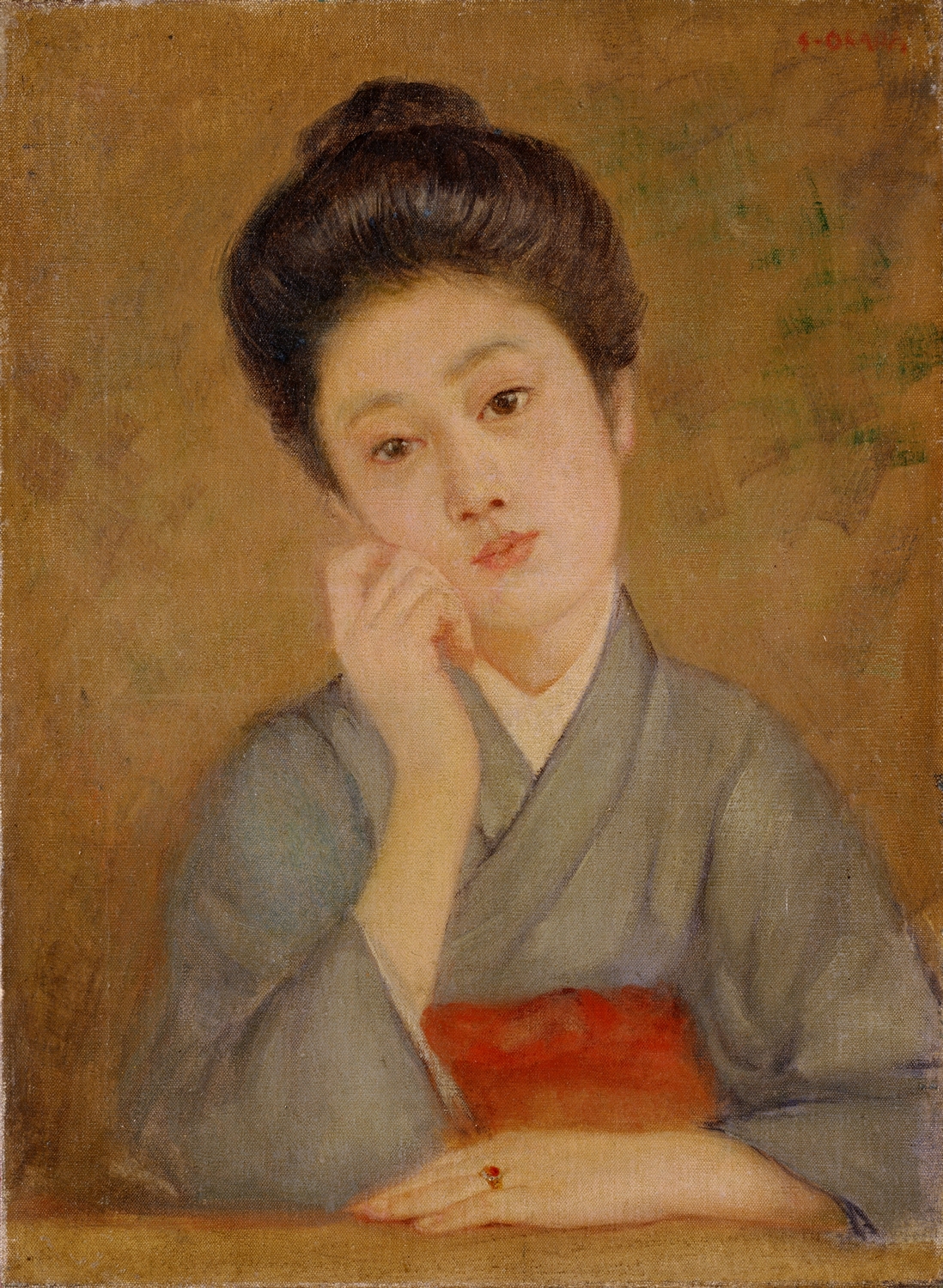
岡田三郎助筆/明治時代(20世紀)。あどけない表情の少女が、ほおづえをついてこちらを見つめている。少女の髪型は髷の不便さを解消するために提案された新しいスタイル「束髪」である。また、着物に宝飾品をつけるということも新しく、少女の赤いルビーの指輪から、おしゃれに敏感な暮らしぶりがうかがえる。

Portrait of Reiko

Reiko, who bears a mysterious smile in this work, was the beloved daughter of the artist. This portrait of her around the age of seven was completed in a mere ten days. This oil painting presents a half-length portrait of a young girl. The bobbed hairstyle, the red obi sash and the brightly-colored kimono peaking out from the shawl are all typical clothes and accessories of Japanese girls from that time. However, there is something intriguing about the girl‘s long eyebrows, almond-shaped eyes and mysterious smile. An air of mystery pervades the picture. It is also apparent in the intricately-drawn shawl and the way her hands seem oddly small compared to her head.Kishida Ryusei became a Western-style painter after a thoroughgoing study of Western painting techniques. He was born in Tokyo in 1891 and he died in 1929 at the young age of 38. He studied under Kuroda Seiki, a pioneer of oil painting in modern Japan, and eagerly incorporated and assimilated Western techniques and forms of expression. In his short life, he won high acclaim for his solid, intricate portraits and expressive works that were influenced by Flemish painting from the 15th to 16th centuries.The model for this painting was Ryusei’s 7-year-old daughter Reiko. Throughout his life, he continued to paint his beloved daughter in oil paintings, watercolors and sketches. Depictions of Reiko changed with each painting as Ryusei‘s style evolved and his daughter grew older. This portrait of Reiko is recognized as the most representative example of these numerous depictions. With its distinctive features and mysterious aura, some have compared this portrait to Leonard Da Vinci‘s Mona Lisa. According to a diary left behind by Ryusei, he decided to eschew the solidity of Flemish painting here to imbue the portrait with more softness and charm, with some of the motifs influenced by the works of Francisco Goya, a Spanish painter active from the 17th to the 18th century.

夢二抒情画選集 下巻

竹久夢二筆/大正時代(20世紀)。幼児から小学生向けの生活教育雑誌として、大正3年に創刊された『子供之友』の挿絵。掲図は、大正4年3月号で、作者は大正時代を代表する画家、竹久夢二。春の野原で草花を摘む子どもたちの姿を、水彩絵の具を用いた柔らかいタッチで描いている。夢二の自作とみられる詩とともに掲載された。

少女画報双六

小林永二郎筆/大正時代(20世紀)。少女雑誌『少女画報』の大正6年お正月号の付録として制作された絵すごろく。『少女画報』は、明治45年に『婦人画報』の姉妹紙として創刊された。

Europe

Most of the children depicted in Western medieval paintings were images of the infant Christ represented by the Virgin and Child. It is thought that it was during the Renaissance period, around the 16th century, when the subject of paintings changed from the religious to the secular, that ordinary children began to appear in Western paintings, although still somewhat rarely. In the Netherlands, which early on established the basis of a modern civil society in Europe, children can be seen in portraits and genre paintings from the 17th century. In other Western countries, children began to be depicted in earnest in the mid-18th century, after the importance of children's rights and childhood was socially recognized, under the influence of "Emile, or Treatise on Education" by the French thinker Jean-Jacques Rousseau. Then, in the 19th century, the status of children in the family and society was firmly established, entering the golden age of child portraiture.

Madonna and Child
The Virgin Mary is depicted here in a very human and approachable manner, with an emphasis on motherly tenderness.

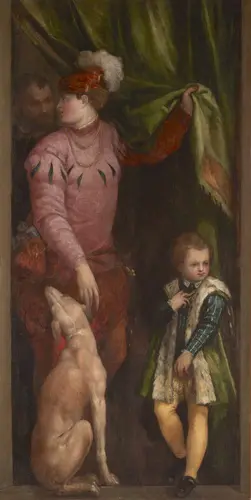
A Boy and a Page

ヴェロネーゼ・パオロ筆/イタリア・16世紀。絵の中の架空の扉を開けて入ってくる騎士見習や少年を描く。ヴェロネーゼは犬や子どもを描くことが好きで、大きな宗教画においてさえ、婦人像とともに子どもや犬を描き込んでいる。こうした世俗的表現は、17世紀フランドル絵画や18世紀フランスのロココ絵画に先駆するものとして注目される。

Peasant Wedding Feast

ブリューゲル、ピーテル(子)筆/オランダ・17世紀。手前の方に描かれている座って皿を舐める人物は子どものようである。一説では、ビールを注ぐ男とその傍らでヴライの皿を舐める子どもは親子で、「この親にしてこの子あり」またはオランダの諺「瓶は最初に入れた物のにおいがつく」(子どものとき身についたものは変わらない)という意味の寓意との解釈もある。

A Little Girl with a Puppy in Her Arms

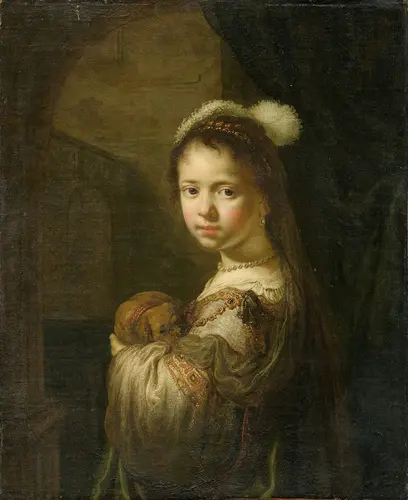
ホーファールト・フリンク筆/オランダ・17世紀。眠る小犬を抱いた少女がこちらを向いている。この愛らしい少女の半身像は当時人気を博した。フリンクはレンブラントの工房で助手として約1年働いた。構図や明暗の調子づけなどにはレンブラントの影響が著しいが、少女の顔の描き方にはレンブラントにはない対象の美化と穏やかさが感じられ、優美な印象を与える。

Figures Before a Cottage

トマス・ゲインズバラ筆/イギリス・18世紀。ある種の叙情をたたえた牧歌的な光景のなかに、理想化された農民たちの姿が描き込まれている。人物は一人一人入念に描かれており、仄暗い画中でスポットライトを浴びたように明るく描かれた、赤ん坊を抱く女性の姿は聖母子像を想起させ、それを取り巻く子どもたちは祭壇画から抜け出してきたキューピッドのようである。

Happy Fecundity

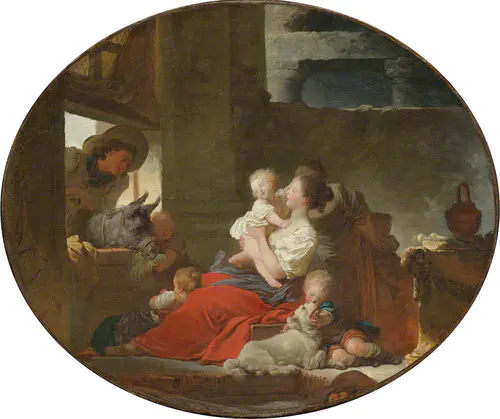
ジャン=オノレ・フラゴナール筆/フランス・18世紀。この家族像は思想家ルソーの思想を絵に描いた「理想の家族像」であると同時に、伝統的なキリスト教絵画のテーマを、当世風の主題にリメイクしたもの。赤と青の着衣に身を包み、幼子を抱く若い女性像は、伝統的に聖母マリアと幼児キリストを表わすもので、「絵画の伝統を継承しつつ、自由で新しい18世紀の精神をも体現する」フラゴナールらしい作品。

Portrait of the King of Rome

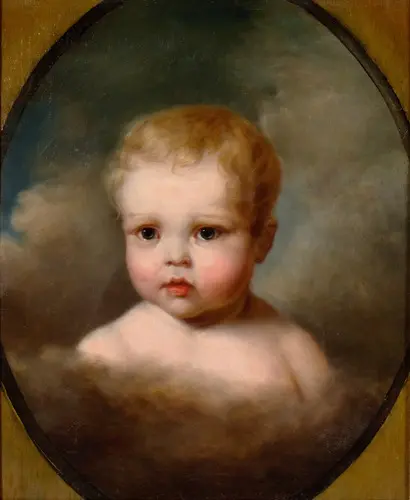
コンスタンス・マイユール筆/フランス・19世紀。ナポレオン2世、つまりナポレオンがフランス帝国の第二の首都にしようと考えたローマの王の誕生間もない姿を表す。ナポレオンが歓喜した長男の誕生に、多くの画家たちが肖像画を描いた。この作品は、象徴物を描かず幼い子どもの純真なあどけなさを表現する。ただひとつ、雲の中に浮かんでいるような設定が、至高の存在を暗示する。

散歩

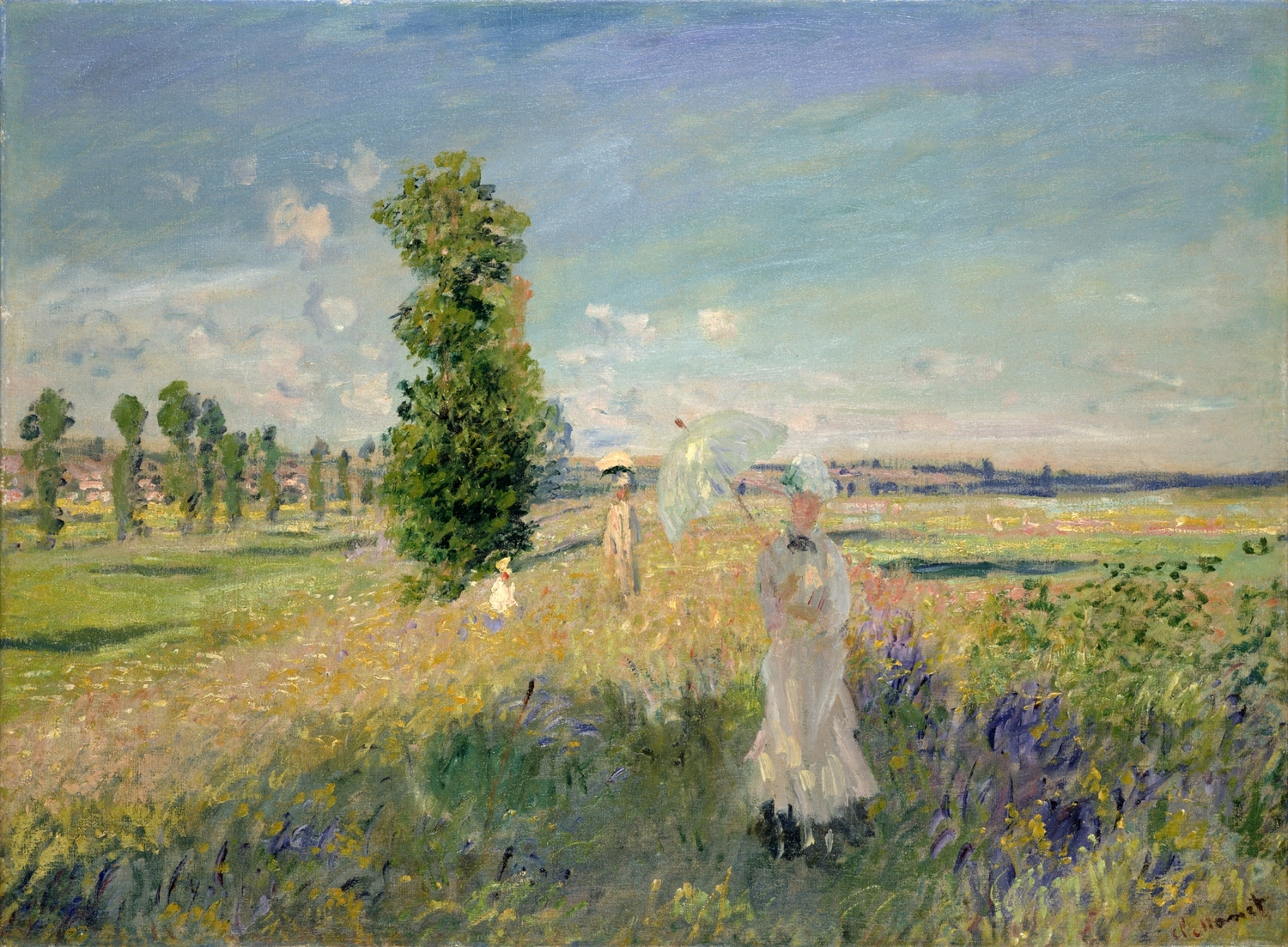
クロード・モネ筆/19世紀。本作品が描かれた1875年頃、モネはパラソルをさす女性と子どもという主題を頻繁に描いている。この作品に観られる女性はモネの妻カミーユ、子どもは息子のジャンである。自然豊かなアルジャントゥイユで、幸福に満ちた生活を送っていたモネ一家の日常生活の一場面をとらえた、親密な空気の漂う作品である。

Child Holding a Basket with His Dog (Portfolio of 30 Original Etchings by Édouard Manet)
エドゥアール・マネ筆/フランス・19世紀後半~20世紀前半。本作は1860年から61年にかけ制作された原作を左右を反転させて版刻したもの。少年の喜ぶ表情など細かなところまで正確に描写している。マネは17歳の頃、シュザンヌ・レーンホフと結婚。彼女の息子レオン・レーンホフの父はマネと推測される(戸籍上は弟)。その特徴的な顔立ちから本作はレオンがモデルであると思われる。

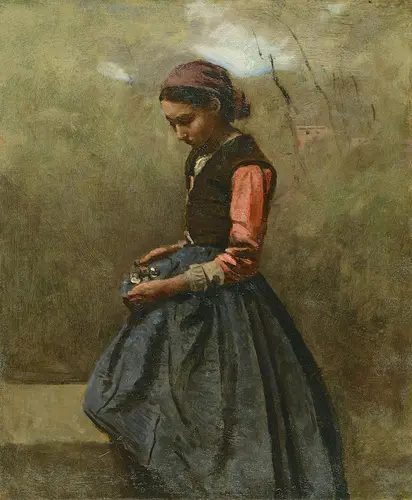
A Pensive Girl

ジャン=バティスト・カミーユ・コロー筆/フランス・19世紀。生来の風景画の詩人であるコローは、また人物画の名手でもあった。うつむいた少女のほぼ全身を左斜め前方から捉えた本作の構図は、《読書する羊飼いの少女》に大変良く似ているが、全体に漂う詩的で瞑想的な雰囲気は、本作の方においてより深まりを見せている。

Girl’s Head Turned Left

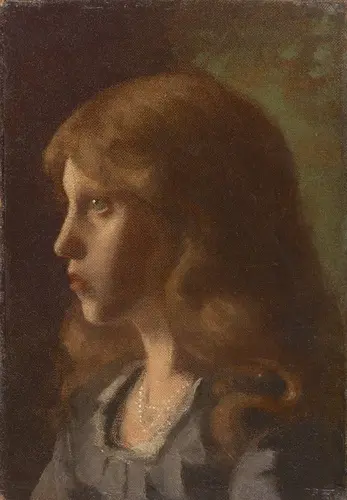
グスラフ・クリムト筆/オーストリア・19世紀。グリーン系の落ち着いた色調でまとめられた画面の中で、ひときわ目を引く少女の瞳の青と唇の赤、そして胸元を飾るネックレスの輝く白が印象に残る。若き日の小品ではあるが、後のクリムトの絵画を特色づける装飾性の萌芽を感じることができる貴重な作品。

マント家の人々

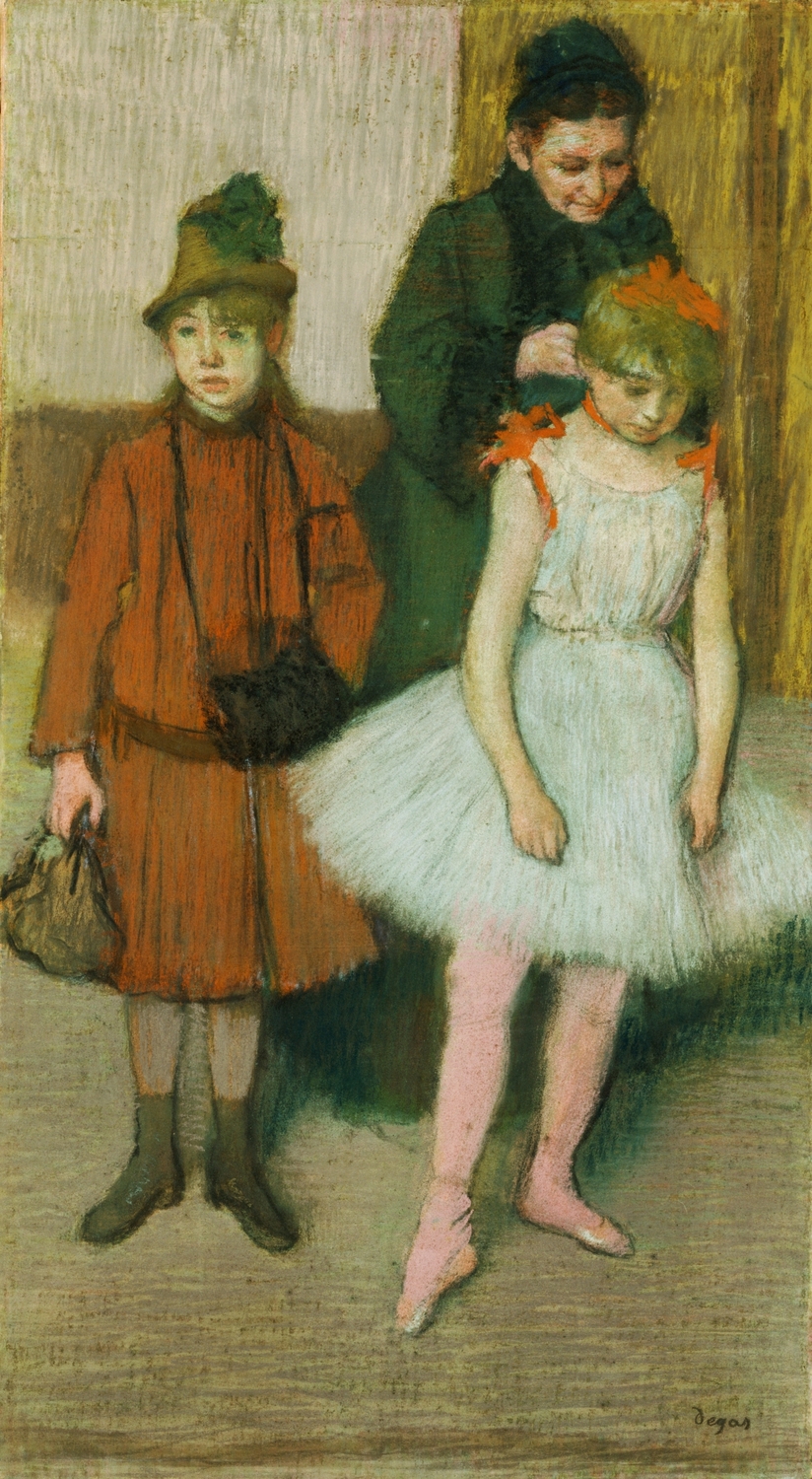
エドガー・ドガ筆/フランス・19世紀。オーケストラのコントラバス奏者で、写真家でもあったドガの友人ルイ=アメデ・マントの家族を描く。マントは7人の子どもがおり、娘3人がバレエ学校に入学した。バレエ学校や舞台裏でよくみかける、母親が娘の世話をする光景を描いた本作品は、肖像画であり風俗画でもあるといえるだろう。

レースの帽子の少女

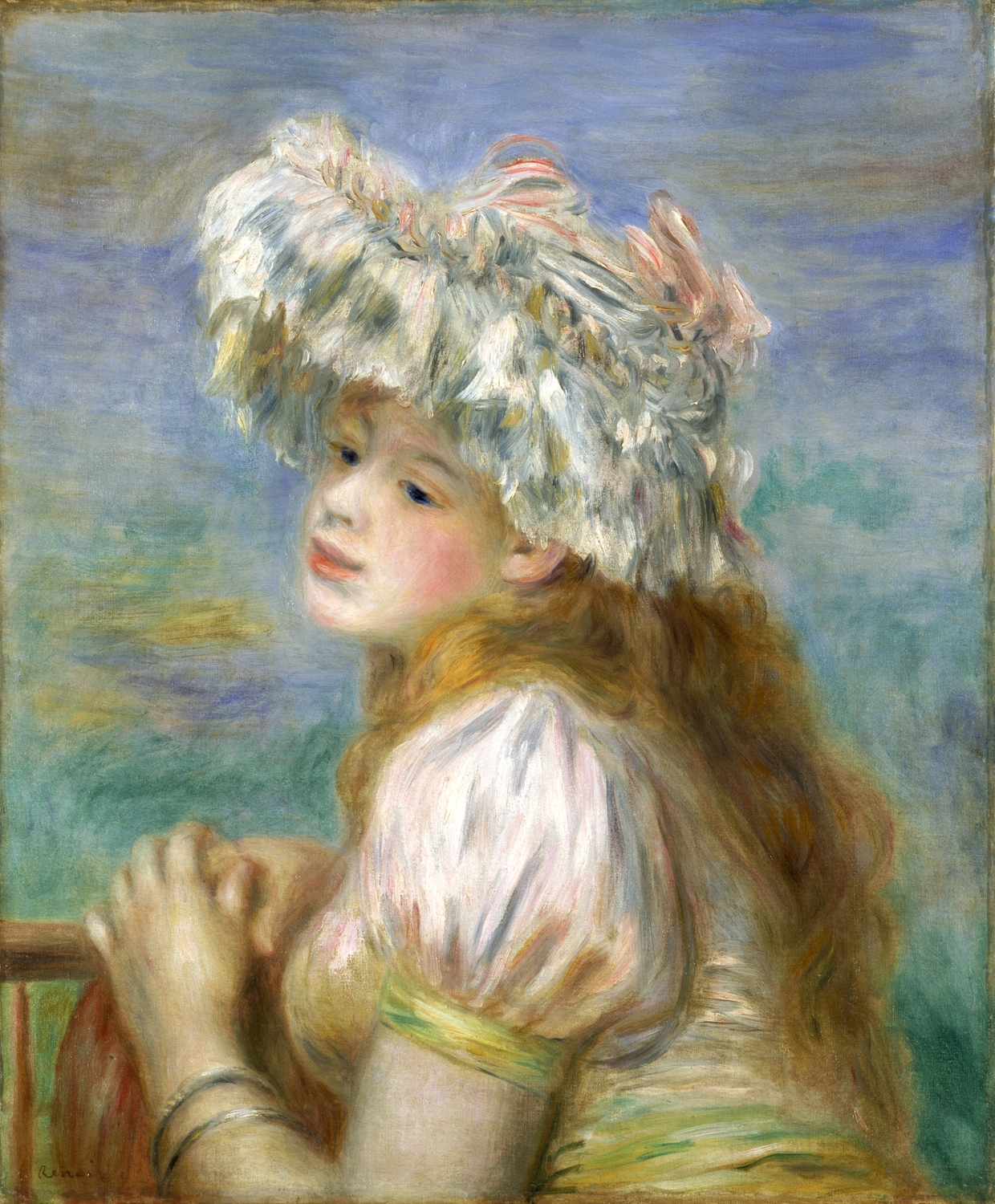
ピエール・オーギュスト・ルノワール筆/フランス・19世紀。ルノワールはこの時期、優雅な、ときとして奇抜な帽子をかぶる若い娘の肖像画を多く描いた。そのような肖像画は画廊を介してよく売れた。少女の透明感のある肌、溌剌とした薔薇色の頬、夢見るような愛らしい表情がルノワールの卓越した描写によって描き止められている。

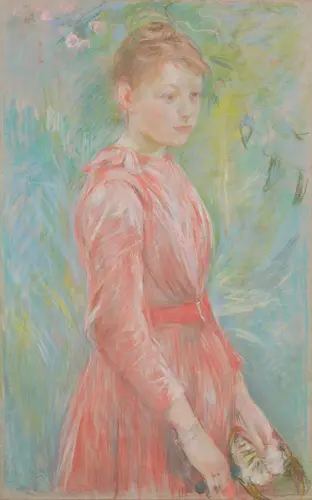
Girl in Rose Dress

ベルト・モリゾ筆/フランス・19世紀。なだらかな肩と豊かな曲線のシルエットを包む鮮やかな色彩。乙女の初々しい表情が印象派風のタッチで的確にとらえられている。モリゾは、コローの指導のもとに戸外で絵を描き、後にマネの指導を受けた。印象派の展覧会に7回出品。繊細な感性と甘美な色彩感覚に優れたこの作品も彼女の代表的なパステル画の名品の一つである。

りんごつみ

ピエール・ボナール筆/フランス・19世紀。舞台は、ボナールとその妹アンドレの一家の別荘の果樹園。本作品を制作した頃、ボナールは子どもの無邪気に遊ぶ姿に興味をいだき、絵画のなかにそのユーモラスに躍動する姿を登場させている。都会の街を行き交う洗練された女性や子ども、この果樹園で憩う幼な子たちの姿を、複数の大きなカンヴァスに描いている。

The New Arrival

アルトゥーロ・リッチ筆/イタリア・19世紀後半~20世紀前半。新しく産まれてきた子を家族として迎え入れる場面を描く。室内の装飾や人物たちの服装は18世紀の貴族社会のロココ趣味にあふれている。リッチが生きたひと昔前の時代の情景だが、当時の画家はあまり描かなかった題材で、彼の優れた歴史観と巧みな描写力によってのみ再現し得た世界ともいえよう。

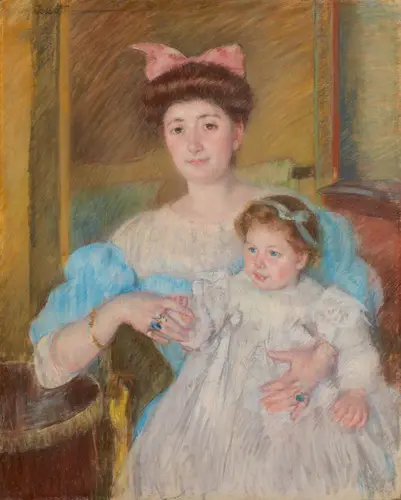
Countess Morel d’Arleux and Her Son

メアリー・カサット筆/フランス・20世紀。モレル・ダルルー伯爵夫人はカサットの友人で、本作はその息子が2歳の時の作品。息子は女児用を思わせるスカート状の上等なレースのドレスに身を包んでいる。このように親しい人々をモデルにした母子像は、カサットの最も得意とするテーマであり、女性らしい平和で温かな視点を見ることができる。

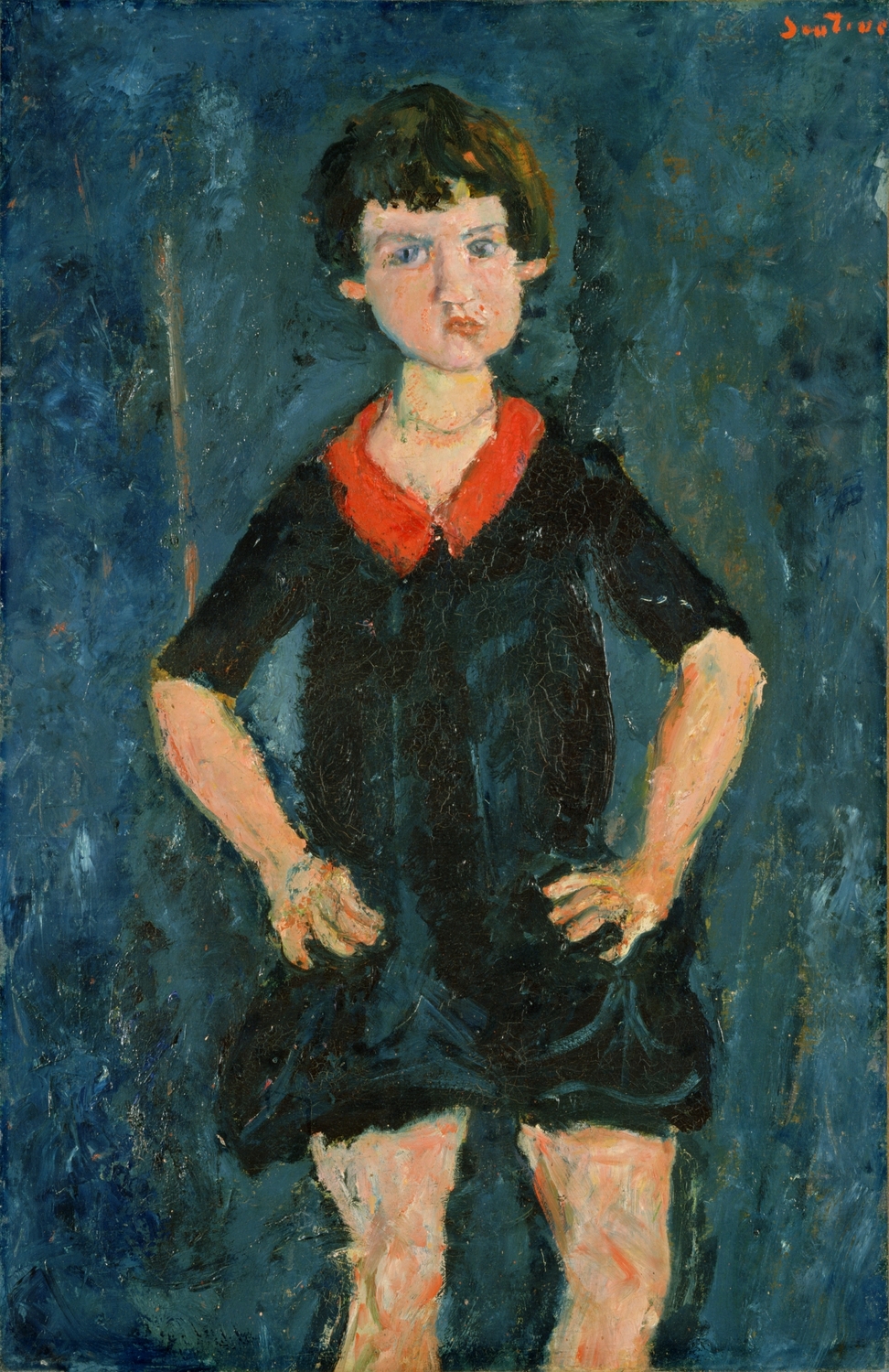
青い服を着た子供の肖像

シャイム・スーティン筆/フランス・20世紀。堂々と正面を見据えるこの幼い少女の姿勢とまなざしは、怯えと挑発の相反する感情をたたえ、迫真の人物描写となっている。絵具をいく重にも塗り重ねて肉付けする描法と、スカートをたくし上げるポーズは、レンブラントの《水浴の女》に倣っている。

China

In ancient China, it was thought to be extremely joyous for the family to be blessed with many children and grandchildren, and to prosper. Also, children, symbols of such happiness, were frequently depicted in paintings and crafts as auspicious motifs for praying for the prosperity of offspring. Chinese paintings of children are characterized by this stylised motif, such as in "A Hundred Children'', in which a hundred children play together, and "Children Playing", in which children pick lotus flowers, a symbol of prosperity for offspring. Such Chinese paintings of children were brought to Japan and became very popular as motifs for ceramics and nishiki-e (multi-colored ukiyo-e) during the Edo period.

Overseas

Textile Fragment with Floral Vines and Children

明時代(14~15世紀)。隙間がある絽という絹地の網目を1つ1つ刺繡で埋め尽くすように刺繡を施した、大変手の込んだ裂です。赤や青、黄色など鮮やかな色彩を用いた明時代特有の刺繡技法。「唐子」と呼ばれる中国の幼子がデザインされ、子宝を願う吉祥文様となっている。

Jar with One-Hundred Boys

中国・景徳鎮窯/明時代(16世紀)。多くの子どもに恵まれることは、かつての中国においては非常な幸福とされた。百人の童子が戯れ遊ぶ「百子図」には、多子の願いが込められている。明時代後期に景徳鎮民窯で焼かれた五彩磁器であり、日本では古赤絵と呼ばれている。

Toy Peddler

呂文英筆/明時代(16世紀)。桃花の咲く頃、操り人形、お菓子や仮面など子どもが喜びそうなものを売りに来た人物と、それを取り巻く子供たちのさまざまな姿を描く。右下にはウサギの姿も見える。このような画題はただの風俗画ではなく、子どもがすくすく育つことを祈る吉祥の意味もあった。

Bowl with Chinese Boys

中国・景徳鎮窯/明時代・嘉靖年間(1522~66年)。明・嘉靖年間に使用された輸入コバルト顔料は、濃い紫色を帯びる特徴がある。またこの頃になると景徳鎮では大量の注文に応じきれなくなった官窯から民窯へ生産委託が行なわれた。唐子の親しみやすい文様表現に、民窯台頭の背景をみることができる。

Vase with Design of Children, Over-glaze Enamels

中国・景徳鎮窯/明・万暦年間(1573-1620)。いわゆる尊形タイプの大型の瓶。口頸部に花木文、頸部に蕉葉文、膨らみ部の花唐草文を挟んで草花の折枝文、さらに八宝文と唐草文の文様帯を経て、胴部に唐子遊図が描かれている。裾部に唐草文、太湖石と草花の折枝文、花文が配されている。

Children Playing

陳洪綬款/明時代(16~17世紀)。蓮花(荷)を採る童子の描かれた、たくさん子どもが生まれること(「蓮生貴子」)を願う吉祥画です。また、夏景で、童子が25人と棋(囲碁)がみられることから、もとは琴棋書画百子を主題とする四季四幅対の内の一幅であったと考えられます。

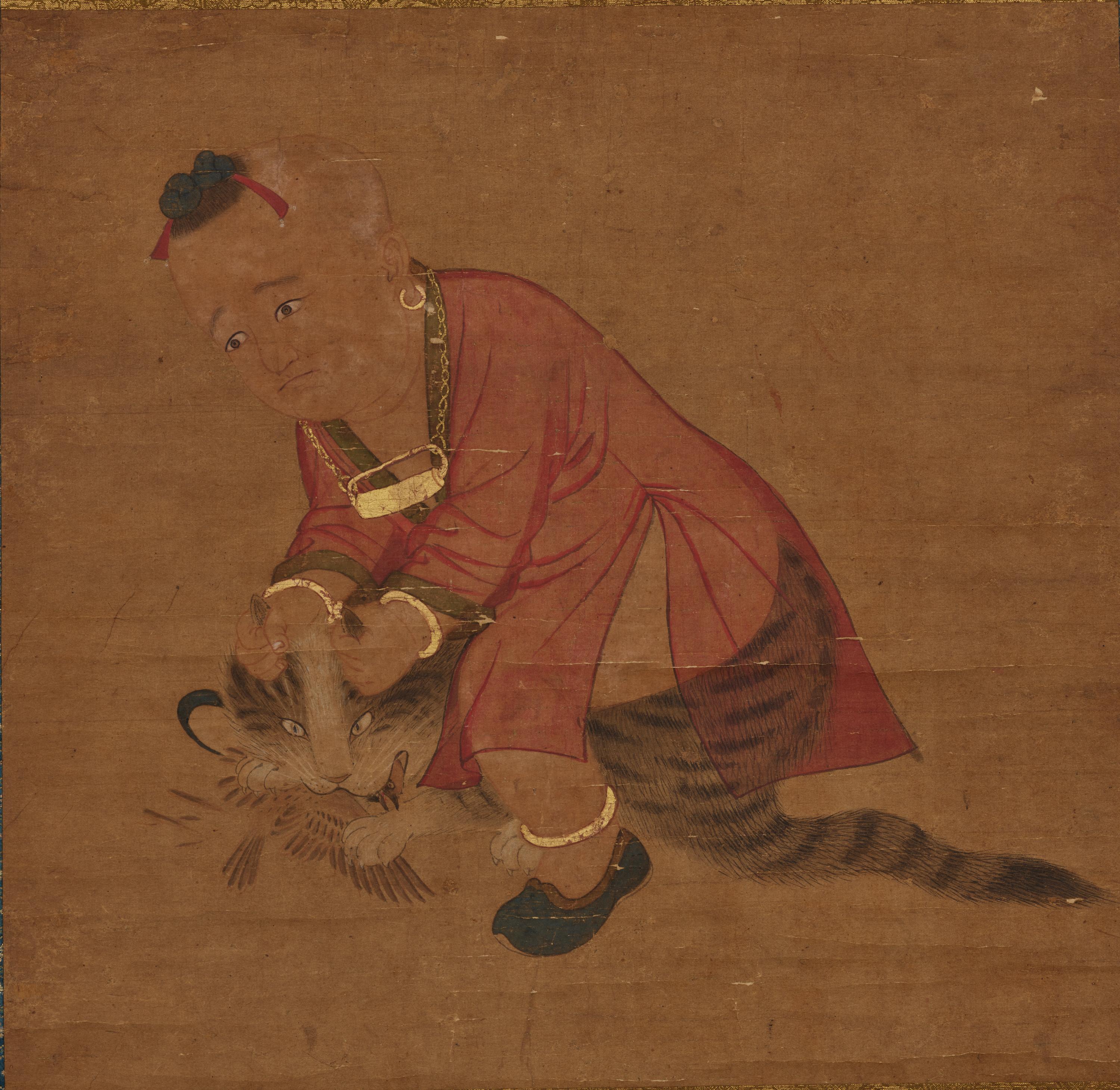
Chinese Child

伝姜隠筆/明時代(17世紀)。鳥を抑える猫を抑える子どもを描く。姜隠(きょういん)は明時代の画家で、字を周佐、黄県(山東省)の人とされるが、その作品は中国にはほとんど伝存しない。本図を「姜隠筆」としたのは、狩野探幽の弟にあたる安信で、日本ではこのような古風な人物画を「姜隠」の作と考えてきたことがわかる興味深い作例。

Brush Pot with a Scene of Children

中国・景徳鎮窯/清時代(18~19世紀)。大型の白磁胎の筆筒。筆を挿す筆筒は、机上を飾る文房具としてとくに重視された。胴部にはヨーロッパの無線七宝の技術をとりいれた粉彩によってあらわされた、賑やかで楽しげな唐子遊びの図が巡る。

白釉鉄絵唐子文壺

<p>鉄分を含む胎土の上に厚く白化粧を施し、手早い筆遣いの鉄絵で文様が描かれている。磁州窯と総称される華北地方の民窯の製品であり、元末明初期の典型的な作風を示している。日用の器物を焼いた民窯ならではの、躍動感にあふれる絵付けに魅力がある。<br /></p>

Related People, Things and Events

References

  1. 『「絵巻」子どもの登場 : 中世社会の子ども像』黒田日出男 著,河出書房新社
  2. 『浮世絵のなかの子どもたち』江戸子ども文化研究会 編,くもん出版
  3. 『吉祥 : 中国美術にこめられた意味 : 特別展』東京国立博物館
  4. 『浮世絵に見る江戸の子どもたち』くもん子ども研究所 編著,小学館
  5. 『江戸子ども百景』小林忠 監修,中城正尭 編,河出書房新社
  6. 『こども展 = Les enfants modèles : 名画にみるこどもと画家の絆』千足伸行 監修,日本テレビ放送網 編,日本テレビ放送網
  7. 『描かれた大正モダン・キッズ : 婦人之友社『子供之友』原画展』刈谷市美術館