Volume 7 of "The Biography of the Traveling Preacher Ippen" 一遍聖絵 巻第七いっぺんひじりえ まきだいなな
Description
This illustrated scroll traces the life of Ippen, the priest who founded the Ji sect of Buddhism. Ippen taught that anyone, even non-believers, could ascend to the Buddhist Pure Land if they chanted “Namu Amida-butsu,” or “I put my faith in Amitabha Buddha.”
Unusually for an illustrated scroll, this work is painted on silk. It is also vertically wider than average. It consists of 12 volumes. This is the 7th volume and it depicts Ippen and several other priests travelling through several regions and arriving in Kyoto.
Members of the Ji sect would dance in a circle while chanting and ringing portable gongs. The priests in this scroll are also dancing this way on a stage set up in Kyoto. The conspicuously-large figure at the front of the stage is Ippen. His serious expression conveys his strong devotion to Amitabha Buddha.
Though the scene is viewed from far above and the assembled characters appear quite small, they are still infused with a sense of individuality and are differentiated by their clothing and expressions. The extraordinary talent of the artist is on full display in the vivid portrayals of the different scenery from each region and the deportment of each person.
Buddhism was initially practiced by Japan’s upper classes and was too demanding for everyday people. Ippen (1239–1289) was a monk who traveled tirelessly throughout the provinces, teaching the faith to common men, women, and children. He claimed that chanting the name of Buddha Amida would guarantee salvation, a straightforward teaching that made Buddhism accessible to everyone.
Read from right to left, this work belongs to a series of picture scrolls illustrating Ippen’s life and accomplishments. It documents his travels and depicts a devotional practice that he popularized, in which people danced while chanting praise to Buddha Amida.
These images are painted on silk, a luxury material rarely used for picture scrolls. They are rendered from a bird’s-eye view, but the artist gave each person a unique facial expression, distinct clothing, and a sense of movement. Landscapes and scenes of everyday life are also shown in detail, providing numerous insights into ancient Japan.
Data source
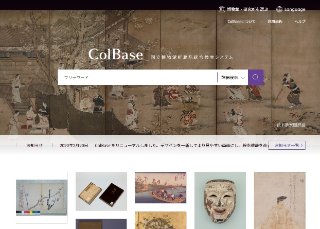
ColBase
"ColBase: Integrated Collections Database of the National Institutes for Cultural Heritage, Japan" is a service that enables a multi-database search of the collections in the four national museums (To...
Contents holder/Provider
Aggregator

National Institutes for Cultural Heritage
The National Institutes for Cultural Heritage (NICH) comprise four National Museums (Tokyo National Museum, Kyoto National Museum, Nara National Museum, and Kyushu National Museum) and two National Research Institutes for Cultural Properties (Tokyo National Research Institute for Cultural Properties, and Nara National Research Institute for Cultural Properties), as well as the International Research Centre for Intangible Cultural Heritage in the Asia-Pacific Region (IRCI) in Sakai City, for a total of seven institutions.
Last updated
June 22, 2026