Paintings of Beautiful Women from the Edo Period
Early modern original paintings and woodblock prints of beautiful women
In Japan, images of women have been depicted in genre paintings and portraits since ancient times, but the genre of "bijinga" (portraits of beautiful women), which specifically focused on the depiction of female beauty, became clearly independent after the early Edo period (1603-1868). During the Kanbun era (1661-73), women who had been depicted in groups in genre paintings began to be depicted individually, and a style known as "Kanbun bijinzu," in which standing figures of prostitutes and maiko (apprentice geiko or geisha) were depicted alone on a hanging scroll, became popular. Around this time, portraits of beautiful women began to be painted in the ukiyoe woodblock print genre, founded by Hishikawa Moronobu, and since then, bijinga has been a major genre in ukiyoe woodblock prints. In the Meiwa era (1764-72), Suzuki Harunobu perfected "nishikie" (woodblock prints with multiple colors) and produced a series of nishikie prints of pretty beauties, leading the ukiyoe world. Later, during the Tenmei era (1781-89), Torii Kiyonaga painted portraits of slender, well-proportioned women, totally changing the public perception of beauty in Edo (present Tokyo). During the Kansei era (1789-1801), Kitagawa Utamaro created the "Bijin Okubie" (close-up portraits of beauties) that replaced paintings of actors with beautiful women, featuring oversized proportions, especially the head, which became explosively popular. This section lists representative examples of bijinga painted during the Edo period (mid-17th century to mid-19th century), divided into four periods.
Table of Contents
Kanbun - Shotoku era (mid 17th century - early 18th century)
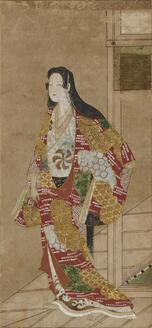
Beauty on Veranda
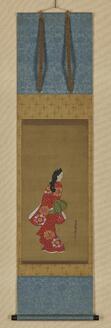
Beauty Looking Back
[太夫と禿]
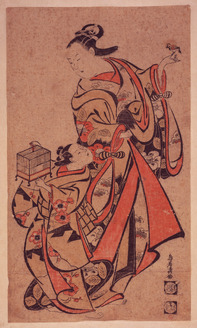
Courtesan with a Bird and an Attendant with a Cage
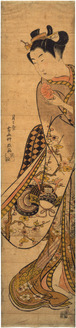
Girl with a Kukurizaru (“Tied monkey” cloth bag)
風前美人図
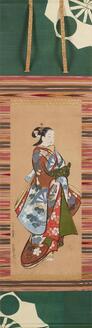
Standing Courtesan
遊女聞香図
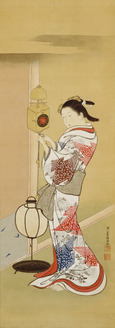
Beautiful Woman and Wall Clock
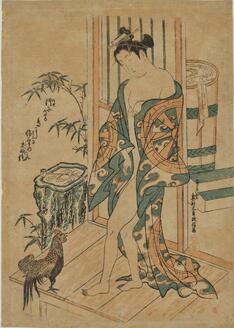
Woman, Rooster and Hen
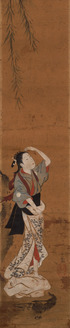
Beauty Doing her Laundry under a Willow Tree
花桶 (石川豊信)
Kyoho - Meiwa, An'ei era s(mid - late 18th century)
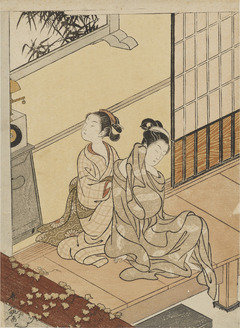
“Clock Striking in the Evening” from the Series Eight Parlor Scenes
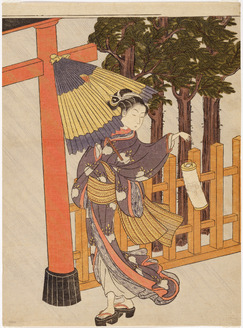
Woman Visiting a Shrine on a Rainy Night
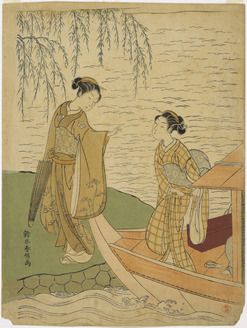
Beautiful Women Stepping off a Boat
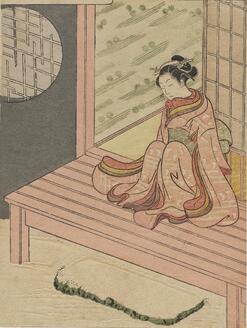
Allusion to the Noh Play Hachinoki (Potted Trees)

Beauty on a Balcony
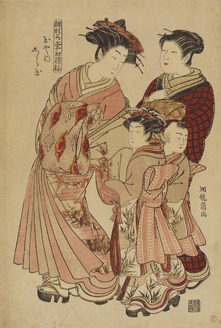
Young Women of the Pleasure District in New Year's Fashion: Shiratama of Tamaya
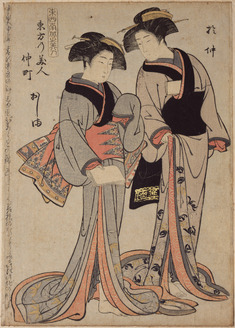
“Oshima and Onaka of the Nakachō, Beauties of the East” from the Series Beauties of the Four Directions
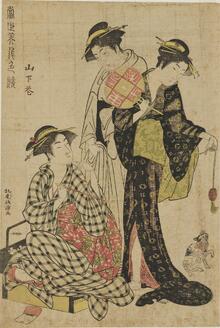
Comparing the Charms of Modern Beauties: The Flowers of Yamashita
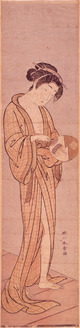
Woman with Fan after Bath
青楼美人合姿鏡 春夏
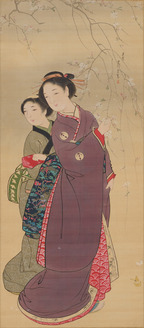
Beauties under Cherry Blossoms
吉原遊女図
Tenmei, Kansei - Bunka era (late 18th century - early 19th century)
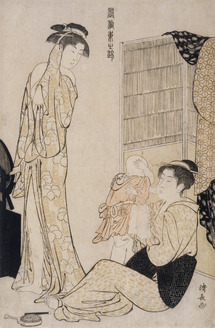
Woman after a Bath and a Woman Cuddling Her Child from the Series Genre Scenes of the East
飛鳥山花見
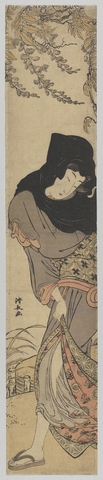
風
Beauties Smoking under a Cherry Tree
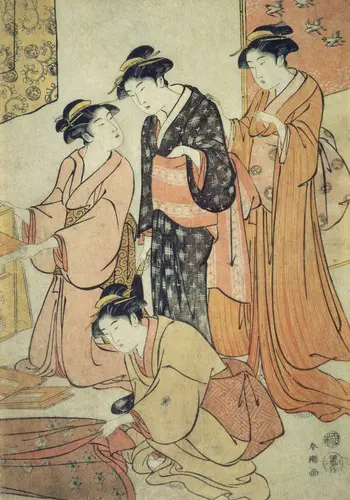
Women in a Room
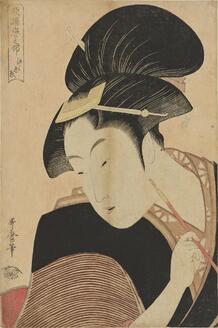
Deeply Hidden Love, from the series “Anthology of Poems: The Love Section”
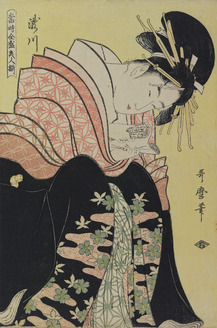
Lineup of Contemporary Popular Beauties: Takigawa
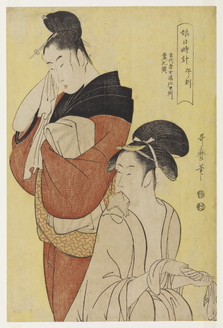
“Hour of the Horse” from the Series Women at Various Hours of the Day
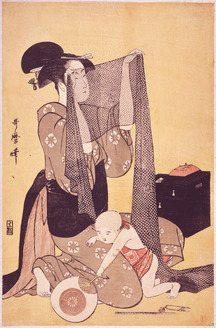
Needlework
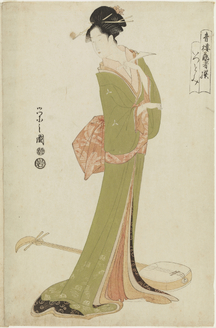
Geishas of the Pleasure Quarters: Itsutomi
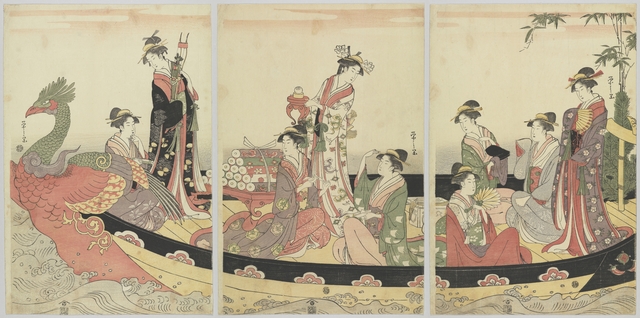
鷁首船
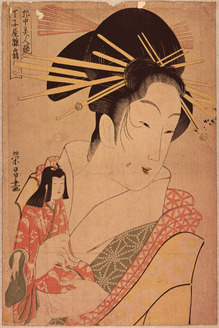
郭中美人竸 丁字屋雛鶴
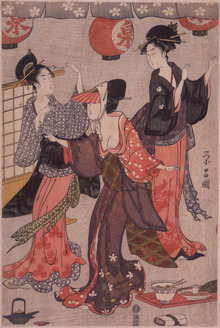
Blindman's Buff (Allusion to Yuranosuke at the Ichiriki Teahouse)
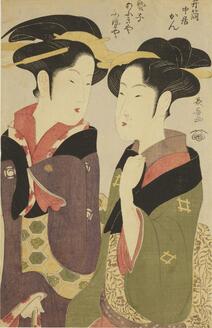
井筒中居かん、藝子あふきやふせや
(四季美人) (雪中美人)
「風流七小町略姿絵」 「かよひ小まち」
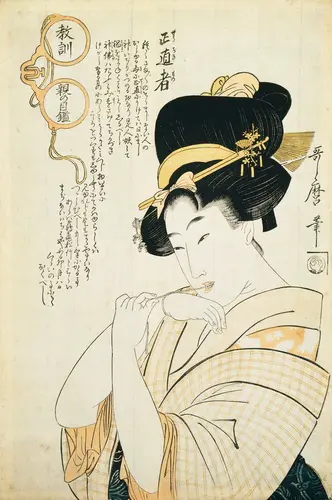
An Honest Girl, from the Series "A Parent's Moralising Spectacles"
舟待つ女 桟橋美人
Bunsei, Tempo-Ansei era (early - mid 19th century)
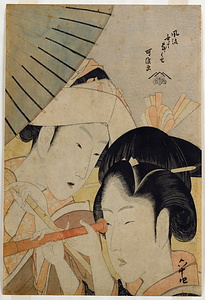
風流無くてななくせ[遠眼鏡]
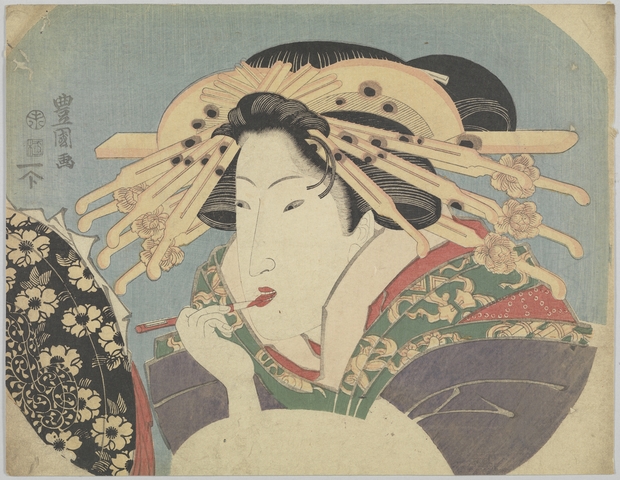
口紅
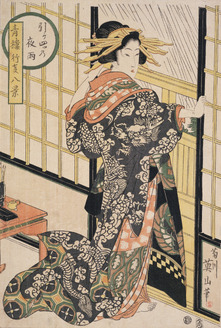
Eight Views of the Yoshiwara Pleasure Quarters: Night Rain in Yoshiwara (12 p.m., closing time)
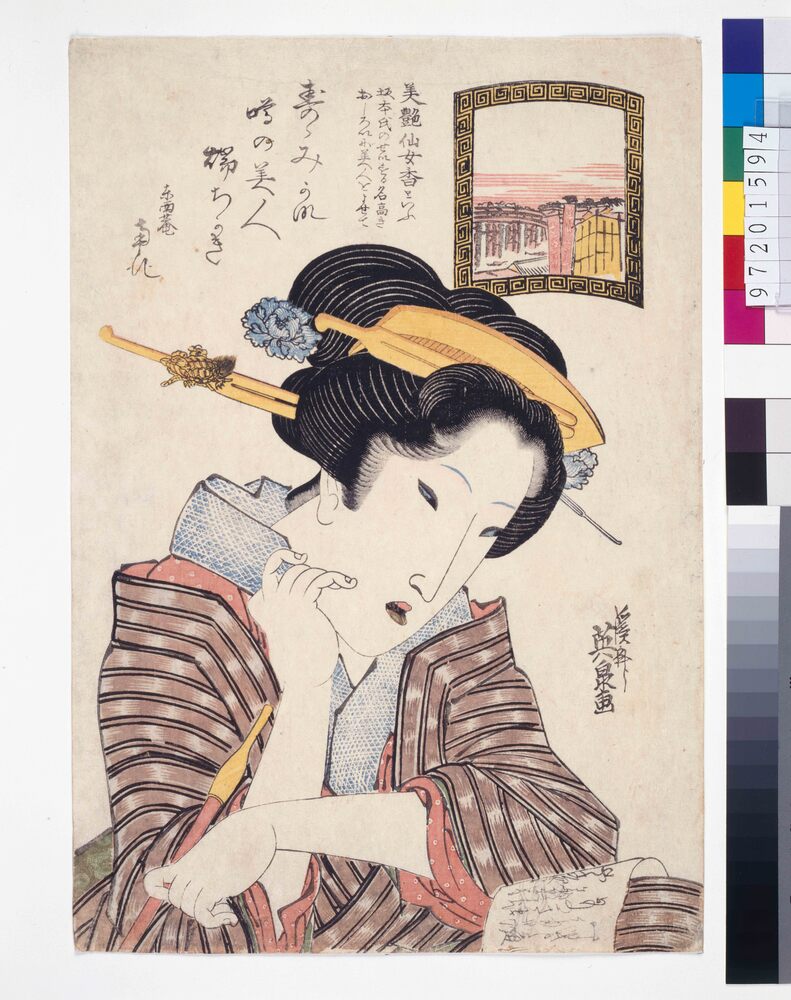
美艶仙女香
英泉藍摺錦絵
京美人夏化粧図
「星の霜当世風俗」 「(蚊焼き)」
「水無月 富士帰 夕立」
駿河町越後屋
「江戸じまん名物くらべ」 「亀井戸のふぢ」
“View of the Sumida Riverbank in the Snow from Afar” from the Series Famous Places for Views of Snow, Moon, and Flowers in Edo
月下砧打ち美人図
Related People, Things and Events
Beautiful women paintings (Bijinga) of the Meiji, Taisho and early Showa eras
Transitions in Modern Japanese bijinga
Bijin-ga (Portraits of Japanese Beauties)
Often referred to as Bijin-e or Onna-e from the Edo through the Meiji era, Bijin-ga is a genre of Japanese painting illustrating the beauty of women. Famous works of the genre include Moronobu Hishikawa’s Mikaeri Bijin-zu (Beauty Looking Back).
Portraits
Paintings of particular individuals, either of just the face or the entire figure
Nishiki-e
Nishiki-e is the generic term for the Ukiyo-e multi-colored woodblock prints which were developed and popularized during the Edo era.
Suzuki Harunobu
A successful colored woodblock print artist noted for his prints of beautiful women 1725?-1770
Torii Kiyonaga
An Ukiyo-e artist in the middle of the Edo period(1603-1867), who swept the world with paintings of beautiful well-proportioned women.
Kitagawa Utamaro
One of the great ukiyo-e painters, responsible for the introduction of large-head portraits. ca. 1753-1806
Utagawa Toyokuni
A master painter of actor portraits who surpassed even Sharaku in popularity
Hokusai Katsushika
A master of ukiyo-e prints in the late Edo period, known also for his eccentricities
Utagawa Kunisada(The third Toyokuni)
An ukiyo-e artist representing the end of the Edo period. He produced the largest number of ukiyo-e paintings among all ukiyoe artists.
Utagawa Kuniyoshi
An ukiyo-e artist of the end of the Edo period known for his outlandish compositions and innovative painting style
Art of the Edo period
Trends in Japanese art during the Edo period
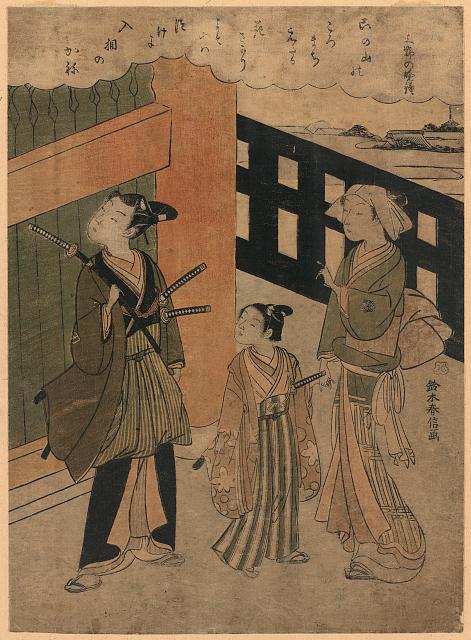
References
- 『日本大百科全書(ニッポニカ)』(JapanKnowledge) 「美人画」の項目
- 『日本美人画一千年史』安村敏信 監修,人類文化社,桜桃書房
- 『浮世絵の歴史 カラー版』小林忠[監],美術出版社
- 『歌麿の美人』[喜多川]歌麿 [画],小林忠 著,小学館
- 『日本の美女』コロナ・ブックス編集部 編,平凡社鏑木清方の江戸美人,上村松園の優美な女,伊東深水のモダンな美女,小村雪岱のキリッとした芸妓たち……浮世絵から昭和の美人画まで。(日本児童図書出版協会)
- JapanKnowledge所収コンテンツの最終アクセス日は、いずれも2023/01/06。