Description
Reiko, who bears a mysterious smile in this work, was the beloved daughter of the artist. This portrait of her around the age of seven was completed in a mere ten days.
This oil painting presents a half-length portrait of a young girl. The bobbed hairstyle, the red obi sash and the brightly-colored kimono peaking out from the shawl are all typical clothes and accessories of Japanese girls from that time. However, there is something intriguing about the girl‘s long eyebrows, almond-shaped eyes and mysterious smile. An air of mystery pervades the picture. It is also apparent in the intricately-drawn shawl and the way her hands seem oddly small compared to her head.
Kishida Ryusei became a Western-style painter after a thoroughgoing study of Western painting techniques. He was born in Tokyo in 1891 and he died in 1929 at the young age of 38. He studied under Kuroda Seiki, a pioneer of oil painting in modern Japan, and eagerly incorporated and assimilated Western techniques and forms of expression. In his short life, he won high acclaim for his solid, intricate portraits and expressive works that were influenced by Flemish painting from the 15th to 16th centuries.
The model for this painting was Ryusei’s 7-year-old daughter Reiko. Throughout his life, he continued to paint his beloved daughter in oil paintings, watercolors and sketches. Depictions of Reiko changed with each painting as Ryusei‘s style evolved and his daughter grew older. This portrait of Reiko is recognized as the most representative example of these numerous depictions. With its distinctive features and mysterious aura, some have compared this portrait to Leonard Da Vinci‘s Mona Lisa. According to a diary left behind by Ryusei, he decided to eschew the solidity of Flemish painting here to imbue the portrait with more softness and charm, with some of the motifs influenced by the works of Francisco Goya, a Spanish painter active from the 17th to the 18th century.
Data source
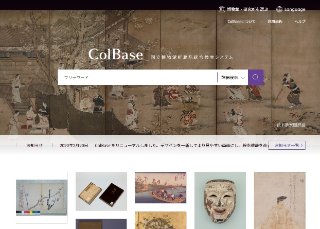
ColBase
"ColBase: Integrated Collections Database of the National Institutes for Cultural Heritage, Japan" is a service that enables a multi-database search of the collections in the four national museums (To...
Contents holder/Provider
Aggregator

National Institutes for Cultural Heritage
The National Institutes for Cultural Heritage (NICH) comprise four National Museums (Tokyo National Museum, Kyoto National Museum, Nara National Museum, and Kyushu National Museum) and two National Research Institutes for Cultural Properties (Tokyo National Research Institute for Cultural Properties, and Nara National Research Institute for Cultural Properties), as well as the International Research Centre for Intangible Cultural Heritage in the Asia-Pacific Region (IRCI) in Sakai City, for a total of seven institutions.
Last updated
June 22, 2026