Rinpa School
A style of Japanese art that emerged during the Momoyama period (approx. 1568-1600), and flourished throughout the Edo period (1603-1867), it is characterized by bold composition and decorativeness.
The Rinpa school is a style of Japanese art that originated with Hon'ami Kōetsu and Tawaraya Sōtatsu, both of whom were active from the Momoyama to the early Edo periods, and was perfected by Ogata Kōrin in the mid-Edo period. The name "Rinpa" comes from the "rin” of Ogata Kōrin. While following the traditional Yamato-e painting style, Rinpa was characterized by bold composition, rich design, and decorativeness, and influenced a wide range of Japanese arts and crafts, including calligraphy, lacquering, ceramics, and also dyeing and weaving.
Hon'ami Kōetsu, one of the founders of the Rinpa school, was a multi-talented artist versed in calligraphy, lacquer arts, and ceramics, and was a leader of the arts and crafts world in the early Edo period. At the same time, Tawaraya Sōtatsu is believed to have presided over an art studio named “Tawaraya”, a workshop that produced craft paintings including folding fan paintings and preliminary sketches for dyeing and weaving. Using silver and other materials, he produced highly decorative works with daring layouts, and produced many works of calligraphy and painting in collaboration with Kōetsu. Later, in the mid-Edo period, Ogata Kōrin, influenced by Sōtatsu and the art of the Sōtatsu school, followed and further developed Sōtatsu's art style. Together with his younger brother, the ceramic artist Ogata Kenzan, Kōrin added new life to Japan's arts and crafts, and the refined designs created by Kōrin became very popular, especially in the Kyoto-Osaka area as "Kōrin patterns". After Kōrin, artists such as Fukae Roshū and Tatebayashi Kagei followed the Rinpa school style. In the late Edo period, the stage was moved to Edo (present Tokyo), where Sakai Hōitsu, who studied Kōrin's works and painting techniques, and his disciple Suzuki Kiitsu established an Edo-based Rinpa school, which has become known in recent years as the "Edo Rinpa school”. This painting style of the Rinpa school was not hereditary like the Kanō and Tosa schools, but was taken over by artists being deeply attracted by works of the Rinpa school.
Related People, Things and Events
Books
Related Works
Azuchi-Momoyama period - early Edo period (the era of Tawaraya Sōtatsu and Hom’ami Kōetsu)

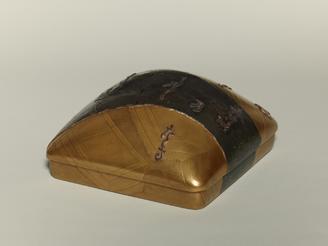
Writing Box, Pontoon bridge design in maki-e lacquer
This is a box used to store writing implements like inkstones, water droppers, ink brushes, and paper knives. It creates a striking impression with its high, domed lid and bold, close-up depictions of boats and a bridge. The surface of the lid uses a technique known as ikakeji, whereby a lacquered surface is covered by a dense sprinkling of gold powder and then polished. It also features waves rendered using the tsukegaki technique, whereby lines are drawn in sticky lacquer and then sprinkled with gold powder. The boats are crossed diagonally by a large bridge made from a strip of lead. The lid also features randomly-arranged Chinese characters created from thick cut-out strips of silver. The characters quote a poem by the Heian-period noble Minamoto Hitoshi. The original poem featured the characters for 'pontoon bridge,' but these are omitted here and instead represented by the design itself. The artist Hon'ami Koetsu was active in Kyoto during the early 17th century. Though born into a family of sword polishers, he demonstrated his talents in the fields of calligraphy, pottery, and lacquerware. This mastery is on full display here in the bold shapes and designs, the superior technical skills, and the exquisite sense of balance engendered by the skillful application of gold, silver and lead.
Waterfowls in Lotus Pond
While this subject has several Chinese precedents in Sung and Yuan colored paintings, Sotatsu painted the two grebes and two lotus flowers with only black ink, giving the painting a clean, simple feeling. Nevertheless, the artist exquisitely expresses the contrast between the blooming white lotus and the ripening lotus fruit. Contrast is also created between the two birds, one of which swims ahead with a half-open, upturned bill, as if in search of new bait, while the other quietly floats on. Though this painting bears no signature, only a red Inen seal in the lower-left corner, it represents the technical perfection of Sotatsu's ink painting.
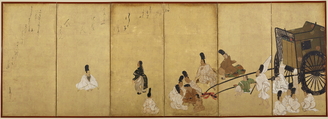
Scene from ‟The Gatehouse” Chapter of The Tale of Genji
【重要文化財】 江戸初期の代表的歌人で、朝廷に仕えた烏丸光広が書した和歌から、『源氏物語』のうち、光源氏が石山寺へ参詣する折、逢坂の関でかつての愛人空蝉の一行と出会い、往時をしのぶ「関屋」帖の一場面とわかる。仕丁の装束の白が光り、波状の動きを生んでいる。
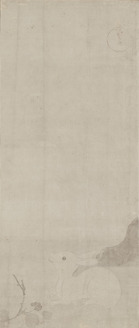
Heron, Rabbit, Plum Tree, and Bamboo
<p>Depicted here are a rabbit, a heron, a plum tree and a bamboo tree. From the mid-1500s to the early 1600s, the artist Sōtatsu favored a technique that involved applying darker shades of ink on top of lighter shades, mixing the two on the work. Resultantly, his subjects are portrayed with a rich three-dimensionality, as seen in this work here.</p>
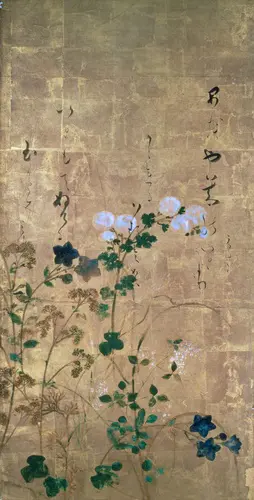
Waka Poem from ‘Wakan-Roeishu,’ Anthology of Japanese and Chinese Poetry, with Design of Flowering Grasses
本図と《草花図下絵漢詩》は、もともと六曲一隻の屏風仕立てのものを各扇ごとに表具したもの。本作は第四扇に仕立てられていた。宗達工房の下絵と思われる金地の秋草図に、和歌を認めている。和歌は平安前期の女流歌人伊勢の作で、和漢朗詠集・上巻のうち春の雨の部にある「青柳の 枝にかかれる 春雨は いともてぬける 玉かとぞみる」の句を数行に分かち書きにしている。
Chinese Poem from ‘Wakan-Roeishu,’ Anthology of Japanese and Chinese Poetry, with Design of Flowering Grasses
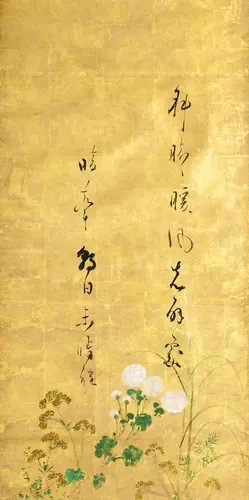
本図と《草花図下絵和漢朗詠集和歌》は、もともと六曲一隻の屏風仕立てのものを各扇ごとに表具したもの。本作は第2扇に仕立てられていた。金地の下部に宗達工房の下絵と思われる女郎花、菊、芒といった秋草をあしらい、漢詩が認められている。漢詩は和漢朗詠集・上巻のうち春の雨の部にある平安時代の文人慶滋保胤の詩「斜脚暖風先扇処 暗声朝日未晴程(斜脚は暖風の先づ扇ぐ処、暗声は朝日のいまだ晴れざる程)」の句。
Scattered Fans
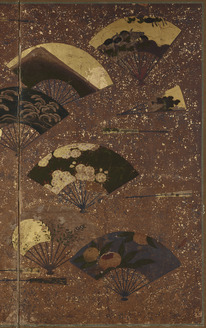
閉じた扇を交えて、季節の風物を描いた扇をあたかも屏風の上に散らしたかのように貼り交ぜた作品。朝顔の垣や桜の花は、胡粉(白色)を盛り上げ、立体的に描いている。対象を大胆にクローズアップする手法は、扇絵を数多く制作した宗達の特色である。
Waka Poetry Fragment with an Underpainting of Lotuses
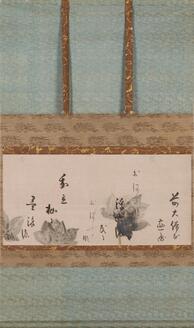
<p>金銀泥を用いて大胆に描く蓮下絵は、古来、俵屋宗達@たわらやそうたつ@の筆といわれており、独特のたらし込みの手法がかいま見られます。その上に光悦が『百人一首』の和歌を散らし書きし、その書は下絵と見事な調和を醸し出しています。<br /></p>
Writing Box with Motifs from the Sagichō Fire Festival
Gold, silver, and tin plates are liberally combined with the [maki-e] technique using gold particles. The style of decoration is unique to the craft of lacquer by Koetsu.
Writing Box, Reed and boat design in maki-e lacquer
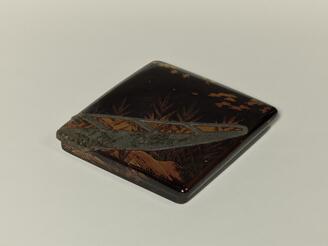
<p>Reed and boat motifs were often used to decorate writing paper in the Heian period (794-1192). Many lacquer works by the artist Koetsu are inspired by the courtly culture of this period.<br /></p>
Writing Box with a Bugaku Performer
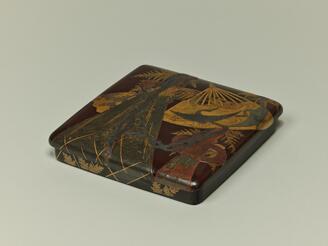
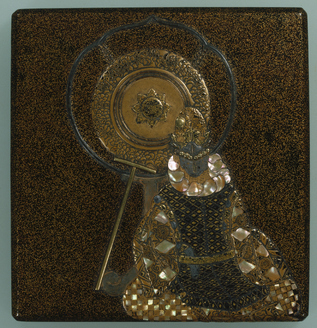
<p>The lid shows a scene from a courtly dance, with a performer and a round drum. Striking close-ups and bold use of materials were trademarks of the artist Hon'ami Kōetsu.<br /></p>
Folding Screen with Design of Spring and Autumn Flowers
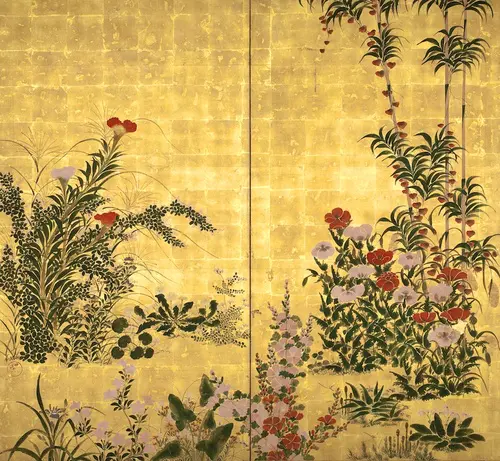
画面左下に「伊年印」と呼ばれる俵屋宗達が主宰した工房作を示す商標印が付されている。二曲仕立ての屏風には女竹・蔦・もろこし・芥子・すみれ・桜草・つくし・立葵・竜胆・燕子花・撫子・たんぽぽ・鶏頭・芒・萩など十数種の草花を散見することができる。草花の配置や組み合わせには花卉全体を見渡せるよう配慮がなされている。花々の最盛期を捉えた瑞々しい生命感が心地よく、艶やかな花の色と金地が相まって琳派特有の雅な空間を創り出している。
Segment from Waka Scroll on Decorated Paper
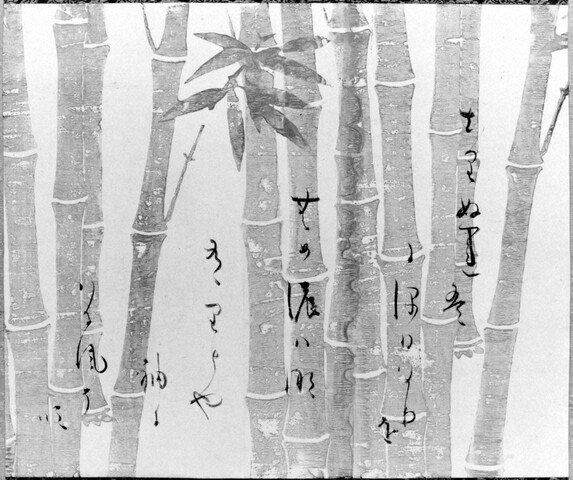
17世紀のころには、城郭や書院造など、大きな建築物が次々に建てられていた。その床の棚飾には、書をかいた巻物が迎えられた。本阿弥光悦〈ほんあみこうえつ・1558-1637〉は、刀剣の家に生まれたが、とりわけ能書であった。好んで、巻物に揮毫の筆をとった。これはそうした巻物の一部分。雲母を粉末にした顔料で、木版であらわした竹の模様を印刷している。薄・草花・松・鶴・蝶など、さまざまな大柄な図柄が連続する。その上に、リズミカル、かつダイナミックな筆を展開している。光悦の真面目(しんめんもく)を発揮するもの。「ちりぬればにほひばかりをむめ(梅)のはな有とや袖にはる風ぞ吹」(『新古今集』巻第一・春)が書かれている。
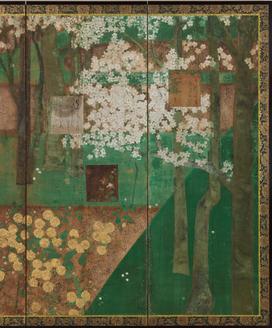
Cherry Trees and Kerria Roses
<p>Tawaraya Sotatsu, active in the early 17th century in Kyoto, is known for the outstanding sense of design seen in this work.</p><br /><p>This is a folding screen painting of mountains with white cherry trees and yellow kerria roses in full bloom. Several sheets of colored shikishi card are adhered to the screens, with each containing a Japanese waka poem. Various seasonal flowers are drawn on the cards using gold and silver paint. Written on them are poems by Hon'ami Koetsu, one of the three master calligraphers of the Kanei era. The mountain on the left-hand screen seems closer than the one of the right, but the cherry trees and kerria roses are all the same size, whether close or far away. This imbues the work with a fantastical air. The mountains are also painted flatly in a single uniform color, while the tree trunks sprout abruptly from the surface, as if sawed off half way and just placed there. This symbolic depiction of mountains and trees is topped off by the scattered arrangement of the poem cards, which seem to float in mid-air. All in all, this is a work bursting with a unique design aesthetic.</p>
Poppies
<p>In the lower left corner of this screen is the seal Inen, which was the trademark of the Tawaraya school established by Tawaraya Sôtatsu (n.d.). The seal was also used by other artists besides Sôtatsu himself. This work, on an eight-panel folding screen, is decorated with gold foil and depicts poppies, which bloom in summer. The gold foil covering the background probably represents the brilliant sunlight of a summer day.</p>
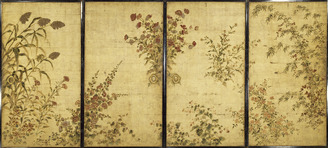
Flowers and Grasses
Bamboos, ivies, roses, thistles, pegonias, poppies, hollyhocks, cockscombs, and millets are painted in the Sotatsu-style (direct touches of subdued colors against gold background). Even though bearing the seal of Inen in the lower right corner, the work, which emphasizes a realistic representation of nature and different color-tones, should be attributed to the Sotatsu school of artwork. There are several varieties of this type of sliding door panel painting with a unique composition, such as the open fan-shaped circle arrangement in this case.
Chrysanthemums and Flowing Water
<p>This work depicts one corner of a garden with chrysanthemums decorated with whitewash in places, and water flowing through small rocks. It also likens square widows to fences covered with blinds. Incredibly decorative in style, the work bears the signature of S&ocirc;setsu and the seal of Inen.</p>




Mid-Edo period (the era of Ogata Kōrin and Ogata Kenzan)

Late Edo Period (the era of Sakai Hōitsu and Suzuki Kiitsu)
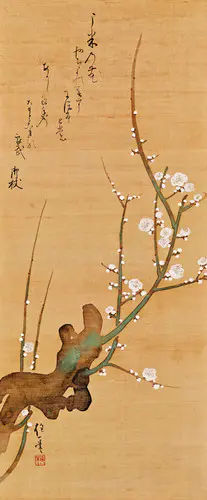
White Plum Tree
花弁の描写を略し、花の輪郭だけを捉えた世に言う「光琳梅」と呼ばれる意匠化された梅の花と、たらし込みの技法を駆使した幹の表現は、琳派を継承した抱一の確かな技量を感じさせる。上部には「梅の花 八千代の春に 匂うとも 赤く色香の なとこもるらん」との歌が添えられている。この歌の作者は京都出身の国学者であり歌人の富士谷御杖で、おそらく抱一と何らかの交友をもっていたと考えられる。
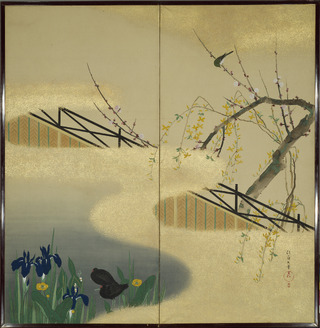
Flowers and Birds of the Four Seasons
<p>Scenes of spring and summer are depicted in the right screen of these two-panel folding screens, and scenes of autumn and winter are depicted in the left. The shift of scenes is expressed by the use of mist. Typical of works by Sakai Hôitsu (1761-1828), who was the head of the Rin school in Edo (present-day Tokyo), the use of color is very vivid. Never overbearing, this painting is completed in a simple, yet elegant manner.</p>
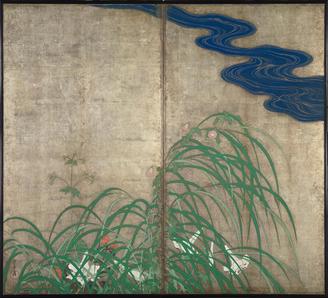
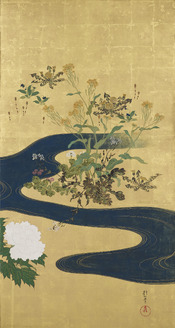
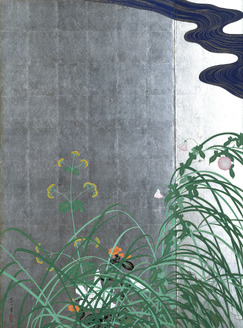
Flowering Plants of the Four Seasons and a Stream
<p>A vividly blue stream flows across one of the screens here, accompanied by flowers of the four seasons. Brightly colored without the use of any outline, they are depicted in chronological order from right to left.</p>
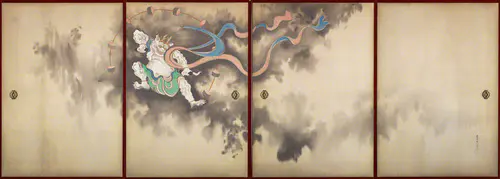
Sliding Door with Design of Wind God and Thunder God
俵屋宗達、尾形光琳、酒井抱一という琳派の巨匠たちによって手がけられてきた重要画題である「風神雷神図」を抱一の高弟其一が再構成した作品。3人の巨匠が二曲の金地屏風に二神を収めたのに対し、其一は絹本の襖四面に各々を描いた。この襖絵は元々4面が表裏にくるよう仕立てられていたという。白と緑の軽やかな色彩を得た風神・雷神は、墨の滲みを使った柔らかな雲を従えて、与えられた広々とした空間を我が物顔で支配している。其一は、師である酒井抱一とともに、大らかで典雅な気風の京琳派に対して、瀟洒で機知的な近代性を併せもった「江戸琳派」を確立させた。本作では風神・雷神の二神の胴体・腕・足の凹凸を表す描線や目玉の周囲にわずかな陰影を施し、立体性をより強調しているのが見て取れ、他の3巨匠にはないリアリティへの追求が窺える。落款には「為三堂」「噲々」の印、「祝琳斎其一」の署名がなされており、抱一の死後、其一独自の作風を確立しゆく30代半ばから40代後半の充溢した時代の作と考えられる。
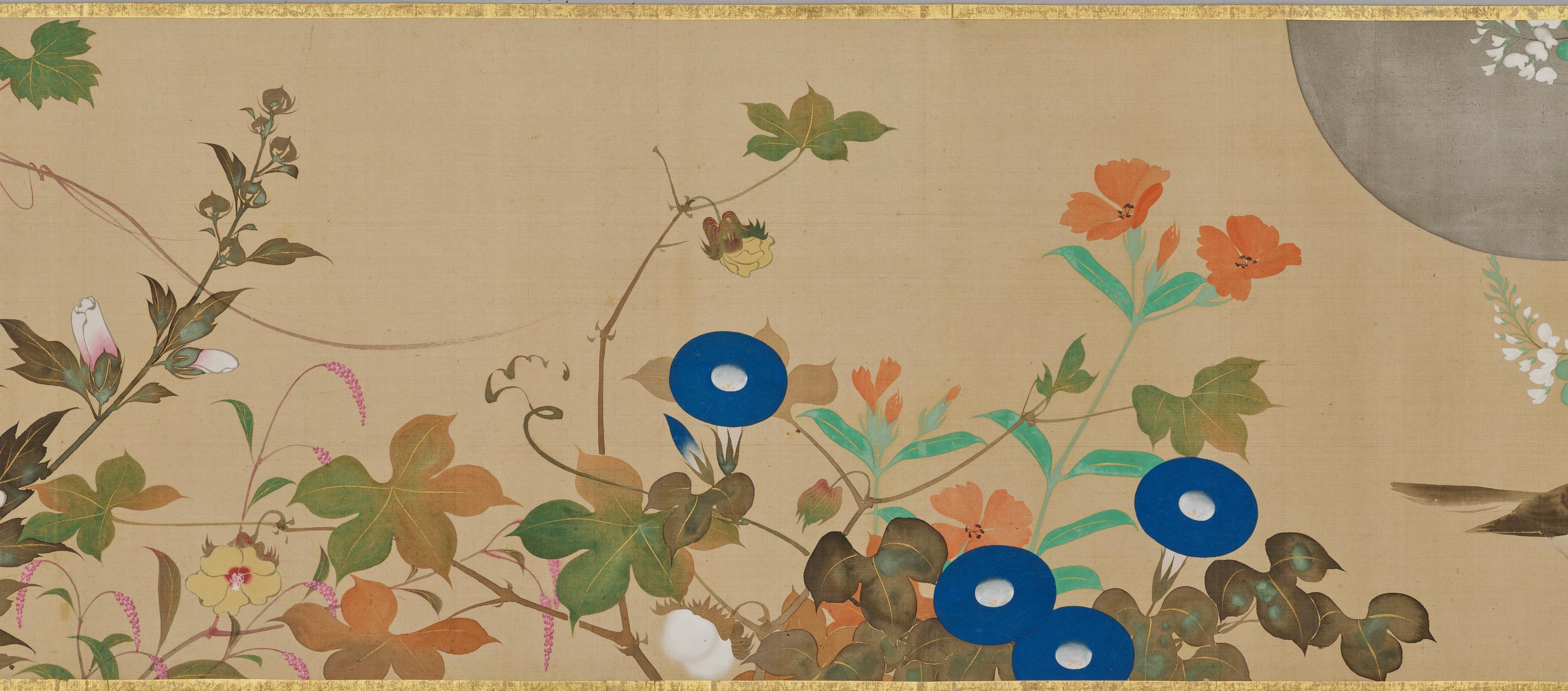
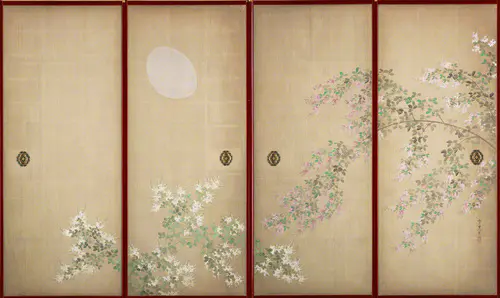
Sliding Door with Design of Moon with Bush Clovers
萩と月は秋を表す好画題といえよう。左右から伸びた紅白の萩は緩やかな動きをもって、対角線上に配置されている。花房と葉の表現には、輪郭線を引かず色の階調を作る付け立ての技法がとられ、葉の葉脈には金泥が施されている。月下の葉色に変化をつけ、絹地の背景に銀泥を引くことで月光を演出するなど、こうした其一の細部へのこだわりが画面に程よい緊張感をもたらすとともに、江戸琳派特有の美麗で瀟洒な品格を醸し出している。
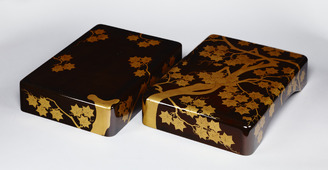
Book Box with a Maple Tree
<p>This box was used to store books, paper and writing implements. The design is drawn on the box using lacquer, with fine gold powder then sprinkled on top. The powder sticks to the lacquer to create the golden pattern. The Japanese word for sprinkle is maku, while the word for picture is e, hence the name for this technique: maki-e. A maple tree is drawn on the surface of the box. The foliage flows across both sides of the cover, inside the box itself and right down to the base. This three-dimensional pattern, ranging across the whole surface, is a characteristic feature of this work. This kind of design composition imitates the decorative style of the Rinpa school of painting. Hara Yoyusai, the creator of this object, hung around with popular writers and other cultural figures of his day. He ran a large workshop that produced inro medicine cases, netsuke toggles, tea ceremony utensils and a great many other objects. Yoyusai's works were highly-prized as luxury goods at the time, just like famous brands are today.</p><br /><p>Hara Yōyūsai (1769–1845) was a popular lacquer artist whose works achieved brand-name status. He designed this box for storing books, paper, writing brushes, and other personal items. He decorated the surface with maple trees in gold lacquer, bending the branches around the edges for a seamless design.</p>
牡丹蝶図
酒井鴬浦(1808-1841)は、江戸時代後期の画家。築地本願寺の末寺、市ケ谷浄栄寺に生まれる。11歳(一説には12歳)で酒井抱一の養子となり、書画などを学ぶ。抱一の没後、雨華庵を継いで酒井姓を名乗る。俳諧にも優れた。
Flowering Plants of Summer
<p>The artist Sakai Dōitsu studied the Rinpa school of painting. This work is a reproduction of a famous painting, [Flowering Plants of Summer and Autumn], by the Rinpa master Sakai Hōitsu (1761–1828). It decorated the interior of a Japanese pavilion at the Chicago World's Fair in 1893.</p>
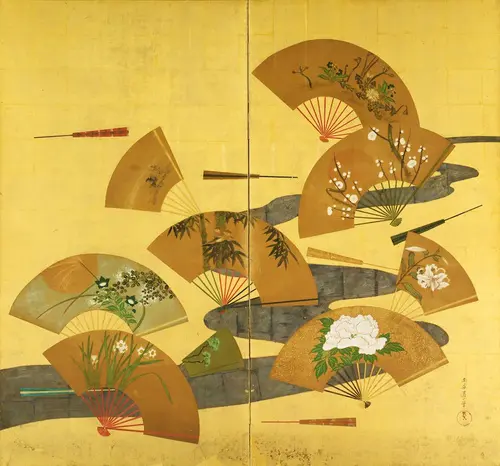
Four Seasons, Stream and Scattered Fans
背景に水の流れを敷き扇面をバランスよく配置した精錬な雰囲気は、琳派に脈打つ粋の精神を感じさせる。扇面図は江戸の庶民の間で文化が熟すにつれ、その需要が増したという。本図に見られるような扇面図屏風もそうした進歩発展の中で大いにもてはやされた。俵屋は扇の製作でも有名であったと見られ、以来、宗達をはじめ酒井抱一を中心とした江戸琳派の中でも一種の伝統的な図案として定着した。扇面の図案としてはタンポポ、梅、竹、百合、牡丹、松、桔梗、水仙といった四季を代表する植物に加え、富士を背景とした山水図が1点見られる。
Tea Bowl with a Mantis and the Moon
<p>This bowl for [matcha] green tea was crafted by one of Kyoto’s leading potters, Eiraku Hozen (1795–1854). He painted the surface with a praying mantis framed by a full moon, an image evoking the fall season.<br /></p>


Past Exhibitions
| Title | shusai | Place | open | close |
|---|---|---|---|---|
Institutions Holding Related Materials
尾形光琳作「八橋蒔絵螺鈿硯箱」(国宝)を始めとする「琳派」の名品を複数所蔵している。「琳派」という名称が定着したのは、昭和47年(1972)に東京国立博物館で開催された創立百年記念特別展「琳派」が決め手であったと言われる。
俵屋宗達画「蓮池水禽図」(国宝)を始めとする「琳派」の名品や、「光琳帰字関係書付」(重要文化財)等の関係資料を複数収蔵している。
The Tokyo Fuji Art Museum is founded on November 3, 1983, in Hachioji, a thriving university town in the western suburbs of the Japanese capital. Priding itself as “a museum creating bridges around the world” to facilitate the exchange of different cultures, our museum has forged cordial relations with art museums and cultural institutes in 32 countries and territories to date. We do so by bringing the world’s finest works of art to Japan while reciprocating in kind by introducing the finest Japanese treasures to the world through special exhibitions that showcase their beauty and wonder through a unique new set of prisms and perspectives. Our museum possesses some 30,000 pieces of artworks from various periods and cultures including Japanese, Eastern and Western works, ranging from paintings, prints, photography, sculptures, ceramics and lacquer ware to armor, swords and medallions. Especially noteworthy is its outstanding collection of Western oil paintings that spans a five-hundred-year period from the Renaissance, Baroque, Rococo, and Romanticism to Impressionism and contemporary art, as well as its exceptional collection of photographic masterpieces that can give an overview of the history of photography from the birth of the photograph to the present age.
東武鉄道の社長などを務めた実業家・初代根津嘉一郎が蒐集した、日本・東洋の古美術品コレクションを保存・展示する美術館。尾形光琳の代表作の一つ「燕子花図」(国宝)を所蔵。
山種証券創業者・山崎種二が蒐集したコレクションをもとに、日本初の日本画専門美術館として開館。俵屋宗達、酒井抱一、鈴木其一など琳派の作品を多く所蔵する。
実業家・細見古香庵に始まる細見家三代の蒐集品を基礎とした美術館。約1,000点に及ぶ日本美術コレクションを所蔵し、多彩な企画展を展開する。俵屋宗達、尾形光琳、酒井抱一、鈴木其一など琳派の作品が充実しており、度々琳派展を開催。
豊臣秀吉の側室淀君が父浅井長政追善のため建立した寺院。本堂で俵屋宗達が描いた杉戸絵と襖絵(ともに重要文化財)を一般公開されている。
建仁2年に開創した、臨済宗建仁寺派の大本山。俵屋宗達筆「風神雷神図屏風」(国宝)を所蔵。現在、原作は京都国立博物館に寄託されているが、 高精細複製作品を展示。
国立国会図書館の所蔵資料を掲載しながら、琳派の流れを解説。
References
- 仲町啓子 著,東京美術
- 仲町啓子 監修,東京美術
- 濱田信義 企画・編集,ピエ・ブックス