Jump to main content
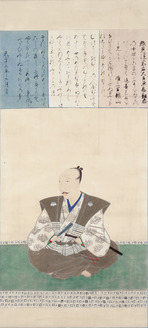
现川幜斎像暡本 /

Yusai Hosokawa

Military commander and man of letters from the last days of the Sengoku period to the first days of the early modern period. Built the foundation of the daimyo family called the Hosokawa clan and also was of his era’s foremost men of culture.

1534–1610

Military commander and man of letters from the last days of the Sengoku period to the first days of the early modern period. Fujitaka was his given name, Mankichi his childhood name, and Yoichiro his popular name. After taking the tonsure, he was given the name Yusai Genshi. The second son of Harukazu Mitsubuchi (1500–1570), a servant of the Muromachi shogunate. His mother was the daughter of Nobukata Kiyohara. According to one theory, he was the son of Yoshiharu Ashikaga, 12th shogun of the Muromachi shogunate. He was adopted by Mototsune Hosokawa in 1539 and had his coming-of-age ceremony in 1546. Receiving one part of the 13th shogun Yoshifuji (Yoshiteru) Ashikaga’s name — “fuji” from Yoshifuji — he was given the name Fujitaka, and following the death of his adopted father Mototsune, he inherited the headship of the Hosokawa family. Upon the assassination of shogun Yoshiteru in 1565, he gave his backing to Yoshiteru’s younger brother Kakukei Ichijoin (1537–1597), who had been cloistered in Kofuku-ji Temple and took the name Yoshiaki Ashikaga upon his return to secular life. In September 1568, Yoshiaki made his entry to Kyoto, aided by Nobunaga Oda, to become the 15th shogun. After Yoshiaki was driven from Kyoto in 1573, Fujitaka became a retainer of Nobunaga’s and was bestowed the territory of Nagaoka in Yamashiro Province, leading him to take the surname of Nagaoka for a time. Declining the invitation to join Akechi Mitsuhide on the occasion of the Incident at Honno-ji, he took the tonsure to join the Buddhist priesthood and was given the name Yusai Genshi. His position as family head he yielded to his son and legitimate heir Tadaoki (Sansai).

Later, he took part in battles including the siege of Odawara and the Bunroku campaign under the leadership of Hideyoshi Toyotomi and was besieged in Tanabe Castle in the Battle of Sekigahara as part of the Eastern army. With such experience serving under Nobunaga Oda, Hideyoshi Toyotomi, and Ieyasu Tokugawa, he built the foundation of the Higo-Hosokawa clan and spent the later years of his life in Kyoto, where he passed away at his home in the Sanjo district in 1610. He was given the posthumous Buddhist name Tesso Genji Taishoin and is interred at the Tenju-an subtemple at Nanzen-ji Temple (Sakyo Ward, Kyoto).

One of the era’s foremost men of culture, having studied the tea ceremony under Sen no Rikyu and the art of waka poetry under Saneki Sanjonishi, he was very well versed in a broad range of scholarly and artistic practices, including waka and renga poetry, the tea ceremony (sado), Confucianism, calligraphy (shodo), and ancient customs. Directing his energy into transcribing and collating the classics as well, he played a considerable role in handing down traditional culture and introducing it to people. Also possessed of superior skills in martial arts, he studied swordsmanship under Bokuden Tsukahara.

Particularly in the world of waka, he played a central part in literary circles from the Sengoku period (1467–1590) to the beginning of the early modern period (16th to 17th century). Joining initiates Tsuneyori To, Sogi, and Sanetaka Sanjonishi, he received the Kokin denju (secret transmissions on the Kokinshu [“Collection of Japanese Poems of Ancient and Modern Times”]) from Saneki Sanjonishi and went on to initiate others himself, including Prince Toshihito Hachijo, Michikatsu Nakanoin, Sane’eda Sanjonishi, Mitsuhiro Karasumaru, and Teitoku Matsunaga. The transmission to the Prince was succeeded by initiations of Emperor Go-Mizuno’o, Emperor Reigen, and other high-ranking members of the nobility, a form of transmission called Gosho denju (palace transmission). From Teitoku Matsunaga, the practice of jige denju (commoner transmissions) was extended to warriors and townspeople as well. In a well-known anecdote, when Yusai found himself in a desperate situation besieged in Tanabe Castle during the Battle of Sekigahara, Emperor Go-Yozei so feared that the secrets of the Kokinshu might reach their end that he issued a decree for surrender of the castle and reconciliation.

A treatise on waka poetry, Niteiki (“Accounts Deep in the Ears”), was transcribed by Mitsuhiro Karasumaru from Yusai’s oral remarks. Other works by Yusai include a personal anthology, Shumyoshu, commentaries on classic works, Eiga Taigaisho (“Notes on Teachings Regarding the Eiga Taigai [‘Fundamentals of Poetic Composition’]”) and Ise Monogatari Ketsugisho (“Doubting Commentary on Ise Monogatari [‘Tales of Ise’]”), and travel accounts Kyushu Michi no Ki (“Journal of the Kyushu Road”), Togoku-jin Michi no Ki (“Journal of the Road to Battle in the Eastern Country”). His son and legitimate heir Tadaoki (Sansai) was also a leading disciple of Sen no Rikyu, was counted as one of the Rikyu shichitetsu (seven leading disciples of Rikyu), and was married to Gracia Hosokawa.

Related People, Things and Events

Books

This is an original manuscript by the court noble KARASUMARU Mitsuhiro (1579–1638), who recorded the teachings in poetry of his instructor HOSOKAWA YÅ«sai (1534–1610), a high-ranking general and poet who introduced medieval poetry to a wide audience in the Edo period (1603–1868), over 70 times from the eighth month of the third year of Keichō (1598) until the twelfth month of the seventh year of the same era (1602) at Tanabe Castle. The title of the manuscript, Deep in the Ear, appears at the center of the simple brown cover of the manuscript, and on the back there is “ichi ni ki” in the same handwriting. Mitsuhiro’s seal appears on the reverse side of the cover page, and the title inside the book reads: “Yusai’s lectures recorded by Mitsuhiro.” Only the cover is inscribed with hiragana script, while the back and subsequent pages are written in katakana, which could be written more quickly than hiragana. The ink color has changed and there is noticeable loss of ink and a lot of blank paper at the end, all clear indications of an original. Although Deep in the Ear is a collection of miscellaneous waka poetics arranged in an unsystematic way, it is a valuable source about YÅ«sai's ideas and the orthodox thought on poetry of the Sanjō-Nishike family, with whom he studied. The calligraphy of the box of this manuscript, which reads “Deep in the Ear, in the handwriting of Lord Mitsuhiro,” is thought have been inscribed by ASUKAI Masaaki (1611–79), and is consistent with the colophon by KARASUMARU Mitsumoto in the Asukai family’s own handwritten manuscript from the fifth year of the An’ei era (1776) in the Tenri Library Collection.  Deep in the Ear was highly valued due to the eminent reputations of HOSOKAWA YÅ«sai (1534–1610) and his disciple KARASUMARU Mitsuhiro (1579–1638), and many manuscripts of the text are still extant. There are also printed editions from the first year of the Kanbun era (1661), the second year of the Genroku era (1689), the fifteenth year of the same era (1702), and several unpublished printed editions. This edition is noteworthy as a rare example of a printed book on poetry related to court nobles from the early Edo period (1603–1868). It is one of many printed editions of the book that has been handed down from generation to generation, and was published with the text “Hayashi Izumi no jō edition” at the end. The preface states that common words were left unchanged, katakana was changed to hiragana for the sake of children, and quotations from poems were transcribed as complete poems instead. Also, the signature and seal found on the back of the first page of the book can be traced back to the original. At the time of publication, this edition was divided into three volumes, and the titles “volume one, two and three of Deep in the Ear,” can be found at the beginning of the books. The biggest difference between this printed edition and the original manuscript is the addition of a list of prohibited words in composing poetry, which is said to have been transcribed from an appendix by Mitsuhiro. The printed editions are displayed here as one set, so they can be compared with Mitsuhiro’s manuscript. Description from the exhibition Catalogue "Letter-scape: Century Akao Collection, A World of Letters and Figures", Keio Museum Commons, April 2021

现川幜斎の家集。寛文111671飛鳥井雅章16111679線。䞀冊。雅章の跋によれば、幜斎の曟孫で肥埌囜宇土藩䞻现川行孝16371692がはじめ烏䞞資慶16221669に䟝頌し、資慶の没埌に雅章が匕き継いだものずいう。曞名は埌氎尟院の呜名。掲出本は内閣文庫所蔵の江戞期の写本。

癟人䞀銖の泚釈曞。现川幜斎の線。宗祇による泚釈『宗祇抄』をもずに、二条掟の䌝統的な泚釈を集倧成したもの。倖題では『癟人䞀銖抄』ずあるのみだが、埌に広く流垃し、䜕床か刊行もされた「幜斎抄」の䞀本。「于時慶長元幎臘倩晊日 察雪倜之寒灯、敲窓䞋之凍硯蚘之 玄旚花抌」ず蚘された现川幜斎の本奥曞がある。

现川幜斎による『詠歌倧抂』の泚釈曞。倩正14幎1586成立。䞉条西実枝さんじょうにしさねきの講矩の聞き曞きで、近䞖期の『詠歌倧抂』泚釈史に倧きな圱響を䞎えた。『詠歌倧抂』は藀原定家による歌論曞。和歌の初心者に察しお、和歌の本質、方法などに関する考えを簡朔に蚘した挢文䜓の郚分ず、103銖の秀歌撰「秀歌之䜓倧略」ずからなる。掲茉曞は、九州倧孊附属図曞通の现川文庫の䞀冊。同文庫は、现川幜斎の曜孫・现川行孝1637−1690を初代藩䞻ずする字土藩现川家の蔵曞で、本曞は烏䞞光雄からすたみ぀お 1647−1690から父烏䞞資慶からすたすけよし 16221669の遺品ずしお行孝に莈られたもの。死に瀕した資慶が行孝宛に曞いた曞状も添えお送付され、同文庫に残されおいる。烏䞞資慶は幜斎の嗣子忠興の嚘を母ずしおおり、行孝ずは埓兄にあたる。同封の曞き付けによれば、本曞䞊巻の筆写は也足䞭院道勝、䞋巻の筆写を玄旚幜斎ずする。

『詠歌倧抂聞曞』䞋の现川幜斎筆による文犄4幎1595の跋。盎前に「倩正十四幎暊八月䞋」の跋があり、それによれば、暩倧玍蚀久我敊通 こがあ぀みちの再䞉の芁望に背きがたく、 䞉光院内倧臣 (䞉条西実枝 さんじょうにしさねき) の講釈をもずにこの『聞曞』を線んだこずを蚘しおいる。 掲出の文犄4幎の跋では、この『聞曞』が埌陜成倩皇の知るずころずなっお䞉条西実条さんじょうにしさねえだを通じお倩皇に進献され、䞊巻は实筆で曞写され、䞋巻も八条宮智仁芪王、興意法芪王によっお曞写されたずある。どちらの跋も幜斎自筆。

『詠歌倧抂聞曞』ず䞀緒に现川䞹埌守行孝に送付された烏䞞光雄の曞簡。故倧玍蚀認残候䞀封幷詠哥倧抂抄二冊二䜍入道玄旚公筆䟝遺呜入芋参候」ずある。幜斎自筆の「詠哥倧抂抄聞曞」2冊を「故倧玍蚀資慶」の遺蚀に埓っお送付する旚を䌝える内容で、資慶は寛文8幎167011月28日死去。「故倧玍蚀認残候䞀封」は、死の床で行李に我が子光雄の埌事を蚗す資慶の曞状。これも宇土现川家に䌝来しおいる。本状の日付は二月十五日。烏䞞光雄は「烏䞞宰盞」ず眲名するが、光雄が右倧匁から参議宰盞ずなったのが寛文9幎11月26日なので、本状は烏䞞資慶死去から間もない、翌寛文10幎2月15日に執筆されたこずがわかる。

现川幜斎の『䌊勢物語』泚釈曞。幜斎が八条宮智仁芪王に講釈をするために䜜った草皿をもずに再線集したもの。叀掻字本ずしお出版もされた。本曞は叀掻字版の䞭でも最も叀い十行本、党冊。「埡幞町通二条 仁右衛門 掻板之」ず版元の蚘茉がある。日本叀兞籍の蒐集家で知られたフランク・ホヌレヌの旧蔵曞。「寶玲文庫」の印がある。

倩正19幎5月27日に興行された「賊䜕色連歌」の写し。玄仍の発句「倕立は空より庭にい぀み哉」に察しお幜斎玄旚法印が「茂る朚の間の束颚のこゑ」の脇を付けおいる。

Related Works

楮玙の折玙に曞かれおおり、裁断埌に䞊䞋を反転させお軞装に仕立おられおいる。本玙の右䞊は補玙ずなっおいる。二玙の題簜のうち、䞀玙に「仮名消息ゆうさい名アリ己巳十䞀『神田道䌎』印」ずあり、叀筆鑑定家の神田道䌎の目にかかったもの。欠損が激しく、䞀郚刀読しにくい。

Hosokawa Yusai (1534-1610) was a daimyo (warlord; landed general) and tea aficionado of the Momoyama Period. Born to Mibuchi Harukazu, he was originally named Fujitaka. Yusai and Genshi were his pen names. Yusai was later adopted by Hosokawa Mototsune and served Ashikaga Yoshiharu. When Yoshiaki’s brother, Ashikaga Yoshihide, passed away, Yusai planned to institute Yoshiaki to be the next shogun. He later sided with General Oda Nobunaga and was given a fief in Nagaoka and Tango provinces (both are currently located in Kyoto). But when the coup d’etat broke out at Honnoji Temple (Nobunaga was murdered by his vassal Akechi Mitsuhide), Yusai and his son Tadaoki shaved off their hair, a gesture of innocence and neutrality. Thereafter, he followed Toyotomi Hideyoshi, and then was given an important post by Tokugawa Ieyasu, the founder of the Tokugawa military government. Yusai was a learned scholar both in Japanese classics and Chinese prose and had a prominent position in waka and renga poetry, as well as the art of tea. He was one of the most highly trained intellectual minds of the era. In this letter, he mentions that the tea presented him by the tea dealer Kambayashi of Uji was excellent. It is addressed to Kambayashi Nyudo, most likely Kambayashi Hisamochi (1542-1606), who supervised all the tea dealers of Uji in those days. (Tea contests were favorite pursuits among connoisseurs. Participants tried to identify the growing area – whether it was from Toganowo or not – of a particular tea or name the tea manufacturer from the taste, aroma and color.) The strokes flow with naturalness, showing what an achieved calligrapher Yusai was.

束阪垂内の旧家の䌊勢神宮関係文曞のうちの䞀通。䌊勢神宮の埡垫、吉沢䞻氎宛。極月17日付。吉沢䞻氎は䌊勢神宮の埡垫おし、神官。幎末に際しお倧麻おおぬさ、埡幣ず長鮑を莈られたこずに察する瀌状。

Karasumaru Mitsuhiro (1579-1638) was a court noble and a poet, who, from boyhood, was hailed as a talented calligrapher. Not only that, but at the young age of 11, he was appointed Junior Officer of the Right and later climbed to the post of Major Counselor. At first, he was trained in the Jimyo-In School of calligraphy, but was later influenced by the Koetsu Style, while also being attracted to Jodai-yo (the classical style). As an achieved calligrapher, he was likened to the renowned ‘Three Brushes of the Kanei Era’.This letter is addressed to Hosokawa Yusai (1534-1610), with whom Mitsuhiro seems to have been exchanging correspondence concerning the Hundred Poetry Party and Nijo Castle Poetry Party. Mitsuhiro was Yusai’s student in the art of poetry composition. As Yusai died in 1610 at age 77, this letter was undoubtedly written before that year, and since Mitsuhiro was 32 years old when Yusai died, this letter was probably written when the talented young man was only in his late 20s or early 30s.

Hosokawa Yusai (1534-1610) was a daimyo (warlord; landed general) and tea aficionado of the Momoyama Period. Born to Mibuchi Harukazu, he was originally named Fujitaka. Yusai and Genshi were his pen names. Yusai was later adopted by Hosokawa Mototsune and served Ashikaga Yoshiharu. When Yoshiaki’s brother, Ashikaga Yoshihide, passed away, Yusai planned to institute Yoshiaki to be the next shogun. He later sided with General Oda Nobunaga and was given a fief in Nagaoka and Tango provinces (both are currently located in Kyoto). But when the coup d’etat broke out at Honnoji Temple (Nobunaga was murdered by his vassal Akechi Mitsuhide), Yusai and his son Tadaoki shaved off their hair, a gesture of innocence and neutrality. Thereafter, he followed Toyotomi Hideyoshi, and then was given an important post by Tokugawa Ieyasu, the founder of the Tokugawa military government.

Hosokawa Yusai (1534-1610) was a daimyo (warlord; landed general) and tea aficionado of the Momoyama Period. Born to Mibuchi Harukazu, he was originally named Fujitaka. Yusai and Genshi were his pen names. Yusai was later adopted by Hosokawa Mototsune and served Ashikaga Yoshiharu. When Yoshiaki’s brother, Ashikaga Yoshihide, passed away, Yusai planned to institute Yoshiaki to be the next shogun. He later sided with General Oda Nobunaga and was given a fief in Nagaoka and Tango provinces (both are currently located in Kyoto). But when the coup d’etat broke out at Honnoji Temple (Nobunaga was murdered by his vassal Akechi Mitsuhide), Yusai and his son Tadaoki shaved off their hair, a gesture of innocence and neutrality. Thereafter, he followed Toyotomi Hideyoshi, and then was given an important post by Tokugawa Ieyasu, the founder of the Tokugawa military government.

Hosokawa Yusai (1534-1610) was a daimyo (warlord; landed general) and tea aficionado of the Momoyama Period. Born to Mibuchi Harukazu, he was originally named Fujitaka. Yusai and Genshi were his pen names. Yusai was later adopted by Hosokawa Mototsune and served Ashikaga Yoshiharu. When Yoshiaki’s brother, Ashikaga Yoshihide, passed away, Yusai planned to institute Yoshiaki to be the next shogun. He later sided with General Oda Nobunaga and was given a fief in Nagaoka and Tango provinces (both are currently located in Kyoto). But when the coup d’etat broke out at Honnoji Temple (Nobunaga was murdered by his vassal Akechi Mitsuhide), Yusai and his son Tadaoki shaved off their hair, a gesture of innocence and neutrality. Thereafter, he followed Toyotomi Hideyoshi, and then was given an important post by Tokugawa Ieyasu, the founder of the Tokugawa military government.

Hosokawa Yusai (1534-1610) was a military general of the Momoyama Period. He was born the second son of Lord Mitsubuchi Harukazu of Yamato Province. (Though, one theory puts him as the son of the 12th Shogun, Ashikaga Yoshiharu.) Yusai’s real name was Yoichiro, which was later changed to Fujitaka, and after becoming a monk, he adopted the religious names Yusai and Genshi. As the lord of Tanabe Castle in Tango Province (in northern Kyoto), his alliance was sought by the powerful military rulers of the era, including the Ashikagas, Oda Nobunaga, Toyotomi Hideyoshi, Tokugawa Ieyasu, and the like. Thoroughly familiar with ancient manners and decorum, Chinese and Japanese classical studies, and trained directly by Sanjonishi Saneki through oral instruction on the Kokin Wakashu (Collection of Ancient and Modern Poems), the powerful Yusai played a central role in literary circles of his time, having many noted disciples of his own, including Karasumaru Mitsuhiro. He also practiced tea ceremony under the private guidance of Takeno Jo-oh and was said to have been attracted to this refined art. Among the many books he authored are his private poetry collection, the Shumyo-Shu, and the treatise Hyakunin-Isshu Sho (lit. “Comments on One Hundred Poems”). On exhibited Tanzaku, the poem is written on brilliantly decorated paper with large silver foils, small gold foils, and gold dust.

Hosokawa Yusai (1534-1610) was a military general of the Momoyama Period. He was born the second son of Lord Mitsubuchi Harukazu of Yamato Province. (Though, one theory puts him as the son of the 12th Shogun, Ashikaga Yoshiharu.) Yusai’s real name was Yoichiro, which was later changed to Fujitaka, and after becoming a monk, he adopted the religious names Yusai and Genshi. As the lord of Tanabe Castle in Tango Province (in northern Kyoto), his alliance was sought by the powerful military rulers of the era, including the Ashikagas, Oda Nobunaga, Toyotomi Hideyoshi, Tokugawa Ieyasu, and the like. Thoroughly familiar with ancient manners and decorum, Chinese and Japanese classical studies, and trained directly by Sanjonishi Saneki through oral instruction on the Kokin Wakashu (Collection of Ancient and Modern Poems), the powerful Yusai played a central role in literary circles of his time, having many noted disciples of his own, including Karasumaru Mitsuhiro. He also practiced tea ceremony under the private guidance of Takeno Jo-oh and was said to have been attracted to this refined art. Among the many books he authored are his private poetry collection, the Shumyo-Shu, and the treatise Hyakunin-Isshu Sho (lit. “Comments on One Hundred Poems”). The poem“Prayers to the Gods” are signed “Genshi” and, as such, was written after 1582 when Yusai became a monk at age 49. This poems is included in the Shumyo-Shu. It also has a literary pretext (kotoba-gaki) which says, “On the occasion of the Lord Regent’s visit.” The Lord Regent presumably refers to Toyotomi Hideyoshi, signifying that this poem perhaps was written after 1585, when he was given an admistrative post on July 11th. Yusai’s brushwork is classified under the Eiga School and is an orthodox representation of its features.

「うくひすの梅の花かさけさきおも雪のふゝきにぬれお鳎也 玄旚」。现川幜斎が「雪䞭聞鎬(せっちゅううぐいすをきく」ずいう題で詠んだ和歌䞀銖を蚘した短冊。歌の末尟に幜斎の法名「玄旚」の蚘茉がある。

Hosokawa Yusai (1534-1610) was a military general of the Momoyama Period. He was born the second son of Lord Mitsubuchi Harukazu of Yamato Province. (Though, one theory puts him as the son of the 12th Shogun, Ashikaga Yoshiharu.) Yusai’s real name was Yoichiro, which was later changed to Fujitaka, and after becoming a monk, he adopted the religious names Yusai and Genshi. As the lord of Tanabe Castle in Tango Province (in northern Kyoto), his alliance was sought by the powerful military rulers of the era, including the Ashikagas, Oda Nobunaga, Toyotomi Hideyoshi, Tokugawa Ieyasu, and the like. Thoroughly familiar with ancient manners and decorum, Chinese and Japanese classical studies, and trained directly by Sanjonishi Saneki through oral instruction on the Kokin Wakashu (Collection of Ancient and Modern Poems), the powerful Yusai played a central role in literary circles of his time, having many noted disciples of his own, including Karasumaru Mitsuhiro. He also practiced tea ceremony under the private guidance of Takeno Jo-oh and was said to have been attracted to this refined art. Among the many books he authored are his private poetry collection, the Shumyo-Shu, and the treatise Hyakunin-Isshu Sho (lit. “Comments on One Hundred Poems”). This poem “Drizzle in a Distant Village” is signed “Genshi” and, as such, was written after 1582 when Yusai became a monk at age 49. This poem is included in the Shumyo-Shu.

「河島 塩みおはおき沖぀すずり巣鳥の぀はさ翅をも又かはしたのかた期に鳎なり 玄旚」。

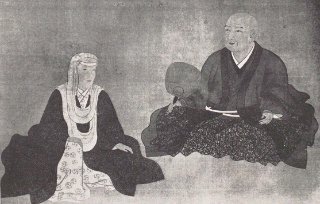
Portrait of Hosokawa Yusai, etc.

现川幜斎倫劻像『囜史倧図鑑』第3巻所収

幜斎倫劻の老埌の肖像。倧埳寺塔頭の高桐院所蔵。

Portrait of Hosokawa Tadaoki

现川幜斎の長子、现川忠興ほそかわただおき、1563-1645の肖像画。織田信長に重甚され、信長の子信忠の字を䞎えられ忠興ず名乗り、明智光秀のむすめ玉のちのガラシャず結婚。本胜寺の倉では光秀に䞎せず、以埌は豊臣秀吉に埓った。秀吉亡き埌は、埳川家康に仕え、関ヶ原の軍功によっお豊前囜が䞎えられた。のちに出家剃髪しお䞉斎宗立。圓時屈指の文化人ずしお聞こえ、鷹狩・胜・和歌・連歌を奜み、茶の湯を千利䌑に孊び、利䌑䞃哲のひずりに数えらる。

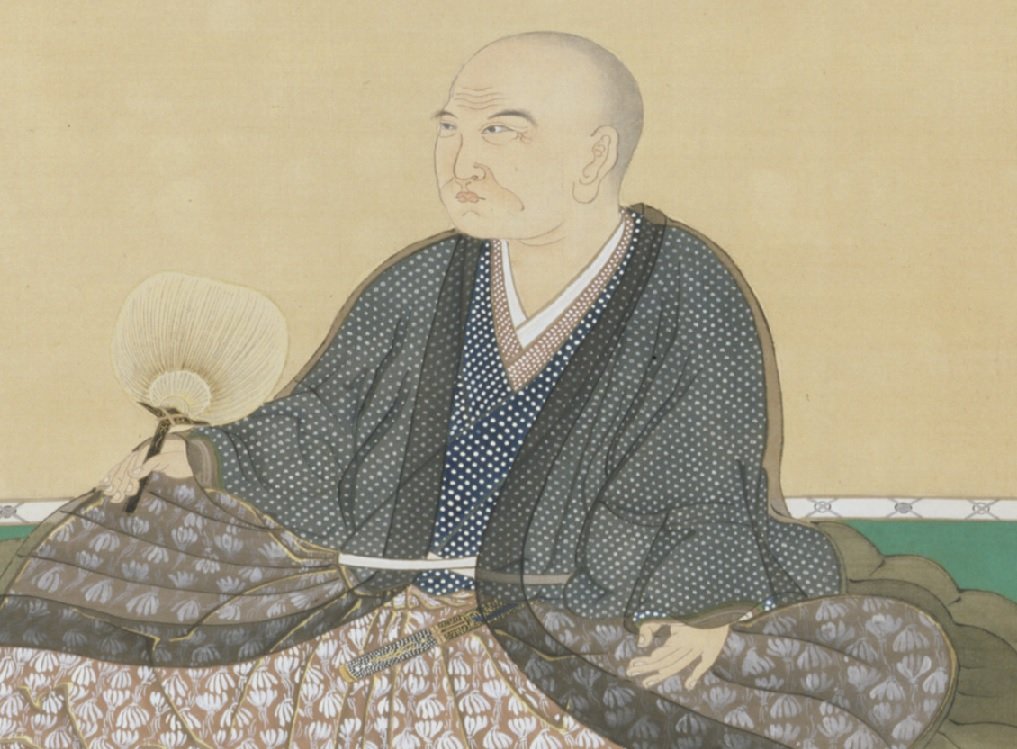
萜合芳幟 音川兵郚倧茔藀孝「倪平蚘英勇䌝」所収

萜合芳幟おちあいよしいく、1833−1904のシリヌズ歊者絵「倪平蚘英雄䌝」に描かれた现川幜斎。「音川兵郚倧茔藀孝」ずしお描かれおいる。「倪平蚘英雄䌝」は、『絵本倪門蚘』に取材した揃い物で、戯䜜者・山々亭有人条野採菊による略䌝が蚘されおいる。  

Past Exhibitions

TitleshusaiPlaceopenclose

Institutions and External Links

  • 氞青文庫の名宝 External Site

    氞青文庫の所蔵する、囜宝件、重芁文化財35件をふくむ、およそ6,000点の矎術工芞品ず88,000点の歎史文曞の䞭から遞りすぐりの名品を玹介する。「氞青文庫」は、か぀お熊本藩䞻であった现川家に䌝来した矎術品や文孊䜜品の写本、叀文曞・叀蚘録等を所有・管理する財団。

  • 氞青文庫研究センタヌ External Site

    氞青文庫資料をはじめずする熊本藩関係資料の総合的な資料に立脚した熊本倧孊の研究拠点。「氞青文庫」は、か぀お熊本藩䞻であった现川家に䌝来した矎術品や文孊䜜品の写本、叀文曞・叀蚘録等を所有・管理する財団。

References