Shinkokugeki (New National Theater)
Theater company organized in 1917 by Sawada Shojiro with the aim of creating new national theater
Shinkokugeki (literally “new national theater”) was a theater company founded by Sawada Shojiro to appeal to a broad audience. Formed in April 1917 by Sawada, who had left the Geijutsu-za, along with Kurahashi Sentaro, Kanai Kinosuke, Watase Junko, and others, the theater company aimed to stage plays that would be popular with the general public. The company’s inaugural performance at the Shintomi-za theater was a failure. However, after relocating to the Kansai region and spending some time in obscurity there, Shinkokugeki became popular for its samurai dramas featuring realistic sword fighting techniques that stood out in contrast to the stylized performances of kabuki theater. In 1921, the theater group relocated back to Tokyo, where it was vindicated for its initial poor showing with performances such as Chichi Kaeru (“Father Returns”) and Kunisada Chuji. In December of the same year, Sawada Shojiro appeared in Dai-Bosatsu Toge (“Swords in the Moonlight”), playing the nihilistic Tsukue Ryunosuke, whose intensely fierce attitude has made him an enduringly popular figure. Popular known as Sawasho, Sawada ushered in Shinkokugeki’s heyday by expanding the theater company’s performances to the Imperial Theater, the Shinbashi Enbujo theater, and others.
In 1929, Sawada died suddenly of complications from tympanitis. Though Shinkokugeki struggled for a time, the young actors Shimada Shogo and Tatsumi Ryutaro were promoted to lead the rebuilding of the theater company. Under their stewardship, the company staged both the masterpieces that they had inherited from Sawada and, ambitiously, introduced new plays such as Miyamoto Musashi, Maruhashi Chuya, and Osho (“Japanese Chess Player”), maintaining mass audience appeal and filling large theaters from 1945 to the 1960s. Positioned between kabuki and shingeki, this new national theater enjoyed a wide following. As the company’s main executives, Shimada and Tatsumi, grew older and younger performers left the company, a combination of succession problems and poor box-office performance led to the dissolution of Shinkokugeki in September 1987, following the 70th anniversary of the theater group’s founding.
Related People, Things and Events
Shingeki — Bungei Kyokai and Jiyu Gekijo
Two pioneering theater groups in the modernist shingeki movement
Shinpa — Kawakami Otojiro and the Beginnings of New School Theater
Popular modern dramas emerging in mid-Meiji Period in opposition to old-school kabuki
Engeki-jin (Theatrical Person) Tsubouchi Shoyo
This gallery introduces the items of Database for Exhibition "Engeki-jin Sho-yo Tsubouchi", held by the Tsubouchi Memorial Theatre Museum, Waseda University.
曾我廼家五郎旧蔵資料
国立劇場所蔵の芸能資料より、元祖日本の喜劇王・曾我廼家五郎の旧蔵資料をご紹介します。
The Most Curiosity Kabuki World
Kabuki, a form of traditional theatre, is still very popular today and continues to evolve. This webpage introduces kabuki-related materials at the Art Research Centre of Ritsumeikan University from various perspectives.
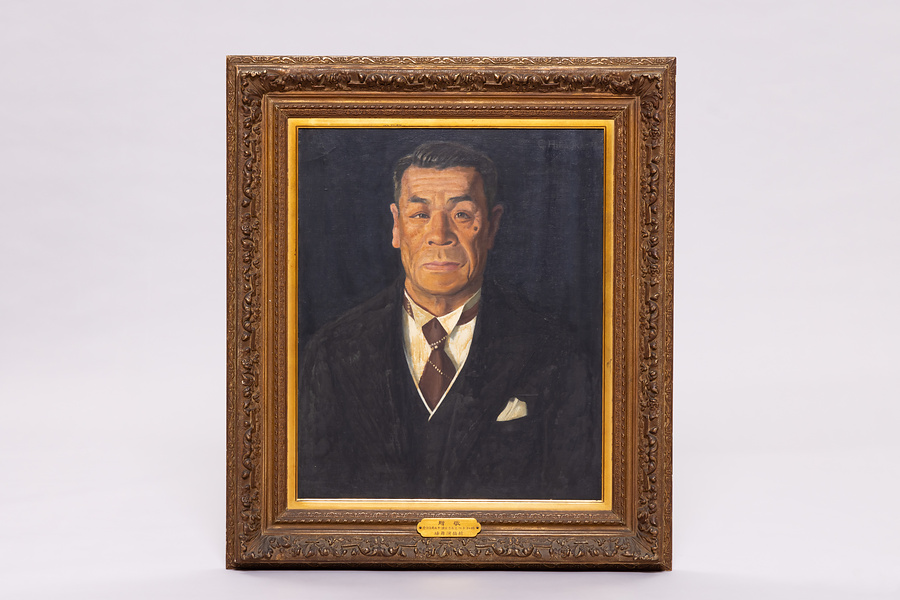
沢田正二郎
沢田正二郎の国定忠治 (帝国劇場 筋書)
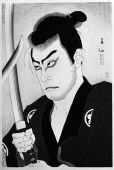
Sawada Shojiro as Hayashi Buhei in The Sword, from Portraits by Shunsen / NATORI, Shunsen (1886 - 1960)
沢田正二郎絶筆
沢田正二郎休演の挨拶(帝国劇場筋書『荒神山 赤穂浪士 』 )
沢田正二郎『苦闘の跡』
沢田正二郎の妻 渡瀬淳子 (『現代俳優鑑』)
村松梢風 『人間苦闘史』沢田正二郎
伊原青々園『続団菊以後』 文芸協会の分裂
宇野浩二『一途の道』沢田正二郎
コリオレーナス
岡本一平「沢田正二郎氏と岡本一平」 (『一平全集』15)
大正12年・新派俳優と女優番附 (『今古大番附 』)
Sawada Shojiro before launching the Shinkokugeki theater company
Launch of the Shinkokugeki new national theater
Although Shinkokugeki relocated to Kansai after its formation and spent several years in obscurity there, the theater company gained Yukitomo Rifu as resident playwright and staged two successful plays — Tsukigata Hanpeita and Kunisada Chuji. After returning to Tokyo, Shinkokugeki based itself at public theaters in Asakusa, where its Dai-Bosatsu Toge (“Swords in the Moonlight”) performances cemented a strong reputation. Immediately after the Great Kanto Earthquake of 1923, the company offered free performances of the kabuki play Kanjincho and other works at the Hibiya Park Open-Air Concert Hall for those affected by the disaster. For 15 days from New Year’s Day the following year, Shinkokugeki set up a tent on the site of a theater that burnt down in the earthquake where, to great acclaim, they performed their original Shakubuku no Nichiren (“Nichiren the Missionary”), Kikuchi Kan’s Shinsai Yobun (“News of the Earthquake Aftermath”), and Yukitomo Rifu’s Kunisada Chuji. Subsequently expanding their performances to the Akasaka Engi-za, the Imperial Theater, the Shinbashi Enbujo, and other theaters, Shinkokugeki emerged at the height of its popularity.
大正9年10月 大阪浪花座辻番付『罪と罰』他
大正10年3月 大阪浪花座辻番付『父帰る』他
大正10年12月 明治座辻番付『大菩薩峠』他
大正11年2 月 大阪浪花座 二の替辻番付『大菩薩峠 第二編』他
大正13年2月 京都南座辻番付『震災余譚』他
菊池寛作 震災余譚
大正14年4月 京都南座辻番付『次郎長と石松』他
大正15年 帝国劇場絵本筋書「次郎長と石松 」
『白野弁十郎』を演じる沢田正二郎(『続団菊以後』)
関東大震災直後の被災者慰問のための勧進帳 (『新日本写真大観』)
『狂った桜花』の沢田正二郎と久松喜世子
『心中熊谷笠』の熊谷三郎兵衛 (『演劇年鑑 1925年版』)

スケッチブック[80]
Shinkokugeki main repertoire
Shinkokugeki after the death of Sawada Shojiro
Shinkokugeki selected two young actors, Tatsumi Ryutaro and Shimada Shogo, to lead the company, and these two men were the backbone of the theater company from then on, as its two star actors. Tatsumi was a bright and bold actor, whereas Shimada was a calm, collected, and dignified performer. Hailed as “Tatsumi, a man of motion,” he specialized in characters such as Tsukue Ryunosuke in Dai-Bosatsu Toge (“Swords in the Moonlight”), the title characters in Miyamoto Musashi, Muhomatsu no Issho (“Ricksaw Man”), and Kunisada Chuji, as well as Sakata Sankichi in Osho (“Japanese Chess Player”). By contrast, the “quiet Shimada” was popular in such roles as Banba-no-Chutaro in Mabuta no Haha (“In Search of Mother”), Komagata Yohei in Ippon Gatana Dohyo Iri (“The Sword and the Sumo Ring”), Yataro in Seki no Yatappe (“Yakuza of Seki”). These two contenders with contrasting acting styles entertained audiences for many years.
Post-War Shinkokugeki
Sawada Shojiro left the Geijutsuza, where artists such as Shimamura Hogetsu and Matsui Sumako were active, to found the Shinkokugeki in 1917. Ichikawa Danpei, the president of Shinkokugeki (backstage caretaker), was originally a kabuki swordsmith and wanted to help Sawada, but as he wanted to establish realistic standup, he refused help. The impetus for Danpei to finally get the chance to play an active role was Kunisada Chuuji, in which Danpei put on a sword fight. It became a big hit in Osaka, and the Shinkokugeki made its long-awaited entry into the Tokyo market. However, Sawada saw the sword fighting as nothing more than a tool to draw in audiences. When Danpei learned of this, he decided to leave the troupe. That was when news arrived from Osaka that his wife, who was working as a hairdresser to support him, was in critical condition...
References
- 沢田正二郎 著,柳蛙書房
- 中林出版
- 伊原青々園 著,相模書房
- 宇野浩二 著,三和書房