Shingeki — Bungei Kyokai and Jiyu Gekijo
Two pioneering theater groups in the modernist shingeki movement
In contrast to kabuki and the shinpa school of drama, shingeki refers broadly to theater influenced by modern Western drama style. Beginning with the activities of Bungei Kyokai and Jiyu Gekijo at the end of the Meiji Period and continuing through the era of the Geijutsu-za, Tsukiji Shogekijo, Shinkyo Gekidan, and Shintsukiji Gekidan theater troupes, shingeki is a collective term for the performances of a variety of theater companies, including the postwar period “Big Three,” Bungaku-za, Haiyu-za, and Mingei. The theater world of Japan today has evolved and become more diverse, and the role played by shingeki, the nucleus of modern Japanese theater, and its influence has waned considerably. Yet, with its traditions and techniques evident in various forms in today’s contemporary performing arts, shingeki still serves as a wellspring for new types of expression. This gallery presents Bungei Kyokai and Jiyu Gekijo, pioneers of the shingeki movement.
Related People, Things and Events
This gallery introduces the items of Database for Exhibition "Engeki-jin Sho-yo Tsubouchi", held by the Tsubouchi Memorial Theatre Museum, Waseda University.
Popular modern dramas emerging in mid-Meiji Period in opposition to old-school kabuki
Theater company organized in 1917 by Sawada Shojiro with the aim of creating new national theater
Kabuki, a form of traditional theatre, is still very popular today and continues to evolve. This webpage introduces kabuki-related materials at the Art Research Centre of Ritsumeikan University from various perspectives.
Bungei Kyokai
Founded in 1906. With Tsubouchi Shoyo at its center and the involvement of novelist Shimamura Hogetsu, actor Togi Tetteki, and actor Doi Shunsho, Bungei Kyokai aimed to advance, improve, and widely disseminate literature, art, and theater. The association gradually narrowed its activities to focus on theater and advance the shingeki movement. In 1909, Tsubouchi began teaching students himself and opened a theater school in his own residence where he trained actors. His first student was Matsui Sumako, and his second was Sawada Shojiro, who would go on to found the Shinkokugeki Theater. Although Matsui Sumako was a big hit when she played Nora in Ibsen’s A Doll’s House in 1911, conflicts between members of the group and Shimamura and Matsui’s romantic entanglement caused the group to dissolve in 1913.
文芸協会「文芸協会組織一新趣意」書 明治44年3月
文芸協会 公私演記録
帝国劇場の舞台正面(『帝国劇場写真帖』)
帝国劇場の外観(『帝国劇場写真帖』)
帝国劇場の花道(『帝国劇場写真帖』)
文芸協会の女優(『続団菊以後』)
島村抱月・松井須磨子誓紙 大正2年6月4日
松井須磨子 牡丹刷毛
文芸協会公演会旗
団菊以後
中沢弘光 故郷
Related documents
『役の行者』初稿本
大正2(1913)年、早稲田大学出版部から刊行を予定していたが、抱月・須磨子の恋愛事件をはじめとする文芸協会の内紛を考慮して出版を中止した未発表の稿本。
第2回公演の絵本筋書
文芸協会第2回公演の筋書。
文芸協会演芸部大会記念絵葉書
第2回演芸部大会のもの 封筒、『大極殿』、『ハムレット』、『新曲浦島』
第2回演芸部大会筋書
『大極殿/ハムレット/新曲浦島』 明治40(1907)年11月 本郷座
『ハムレット』服装・小道具下絵
ハムレット オフィリア ガーツルード レーヤーチーズ 墓堀人
文芸協会 会員名簿各種
左より「特別会員名簿」「通常会員名簿」「学生名簿」「明治41年1月付会員名簿」、手前は早稲田関係者の名が連なる「幹部員・名誉会員名簿」
文芸協会研究生 森英二郎の日記
明治43(1910)年1月1日から3月9日
文芸協会第3期生入会試験答案
入会願書(志望理由書、履歴書、顔写真、身長・体重ほかの調書)を提出した後に受ける試験問題。この時の問題は「旧劇及び新劇の欠点や弊害」について記せ。答案の内容も主種様々だが、用紙の上下左右も各々バラバラで面白い。
Records of performances
第1回 ハムレット 明治44年5月
第2回 人形の家/寒山拾得/お七三吉/ヴェニスの商人 明治44年11月
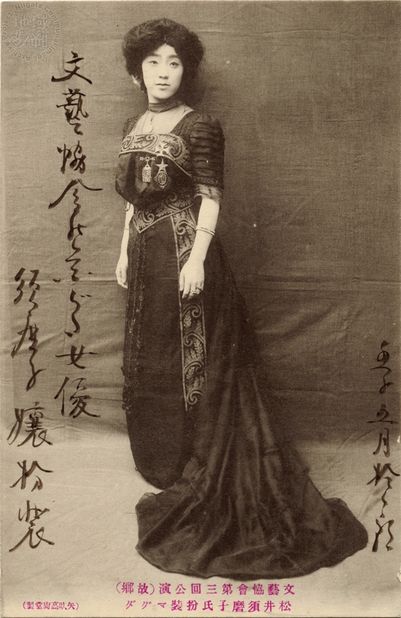
第3回 故郷 明治45年5月
第4回 二十世紀 大正1年11月
第5回 思い出 大正2年2月
第6回 ジュリアス・シーザー 大正2年6月
Photographs of stage performances
第1回 ハムレツト 明治44年5月/東儀鉄笛の墓堀男と土肥春曙のハムレツト(『舞台之華』)
第1回 ハムレツト 明治44年5月/土肥春曙のハムレツト 森英次郞のホレーシオ 上山浦路の王妃ガーツルード(『舞台之華』)
第1回 ハムレツト 明治44年5月/松井須磨子のオフィーリア(『牡丹刷毛』)
第2回 人形の家 明治44年11月/松井須磨子のノラと東儀鉄笛のクログスタッド(『舞台之華』)
第2回 人形の家 明治44年11月/松井須磨子のノラと土肥春曙のヘルマー(『舞台之華』)
第2回 人形の家 明治44年11月/松井須磨子のノラ(『牡丹刷毛』)
第2回 お七吉三 明治44年11月/坪内くに子のお七と上田洋一の吉三(『舞台之華』)
第2二回 お七吉三 明治44年11月/坪内くに子のお七と上田洋一の吉三
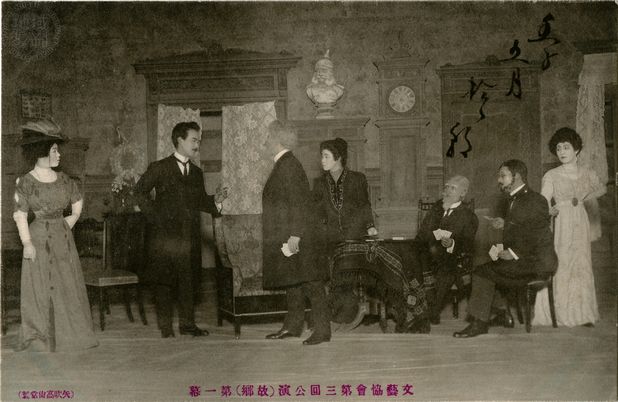
第3回 故郷 大正1年11月/松井須磨子のマグダ
第5回 二十世紀 大正1年11月/松井須磨子のグラントン夫人(『牡丹刷毛』)
Jiyu Gekijo
Founded in 1909 by Osanai Kaoru and Ichikawa Sadanji II with the aim of studying and performing modern dramas. In November of the same year, the theater company staged its first experimental performance of Ibsen’s John Gabriel Borkman at Tokyo’s Yuraku-za theater, where it gained a large following among the intelligentsia. While featuring foreign plays by Maxim Gorky and Gerhart Hauptmann, the company also actively staged plays by Japanese writers and featured a group of kabuki actors, including onnagata (male actors playing female roles). Although staging just nine performances through 1919 and then becoming inactive, Jiyu Gekijo, together with Bungei Kyokai, significantly influenced Japan’s subsequent shingeki movement.
市川左団次のボルクマン(関根黙庵『明治劇壇五十年史』)
左団次のボルクマンのメイクアップ(伊原青々園『続団菊以後』)
自由劇場による『夜の宿』の舞台(久保栄『小山内薫』)
自由劇場第7回公演『夜の宿(どん底)』番組 大正2年10月
自由劇場第8回公演『星の世界へ』番組 大正3年10月
自由劇場第9回公演『信仰』番組 大正8年9月
三宅周太郎 演劇五十年史「自由劇場成立」
小山内薫 演劇論集「夜の宿の器械的失敗」
島崎藤村 後の新片町より「ボルクマン」
関根黙庵 明治劇壇五十年史「自由劇場」
伊原青々園 続団菊以後「自由劇場の旗揚」
Photographs of stage performances
第1回試演 ジョン・ガブリエル・ボルクマン 明治43年1月/市川左団次のボルクマン(『舞台之華』)
第2回試演 出発前半時間 明治43年6月/市川左団次のオペラの役者(右)(『舞台之華』)
第4回試演 奇蹟 明治44年6月/市川左団次の聖者アントニウスと市川猿之助の婆イルジニイ(『舞台之華』)
References
- 伊原青々園 著,相模書房
- 秋庭太郎 著,理想社
- 秋庭太郎 著,理想社
- 関根黙庵 著,玄文社
- 田中栄三 著,演劇出版社
- 戸板康二 編,青蛙房