Jump to main content
/

Blue-and-white Ceramics (Sometsuke)

Ceramic wares decorated with indigo patterns on a white base

The term “chato” refers to the ware used in the tea ceremony, which includes tea bowls, jars, water jugs, flower containers, and kaiseki (traditional Japanese cuisine) ware. Tea ceremony ware from Seto and Mino, the two largest manufacturing regions of glazed ceramic ware in medieval Japan, has been used in tea ceremony since the dawn of this art.       

Chinese blue-and-white Ceramics

The technique of "sometsuke", in which painting is done with cobalt pigment, is called "qinghua (blue flower)" in China, and is thought to have been perfected at the Jingdezhen kilns in Jiangxi Province around the end of the Yuan Dynasty (1271-1368). The cobalt pigment used at the time was from the Islamic world, and the shapes and patterns of many of the vessels were modeled after Islamic metalware, suggesting that Chinese blue-and-white ceramics were ordered from the Islamic world and production began under its influence. In the beginning, it was produced mainly for export, but in the early 15th century during the Ming Dynasty (1368-1644), it began to be produced at the official kilns established in Jingdezhen as court-ware, and a refined and elegant style was perfected. Thereafter, it became the representative ceramic style of China, and during the Ming and Qing Dynasties, it spread throughout Asia, the Middle East, and even to European countries, fascinating people from all over the world.

The form of this large jar began to appear in the Yuan dynasty

This large dish has a rare drawing of a front view

元時代(14世紀)/景徳鎮窯。青花磁器は元時代の景徳鎮窯で完成した。イスラムから輸入した良質のコバルトの発色は美しく、文様は濃淡を活かした高度の絵画表現により、まるで動いているかのように表情豊かにあらわされている。

明時代(15世紀)/景徳鎮窯。内湾気味の立ち上がり部に、鍔状の口縁部を持つ盤。明時代になると、元時代の器面を多段に分けて文様帯を重ねる構成から、伸びやかで均整のとれた筆致の表現、写実的な絵画表現へと変化する。

During the Yongle period

明時代(15世紀)/景徳鎮窯。明時代初期に景徳鎮民窯で生産された青花で、楼閣とくるくると特徴的な雲が配されている一群を「雲堂手」と呼ぶ。手慣れた筆遣いで楼閣や木々が描かれ、人物の表情は生き生きとしている。官窯器にはない軽妙さと親しみ深さが魅力の名品。

The body of this wide-mouthed jar is dominated by baoxianghua scrolls

The so-called palace bowls are thought to have made in accordance with a certain standard

明時代(16~17世紀)/景徳鎮窯。淡い青花で器面全体を覆うように蝶と花唐草があらわされている。総体の爽やかな印象は、清時代初頭に作られたヨーロッパ向けの青花磁器に通じるものがある。口縁部「大明万暦年製」青花銘。

明時代(16~17世紀)/漳州窯。中央に大きく円窓を設け、外周を均等に区画して文様を配置する構図は、景徳鎮窯で主にヨーロッパ向けの輸出品として焼かれた芙蓉手を真似たもの。腰の部分で折れて口縁が大きく広がる器形は、呉州染付の芙蓉手の中では早い段階に位置づけられる。

明時代(17世紀)/景徳鎮窯。型でうつわの縁を二段、二重の蓮弁形とし、青花で多種の花卉文を細やかに配した大型の鉢。素地が粗く、釉が剥がれていわゆる「虫喰い」になるのはこの時期の景徳鎮窯器の特徴の一つ。爽やかな印象で気品漂う優品。

明時代(17世紀)/景徳鎮窯。中国明末に景徳鎮民窯で焼かれた手桶形水指。本作品のように素地が粗く、古拙な趣を醸した明末の青花を日本では「古染付」と呼び、親しんできた。それらは茶湯道具として日本から注文されたものと考えられている。

明時代(17世紀)/景徳鎮窯。明末に景徳鎮民窯で焼かれた古染付の皿。いずれも型成形で兎、魚、琵琶、貝、筍をかたどっている。懐石の向付として日本から注文されたものであろう。飄逸で味わい深いかたちと文様が目に楽しい作品。

明時代(17世紀)/景徳鎮窯。「祥瑞」とは、明時代末に景徳鎮民窯で日本の茶人向けに誂えた青花磁器の一群。透き通るような白磁胎と紫がかった濃いコバルトであらわした幾何学文様が特徴。瓢形の徳利は人気が高く、日本の伊万里焼でも写しが作られた。

清時代(18世紀)/景徳鎮窯。雍正年間、景徳鎮官窯では過去のすぐれた陶磁器の再現が積極的に行なわれた。本作も評価の高い明初永楽、宣徳年間の青花を目指して作られたもの。ただし、鋭くきびきびとした文様表現に、清官窯ならではの特徴がみえる。

Vietnamese Blue-and-White Ceramics

In Vietnam, under the influence of Chinese blue-and-white porcelain, the production of blue-and-white ceramics are thought to have begun at the end of the Tran Dynasty (1225-1400). During the following Le Dynasty (1428-1789), a production system was established, and from the late 15th to 16th centuries, Vietnamese blue-and-white ceramics were exported in large quantities to neighboring countries such as the Philippines and Indonesia. Early examples of Vietnamese blue-and-white ceramics were often copied from the Yuan and Ming Dynasty blue-and-white porcelain, but gradually a style unique to Vietnam appeared. Vietnamese blue-and-white wares have a gray semi-porcelain body that has not fully become porcelain, and is sometimes decorated with white glaze. The graceful and fluid brushwork of the underglaze blue was characterized by a rather dull color, called "Annan sometsuke" in Japan, and it became popular among masters of tea ceremony.

Large Dish with Flowers
ベトナム(15世紀)。夾雑物を含んだ灰茶色の胎。伏焼きを行なったため、口縁の釉を剥いでいる。見込み中央には菊と思われる花を一輪配し、その花と葉を取り囲むように青海波とクルス(十字架)の文様を描く。

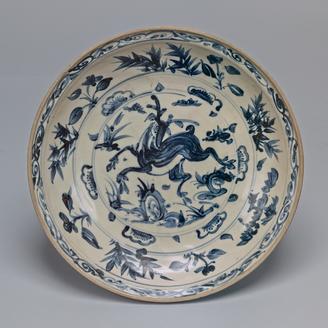
Large Dish with a Landscape and Deer

【重要美術品】 ベトナム(15~16世紀)。ベトナムでは、中国元王朝の影響を受けて、14世紀の中頃から青花の生産が始まったと考えられている。この作品は中央にのびのびとした筆致で、躍動感あふれる鹿の姿を描く。力強く、そして温和で素朴な雰囲気には、中国青花とは異なる魅力がある。

Lobed Jar, Flowering plant design in underglaze blue
ベトナム(15~16世紀)。ベトナムの青花は15世紀黎(レ)王朝のもとに生産体制が確立し、周辺諸国へ輸出されるまでに発展した。この壺は胴部を型で瓜形に成形し、抑揚のない筆遣いで花卉文、肩と裾に蓮弁らしき文様を配する。中国の青花磁器の影響が色濃くみとめられる作品。

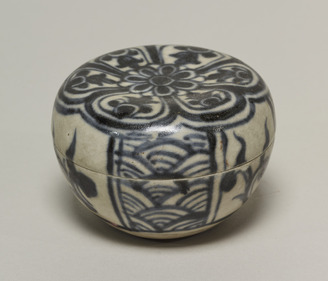
Incense Container with Vines

ベトナム(15~16世紀)。ベトナム製のやきもの、いわゆる「安南焼」は、中国景徳鎮窯器とは異なり、温かみのある素地や味わい深い文様が日本の茶人に好まれた。灰色の胎に白釉で化粧を施し、そこに下絵付けを施して透明釉を掛けている。

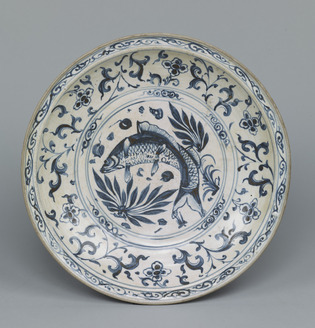
Large Dish with Fish and Aquatic Plants
ベトナム(15~16世紀)。ベトナムでは、15~16世紀にかけて、青花磁器の生産が最盛期を迎える。白釉で化粧を施すのがベトナム青花の特徴で、中国磁器に無い素朴さと重厚さが魅力。文様は闊達で、すぐれた画工の存在がうかがわれる。

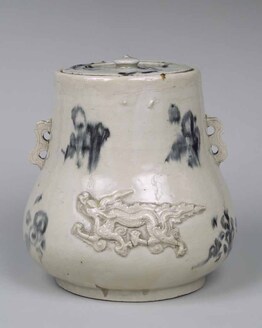
Lidded Fresh Water Container with Dragons and Flowers in Underglaze Blue

ベトナム(17世紀)。京都の朱印船貿易商、大沢家伝来の水指。染付と龍の貼り付け文様の組み合わせ。17世紀頃のベトナムの滲んだ染付は、日本で「絞り手」と呼ばれ、茶道具として珍重された。下脹れの形は特殊で、注文製作の可能性が考えられる。

Korean blue-and-white Ceramics

Blue-and-white ceramics on the Korean peninsula are believed to have originated in the mid-15th century during the Joseon Dynasty (1392-1897). In the early period, Gain (court painters) painted in the Guangzhou official kilns, which fired court-ware, and produced graceful, picturesque blue-and-white ceramics. From the end of the 16th century to the 17th century, the Korean peninsula was severely damaged by warfare, and production of blue-and-white ceramics temporarily ceased. In the 18th century, when the pottery industry was revived, blue-and-white ceramics with very simple floral motifs painted in delicate brushwork, known in Japan as "akikusa-de (autumn grasses style)" appeared, and the aesthetic sense unique to the Joseon Dynasty was developed. From the late 18th to the 19th century, the production of blue-and-white ceramics became increasingly popular, and a wide variety of patterns and shapes appeared.

Kiseto ware

This is one of the precious examples of blue-and-white ware of the early Joseon dynasty. The flat and smooth surface bears a baoxianghua flower in the center and five more flowers radiating outward. Such motif is reminiscent of those produced in the Hongwu period (1368-98) of the Ming dynasty China. The flattened mouth rim can also be found in the metal dish excavated from the tomb dated 1370

This jar has a design of plum trees and bamboos on the center of the body

The Japanese first encountered Korean blue-and-white porcelain in around the 16th century. This precious work was preserved through many generations by the Maeda family of Kaga (present-day Ishikawa Prefecture)

This is an octagonal beveled bottle with a slender form having a moderate weight. A blue-and-white octagonal bottle in such a small size is rare. The thickly potted bottle was beveled from just under the rolled lip toward the body. The unpretentious yet graceful drawing of wild flowers in pale blue

This jar was made by throwing a round form

Leaving ample white space

After the official kiln settled in its final location

朝鮮時代(19世紀)。朝鮮時代後期に広州分院里窯で焼かれた青花磁器は白磁の素地が硬質になり、濃く鮮明な発色のコバルトで細密な文様が描かれる。鯰や魚が鳥とともに宙を飛んでいるかのように見える幻想的な空間表現は、朝鮮青花に独特のもの。

朝鮮時代(19世紀)。十三角形に形作られ、紗綾形文と亀甲文で埋め尽くされている。裏面外周は三方に蝙蝠が描かれ、高台内に「己亥九月」の文字と木葉形のマークが記されている。朝鮮時代後期の憲宗5年(1839)に作られたことが知られる貴重な基準作例。

Japanese blue-and-white Ceramics

Imari wares from Arita (Saga Pref.), Japan's oldest porcelain, produced the first underglaze blue ceramics in Japan in the early Edo period (17th century). Early blue-and-white ceramics produced mainly by Korean potters from the 1610s to the 1640s are called "early Imari", and they are often decorated with simple Chinese-style patterns on a heavily glazed base. In the 1640s, when Chinese porcelain exports were ceased due to civil war in China, demand for Imari wares surged in Japan, and exports to Europe and other countries soon followed. Later, kilns of the Nabeshima domain and Kyoto, Seto, and other areas began to produce blue-and-white porcelain, and by the late Edo period, it was being produced all over the country.

Large Bowl with a Landscape

江戸時代(17世紀)/伊万里。元和年間(1615~23)頃に始まった肥前(佐賀県)有田の磁器は、意匠は明代末期の古染付の影響を受けながら、おのずから和様が打ち立てられていった。のびのびとした山水文には中国の古染付にはない力強い味わいがある。

Dish with a Rabbit and the Moon

江戸時代(17世紀)/伊万里。江戸前期、1620年代~30年代の作と推測される初期伊万里の中皿。景徳鎮窯の古染付に手本をとった吹墨文様の月兎を表わす。その瀟洒で的確な文様表現は、類品の中でも特に出来ばえがよい。

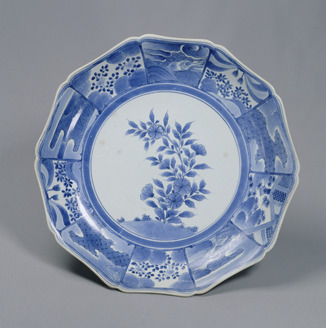
Large Lobed Dish with Flowering Plants
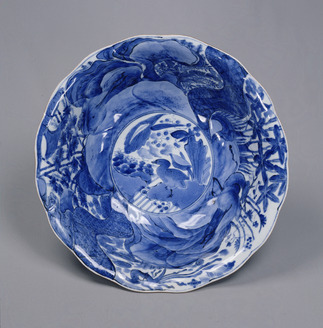
江戸時代(17世紀)/伊万里。中国の芙蓉写しの大皿を作っていた伊万里は、1660年代以降、和様の表現を持つ精作を作り出す。この大皿では、周縁部を和様の表現とし、見込も余白を生かした絵画性の強い意匠とする。

Bowl with a Lobed Rim and Rocks, Deer, and Waterfowl

江戸時代(17世紀)/伊万里。 中国・景徳鎮窯の古染付の影響を強く受けていた初期伊万里に対して、17世紀後半の作であるこの鉢は、同じ景徳鎮窯でも祥瑞の影響を受けて作られたもの。発色の鮮やかな呉須を使い、祥瑞独特の意匠を濃密に描き込んでいる。

Dish with a Sluice and Flowing Water

江戸時代(17世紀)/鍋島。日本を代表する磁器生産で知られる伊万里を抱えた鍋島藩御用の製品。定型化された皿や、香炉や向付など型物の小品が特徴的で、堰から水が流れる様を描いた本作品のように、高度に洗練された意匠が最大の魅力であろう。

Large Dish with Ferns

江戸時代(18~19世紀)/伊万里。濃く鮮やかな発色の染付で羊歯とユキノシタの葉をあらわした大胆奇抜な構図。松茸などには彩りや乾燥防止のため羊歯の葉を敷く習慣があり、キノコのような山の幸を盛りつけるために工夫されたデザインと考えられる。

Footed Bowl with a Landscape

江戸時代(18~19世紀)/奥田頴川作。奥田頴川(おくだえいせん)の作品には、中国陶磁に学んだものが多く、呉須赤絵や交趾の写しを得意とした。いっぽうで染付にも技を振るい、この作品では馬上杯形の台付鉢に胴の五方に縦耳を付け、染付で山水文を描いている。

染付洋文字に獅子図水指

江戸時代(18世紀)/沼波弄山作。江戸時代中期に桑名(三重県)の沼波弄山(ぬなみろうざん)による萬古焼の水指。染付で蓋と身に洋文字を配し、身の正面には番の獅子、反対面には闊歩する雄獅子の絵付を施す。この獅子図は、当時日本に輸入されていたJ.ヨンストン『動物図譜』からの転用。

Large Dish with a Crane and a Turtle

江戸時代(19世紀)/伊万里。元禄以降、伊万里の染付は新しい展開を示し、凄じいほどの多様な文様と豊穣な意匠の世界を作り上げた。この皿は青磁釉と染付を塗り分け、とらわれない自由な発想で亀と鶴を描き民衆の器に相応しい活気溢れた作。

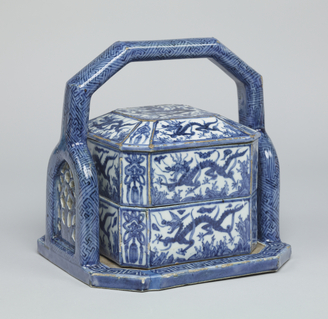
Portable Dining Set with Dragons and Waves
江戸時代(19世紀)/青木木米作。京焼の陶工青木木米(あおきもくべい)は文人としても知られ、中国・朝鮮の陶磁器を広く研究した。この提重は主題の文様や胎、釉の特徴を、中国・明時代後期の万暦年間(1573~1620)の青花から写しとっている。

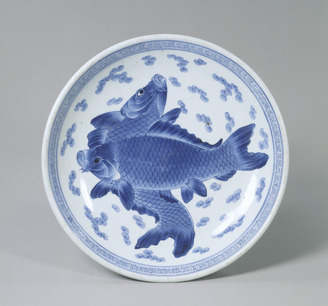
Large Dish with Carp

江戸時代(19世紀)/亀山。丸々とした二尾の鯉には堂々とした存在感がある。亀山焼は現在の長崎市伊良林に開かれ、天草石を用いた精美な染付磁器を文化11年(1814)から慶応元年(1865)の閉窯まで焼いた。

Large Vase, Flower and bird design in underglaze blue

明治時代(19世紀)/加藤五輔作。明治の美濃を代表する陶工加藤五輔(かとうごすけ)の1893年シカゴ・コロンブス世界博覧会出品作。一対で作られ、水面に舞い降りる鳥と、水に浮かぶ鳥とを左右に配する構図は、二曲一隻の屏風のような効果をあげている。

Related People, Things and Events

References

  1. 赤沼多佳, 伊藤郁太郎, 片山まび 編著,講談社
  2. 大橋康二監修