Jump to main content
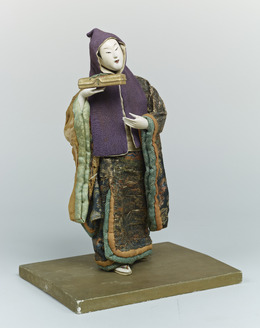
衣裳人形 吉弥 / ColBase

Imani todomeshi ukiyo no sugata (The image of the floating world that remains today)

As the production skills of hina dolls become more sophisticated, isho ningyo (costumed dolls) were created for the purpose of appreciation as works of art. From kabuki actors to yujo (prostitutes) and wakashu (young men), the costumed dolls feature a wide variety of subjects, all full of life and dressed in sumptuous kimonos.

In addition to this, dolls made of wood also became highly developed. Many masterpieces are still preserved today, such as the extremely colorful Saga and Nara dolls, and Kamo dolls made with use of the kimekomi technique, retaining the original appeal of the materials. In particular, gosho ningyo, dolls which imitate plump and adorable young children, were beloved by the upper classes such as the nobility and feudal lords, representing a highly artistic expression of Japanese doll culture.

Isho ningyo modeled after kabuki actor

An isho ningyo which is said to have been modelled after Kamimura Kichiya, an onnagata kabuki actor (man playing a woman) who was active in Kyoto from the Kanbun to the Enpō period (1661-81). Other lively looking isho ningyo were also made.
Isho ningyo expressed the lives of people in the Edo period. Also known as ukiyo ningyo, the models of these dolls included kabuki actors, yujo, wakashu, and other everyday people. For some dolls, you can move their arms, and pose them in any way you like.

Uizan ningyo and gosho ningyo

A wise looking boy sits upright in kamishimo (formal samurai clothing). "Uizan ningyou" were bestowed when an imperial infant had their first audience with the Emperor (Ohatsu Sandai).
"Gosho ningyo: Hifu tachisugata" is a doll of a lovely young nobleman with white kosode (short sleeved kimono) and a hifu (a kind of jackets to put on over kimono) made from yamama chirimen (silk crepe).The binpuku is the special hairstyle of a noble boy before his genpuku (coming-of-age ceremony). Gosho (Imperial Court) ningyo first appeared in connection with the Imperial Court and gradually spread to everyday people. This doll shows a typical example of what was done in a noble family and shows a high degree of elegance.

Hina asobi which remain in each region

Saiji shuzoku goi by Kunio Yanagita (published in 1939) records various “Hina asobi (playing with dolls)” events in each region.