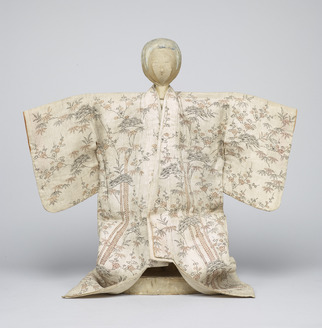
Birth of hina dolls
The history of dolls associated with hina dolls dates back to an ancient ritual in which impurities were transferred to thin sheets of wood or other material in the shape of a human being and then thrown into water. In the Imperial Court, simple figure dolls such as amagatsu and hōko existed since the Heian period as protective charms for infants.
The Heian aristocracy also used to engage in "Hiina asobi", playing with small dolls and furnishings. Hiina asobi is also found in the literature of the Kamakura and Muromachi periods.
Hiina asobi depicted in Makura no soshi
The use of dolls, entrusting them with prayers and sometimes playing with them, continued into the Edo period (1603–1868), during which the tradition of displaying hina dolls during the Peach Festival became established, wishing for the happiness of girls. Hina dolls in the early Edo period are thought to have been standing paper dolls that were used mainly for play.