Udagawa Yoan
Rangaku scholar of the late Edo period. Left a considerable mark on the history of Japanese science with his introduction of modern Western science.
1798–1846
Rangaku (Western studies) scholar of the late Edo period (approx. 1750–1850). Born in Edo. His father Ezawa Yoju was a physician and Rangaku scholar in the service of the Ogaki Domain. His childhood name was Shigejiro. In 1811, he became the adoptive heir of Udagawa Genshin, a physician practicing Western medicine in the service of the Tsuyama Domain, and took the name Yoan upon coming of age the following year. Along with traditional Chinese medicine, he familiarized himself with honzogaku (herbalism, or the study of plants, minerals, and animals for use in Chinese medicine) and bussan-gaku (the study of material goods), at which he excelled, and he studied the Dutch language under Baba Sajuro and Yoshio Shunzo. Entering into the service of the Tsuyama Domain as a physician in 1817, he changed his name to a different form of Yoan, using the characters 榕菴 rather than 養菴. Around this time, he read Kosei Shinpen (“New Volumes for the Public Welfare”), a translation of Noël Chomel's encyclopedia into Japanese. Coming to learn that in Western scholarship there was a field of study called botany (shokubutsugaku in Japanese, referred to as “shokugaku” by Yoan with a term he coined himself), which involved studying plants themselves in a way distinct from the approach of Chinese honzogaku herbalism, his interest in fields including pharmacology, medical science, botany, zoology, and chemistry deepened further.
In 1822, he authored the first Japanese botanical work, Botanika Kyo (“Sutra of Botany”), introducing Western botanical science to Japan. He also collaborated in the publication of pharmacological works by his adoptive father Udagawa Genshin, Ensei Iho Meibutsu Ko (“A Reference on the Specialty Products of Far Western Medicine,” 1822–1825) and Oranda Yakukyo (“Mirror of Dutch Medicine,” 1828–1830).
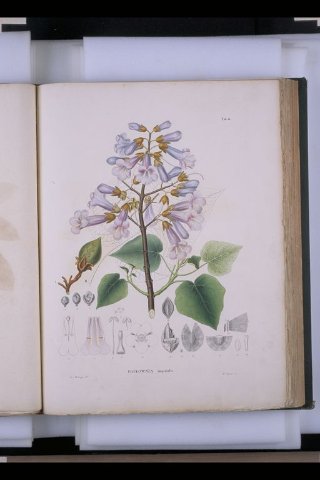
In 1826, he became an official translator of Western books into Japanese for the bakufu shogunate, participating in the translation of Noël Chomel's encyclopedia, a project that would last until the end of his life. Also, the same year, he interacted with Philipp Franz von Siebold who was visiting Edo, calling on him at his place of lodging. He presented Siebold with botanical specimens, hand-drawn illustrations of flora, Japanese books, and more, and some of the botanical illustrations were used as the original drawings for Siebold’s Flora Japonica, translated as Nihon Shokubutsu-shi.
Subsequently, he continued to devote himself to the study of fields including pharmacology, botany, and chemistry, conducting his own experiments in addition to translating Western science texts. His published works include Shokugaku Keigen (“Introduction to Botany”; 1834), Ensei Iho Meibutsu Ko Hoi (“A Reference on the Specialty Products of Far Western Medicine Addendum,” 1834), and Seimi Kaiso (“Introduction to Chemistry,” 1837–1847). His Shokugaku Keigen is highly appraised as an authentic text of Western botany, and Seimi Kaiso as the first Japanese text covering chemistry in a systematic manner.
Also well versed in fields including mathematics, land surveying, and military science, he left a considerable mark on the history of Japanese science as the person responsible for introducing a number of fields of study, including chemistry, to Japan. Having no biological children, he accepted Kosai, the son of Iinuma Yokusai, a honzogaku herbalism scholar as well as physician for the Ogaki Domain, as his heir. On August 13, 1846, he died at the age of 49. While he was buried at Choan-in at Seigan-ji Temple in Asakusa, he was later reburied at the Tama Cemetery.
関連するひと・もの・こと
Philipp Franz von Siebold
A German physician and naturalist who served as a physician for the Dutch trading house in Dejima during the Edo period
Hendrik Doeff
Dutch Trading Post head who compiled the first full-scale Dutch-Japanese dictionary during his stay at Dejima
Flora Japonica
A botanical encyclopedia compiled by Philipp Franz von Siebold that introduced Japan’s flora to Europe
本で知る
もっと知りたい
Figures associated with Udagawa Yoan
宇田川玄真(『医家先哲肖像集』所収)
宇田川玄随(『医家先哲肖像集』所収)
飯沼慾斎(いいぬまよくさい) (『郷土の偉人』上所収)
伊藤圭介
岩崎灌園(『医家先哲肖像集』所収)
箕作阮甫(『箕作麟祥君伝』所収)
シーボルト 「シイボルト観劇図并シイボルト自筆人参」
ドゥーフ 「ドゥーフ像」
ブロンホフ 「阿蘭陀加比丹並妻子等之図」
見に行く・調べる
- 津山洋学資料館
宇田川家や箕作家をはじめとする洋学者を輩出した津山市の、洋学を専門にした資料館。岡山県津山市西新町に所在。
- 杏雨書屋(きょううしょおく)
大阪市中央区道修町にある、公益財団法人・武田科学振興財団による本草医書を中心とする図書資料館。
- 洋学博覧漫筆
「津山洋学資料館」によるサイト。宇田川玄随、玄真、榕庵についての記事が充実。
- 杏雨書屋蔵 宇田川榕菴 化学関係資料
杏雨書屋によるサイト。宇田川榕菴が調査研究した蘭書資料の覚書、稿本、手択本などを紹介する。
- 近代植物学と化学の先駆け 宇田川榕庵
岐阜県図書館によるサイト。
- 洋学(蘭学)コレクション
早稲田大学図書館の所蔵する洋学関係のコレクションのページ。
- 早稲田大学図書館所蔵貴重資料デジタル化による―WEB展覧会―顕微鏡
シーボルトが宇田川榕庵に贈ったと推定される「顕微鏡」の写真を見ることができる。
参考文献
- 『日本大百科全書(ニッポニカ)』(JapanKnowledge) 「宇田川榕庵」「宇田川玄真」「舎密開宗」「厚生新編」の項。
- 『世界大百科事典』(JapanKnowledge) 「宇田川榕庵」「宇田川玄真」「舎密開宗」の項。
- 『国史大辞典』(JapanKnowledge) 「宇田川榕庵」「舎密開宗」「厚生新編」の項。
- シーボルトと宇田川榕菴 : 江戸蘭学交遊記高橋輝和 著,平凡社
- 姉帯正樹「舎密か ら化学ヘ」(「るつぼ」 第66号 2018)
- 『明治前日本物理化学史』第五章 「遠西医方名物考」における化学の基本概念の導入日本学士院日本科学史刊行会 編,日本学術振興会
- 矢部一郎「 『 ショメール百科』(『厚生新編』)・ 『植学啓原』『植学独語』の関連」 (「日本医史学雑誌」21・4、1975)」
- 吉野政治「日本における植物観の変革」(「同志社女子大学日本語日本文学」 巻 24、2012)
- 矢部一郎「宇田川榕庵の植学独語」(『蘭学資料研究会研究報告』 (253);1971・12・18蘭学資料研究会
- 伊地智昭亘・宇月原貴光「日本の化学の父 宇田川榕菴のライフワーク」 (「函館工業高等専門学校紀要」51巻 2017)
- 幸田正孝「宇田川榕菴の履歴」(「豊田工業高等専門学校研究紀要」35 2002)
- JapanKnowledgeの最終アクセス日は、いずれも2024/1/25。