Yoshimitsu Ashikaga
Third shogun of the Ashikaga Shogunate; achieved the pinnacle of success in ruling over court nobles and the warrior class; built Kinkaku Temple
1358–1408
Yoshimitsu Ashikaga was the third shogun of the Ashikaga Shogunate, active in this role from 1368 to 1394. He was the son of Yoshiakira Ashikaga, the second shogun, and Yoshiko Kino, the great-great grandchild of Emperor Juntoku. His childhood name was Haruo. He was appointed shogun in 1368, and Yoriyuki Hosokawa, who served in the post of kanrei (shogun’s deputy), was his long-time aide. In 1378 Yoshimitsu completed the Muromachi Palace, also known as Hana no Gosho, which served as the Shogunate’s government offices. The name of the Muromachi Shogunate derives from the palace name. Yoriyuki’s loss of his position led to an accumulation of power in the hands of the shogun, and the Mino, Meitoku, and Oei rebellions weakened the influential military governors such as the Toki clan, Yamana clan, and Ouchi clan. Yoshimitsu also demonstrated his effectiveness in his relationship with the Imperial court and court nobles, even resolving the schism between the Northern and Southern courts. After the death of Emperor Go-enyu, who opposed Yoshimitsu, he solidified his power base and reached the pinnacle of Ashikaga power among both court nobles and the warrior class. In 1394 Yoshimitsu passed the position of shogun on to Yoshimochi Ashikaga, but continued to exercise actual power. The following year, he retired and entered the priesthood, taking the Buddhist name Dogi. Wishing to restore relations with the Ming dynasty, in 1401 he sent an embassy to China, where he was given the title King of Japan by the Jianwen emperor as part of the Chinese tributary system. This was the start of Japan-Ming trade under the guise of tribute to the Ming emperor. Yoshimitsu carried out a coming-of-age ceremony for his second son, Yoshitsugu, with Yasuko Hino, Yoshimitsu’s principal consort, given the status of adoptive mother. He built the mountain villa Kitayama Palace in Kitayama, Kyoto, and then built Kinkaku (reliquary hall) for his residence. The culture of this era, Kitayama Culture, takes its name from Kitayama Palace.
Related People, Things and Events
Books
Related Works
文書類
足利義満御判御教書
応永14年(1407)4月23日の御教書。御判御教書は、足利将軍や室町殿(義満以降の政務権者)が自身の花押か自署を書き添えて出す直状形式の御教書。
足利義満御判御教書(「佐々木家文書」)
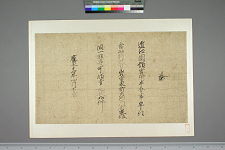
永和5年(1377)3月8日「足利義満御判御教書」 (伊予佐々木家文書)などを含む。御判御教書は、足利将軍ないし室町殿(義満以降の政務権者)が花押もしくは自署を加える直状形式の文書。
足利義満御内書
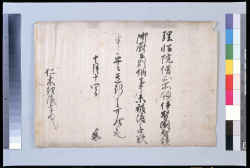
室町幕府3代将軍足利義満の御内書である。重要文化財指定の醍醐寺所蔵『醍醐寺文書』の中に、本資料の案文(当時の写)があるが、本資料はその正文(原本)である。日下の花押は足利義満のもの。内容は、現在の四日市市智積を中心にして存在していた智積御厨の押領について、その停止を伊勢守護仁木満長に遵行するよう命じたもの。
足利義満下知状
佐々木(朽木)氏秀と称阿弥陀院との所領争いで、足利義満が氏秀の領掌を認め、永和3年(1377)12月21日付で作成した文書(34×110センチ)。右端に義満の花押が記されている。
足利義満下知状
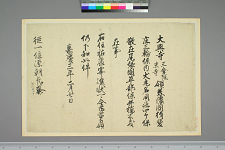
嘉慶3年(1389)2月8日の下知状。下知状は武家文書の様式の一つで、命令を下達する文書。幕府の訴訟判決、譲与、安堵など広く用いられた。


国宝・重要文化財を探す
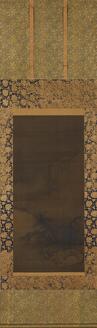
国宝・出山釈迦図
足利義満の収蔵品。開悟直前の釈迦の姿で、禅宗で好まれる画題。
国宝・雪景山水図
もと足利義満の収蔵品で、若狭酒井家、本願寺などに分かれて伝わったが、現在は東京国立博物館の所蔵。梁楷の作品は中国にもほとんどなく、貴重。
国宝・阿須賀古神宝類 唐花双鶴文鏡
明徳元年(1390)禁裏・仙洞・室町殿(足利義満)と諸国守護が、熊野十二社と摂社阿須賀宮に調進した神宝にかかわる大型白銅鏡。白銅の上に鏡面鍍錫。台形縁。
国宝・阿須賀古神宝類 松椿蒔絵手箱
熊野速玉大社伝来の梛・桐・橘・牡丹などを象徴的に意匠した手箱類と同一製作になるもので、明徳元年(1390)に足利義満らが奉納したものとされる。
Returning Sails off Distant Shore
<p>This work represents one of the Eight Views of the Xiao and Xiang, a painting subject first associated with Song Di (act. late 11th c.). The skillful harmonization of ink tones and swift brushstrokes capture two boats drawing near as wind fills their sails. After the shogun Ashikaga Yoshimitsu, this work went into the possession of the warlord Oda Nobunaga (1534–1582).</p>
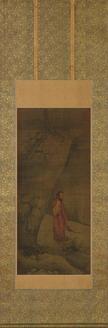
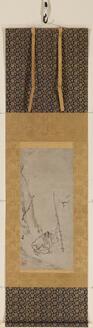
重要文化財・六祖截竹図
梁楷(りょうかい)は南宋時代の宮廷画家。本図は梁楷の代表作の一つで、禅宗の第六祖・慧能(えのう、638~713)が竹を切る一瞬をとらえたもの。画面左下に足利義満の鑑蔵印「道有」がある。


Videos
Past Exhibitions
| Title | shusai | Place | open | close |
|---|---|---|---|---|
Institutions Holding Related Materials
鎌倉時代の公卿、西園寺公経の別荘を足利義満が譲り受け、山荘北山殿を造ったのが始まり。金閣を中心とした庭園・建築は極楽浄土をこの世にあらわしたと言われる。義満の死後、遺言により寺となり、義満の法号鹿苑院殿から二字をとって鹿苑寺と名づけられた。
足利義満が設けた「花の御所」についての解説。京都市によるサイト。