Description
Liang Kai was a court painter for the Southern Song dynasty of China. He was known for his skillful ability to paint meticulously with fine lines and intensely in a rough style. The central work shown here, Sakyamuni Descending from the Mountain, shows the founder of Buddhism as he returns after enduring ascetic practices deep in the mountains. Landscape in Snow on the left shows travelers passing through deep snow in the mountains. These three works were painted separately. The other snowy landscape, on the right, is thought to have been painted by a disciple of Liang Kai. After the paintings were brought to Japan and became the property of the Ashikaga clan, which established the Muromachi shogunate in the 14th century, they were combined into a set of three.
These paintings show the variety of Liang Kai’s style. The strong-willed face of Sakyamuni, while drawn and thin, is shown with sharply-glinting eyes and a firm expression. It is depicted carefully with a sense of depth. The travelers in the snowy mountains are also carefully portrayed, from their horses and hats to the gold fittings worn by the horses. In contrast, the dead tree in the background behind Sakyamuni is painted with strong and playful brushstrokes, while the snowy mountains towering behind the travelers are drawn in rough and scratchy lines. This masterpiece brings together precision and roughness, the two polar opposites of Liang Kai’s style.
Data source
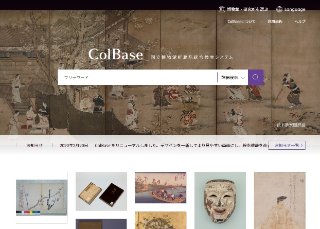
ColBase
"ColBase: Integrated Collections Database of the National Institutes for Cultural Heritage, Japan" is a service that enables a multi-database search of the collections in the four national museums (To...
Contents holder/Provider
Aggregator

National Institutes for Cultural Heritage
The National Institutes for Cultural Heritage (NICH) comprise four National Museums (Tokyo National Museum, Kyoto National Museum, Nara National Museum, and Kyushu National Museum) and two National Research Institutes for Cultural Properties (Tokyo National Research Institute for Cultural Properties, and Nara National Research Institute for Cultural Properties), as well as the International Research Centre for Intangible Cultural Heritage in the Asia-Pacific Region (IRCI) in Sakai City, for a total of seven institutions.
Last updated
July 20, 2026