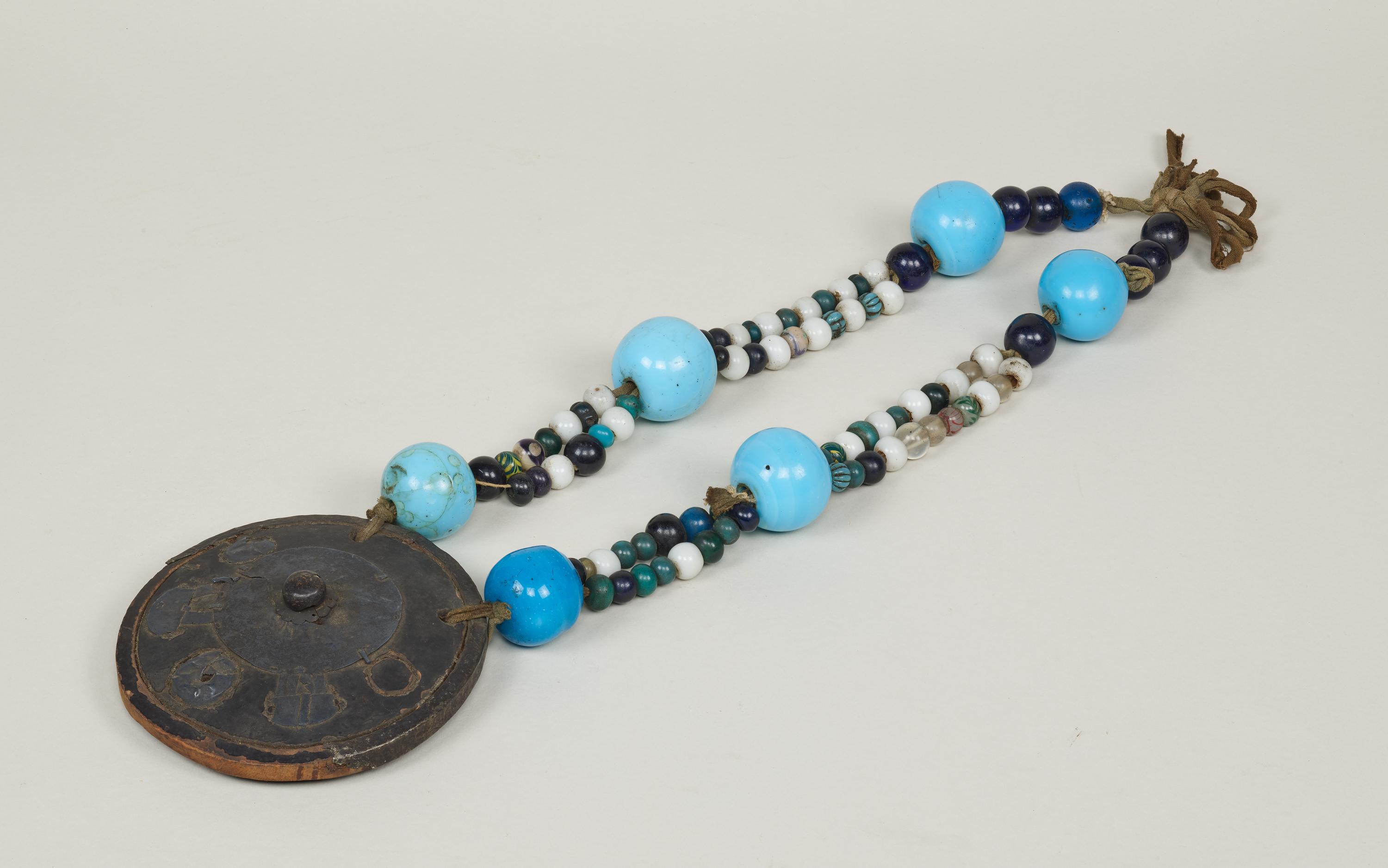
シトキ(首飾) / ColBase
Ainu Craft
The Ainu people believes that everything in nature is “kamui” (deities). They have lived in nature since ancient times, and it is believed that the sense of beauty which they have gained from their environment is reflected in their handcrafts.
Embroidery
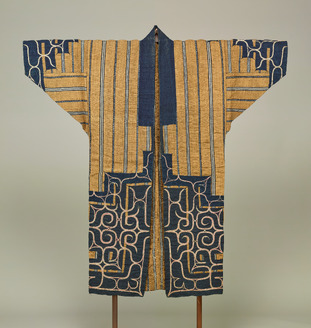
Attus (Coat)
<p>Made of woven bast fibers from a type of deciduous elm tree, this Ainu coat features stripes rendered in colored cotton threads. Pieces of cotton cloth are embroidered onto the collar, cuffs, and hem. The high level of decoration suggests this coat was worn during rituals.</p>
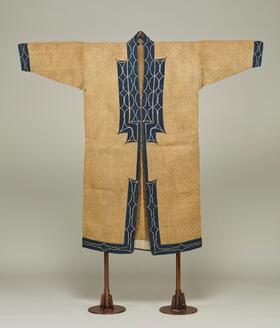
Attus (Coat)
アットゥシ地切伏刺繍文の上衣である。襟、袖口に紺木綿裂を置き、その上に木綿糸の刺繍により、アイウシ文と呼ばれる棘状の文様を連続して施している。シンプルな文様構成をもつ上衣であるが、細かい手仕事の様子がうかがわれる。男ものといわれている。
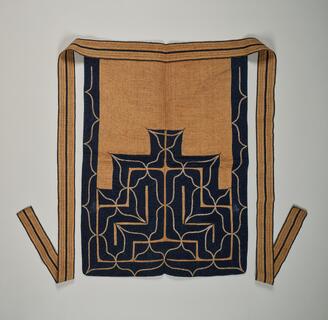
Maetari (Apron)
<p>The frontal section of robe-like garments of the Ainu tended to be easily separated. Wearing an apron over such garment prevented this from happening. </p>
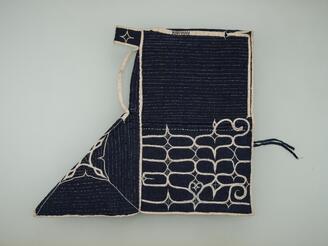
Konci (Hood)
Hoods called [konchi] in Ainu were worn to keep warm in winter for hunting in the mountains.
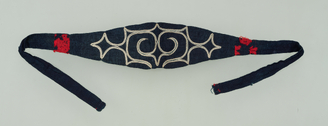
Matanpushi (Headdress)
<p>The inner layer of this headband is made of [attus], while its outer layer is dark blue cotton with embroidery. Ainu men once used headbands of this type to tie up their hair while hunting. Today, they can be more decorative with embroidery and are worn by both men and women. </p>
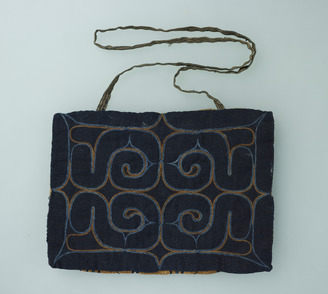
Bag
<p>縦縞のアットゥシを三ツ折りして袋部分とふた部分を作り、刺繍を施す。ふたの表側には紺木綿の裂を貼りつけ、渦巻き文様を刺繍する。下げ紐は縞木綿。女性の小物入れである。<br /></p>
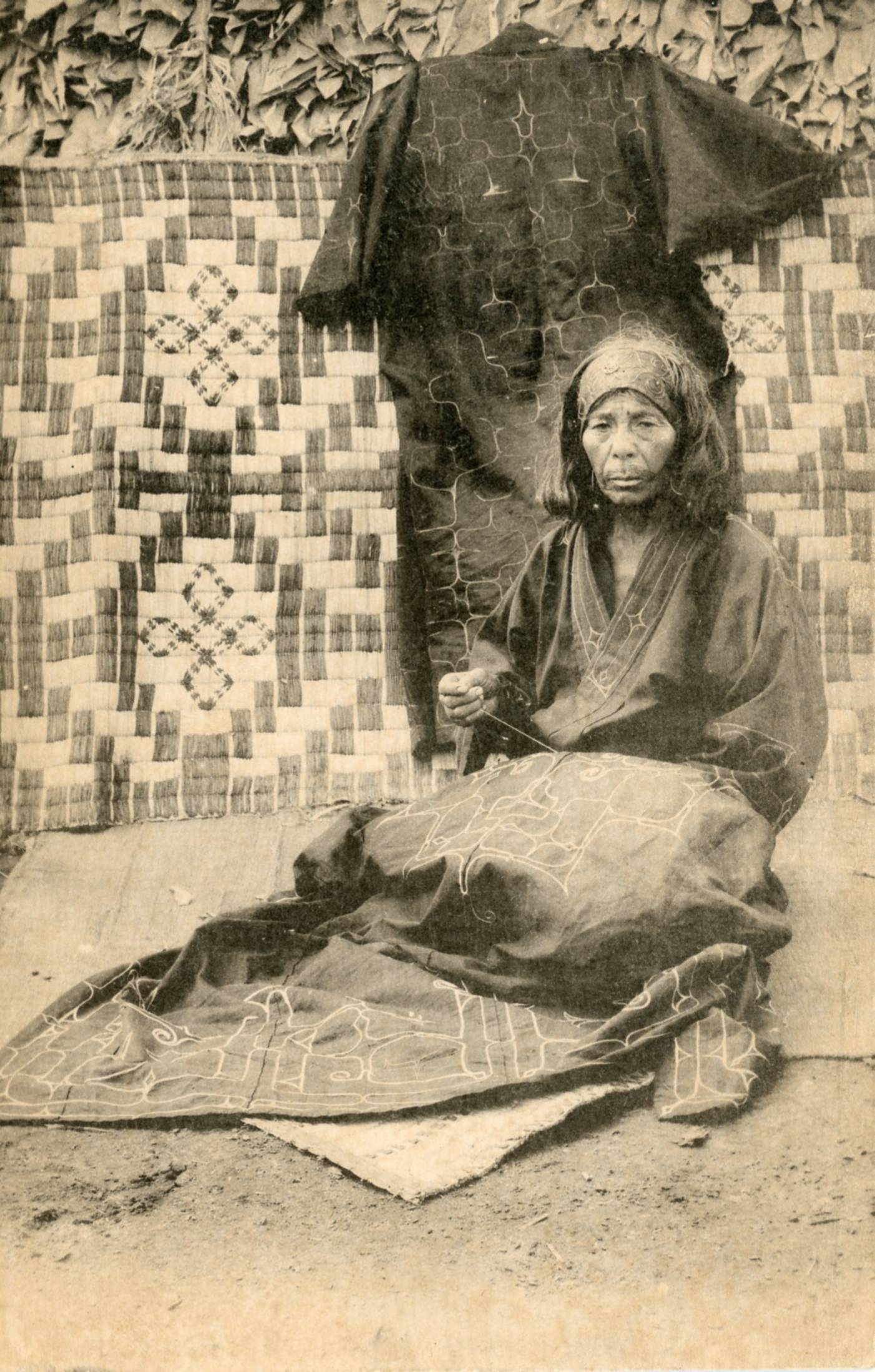
Picture postcard (Ainu customs)
Ainu woman who embroiders traditional pattern on a clothes.
Weaving cloth such as “attus” (coat-like garments made from the fibers of the elm tree) and embroidery was considered women's work.
Necklaces
Tamasay (necklace)
This Ainu necklace features a string of 114 glass beads.

Sitoki tamasay (Necklace with medallion)
This is a necklace worn in rituals. It has an ornamental metal plaque known as a sitoki. A tamasay is a necklace of glass beads.
Shitoki (necklace)
<p>This uniquely-Ainu necklace was worn as part of a woman's formal attire at rituals. <br /></p>
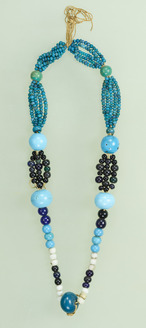
Tamasay (necklace)
<p>アイヌ文化独特の形態をもつ首飾<タマサイ>であるが、玉はシベリアもしくは日本から輸入したものでガラス製。大小さまざまなガラス玉を連ねたもので、本例には彫刻を施した木箱が附属している。<br /></p>
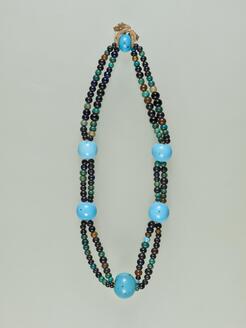
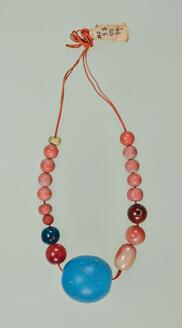
Ainu women wearing a necklace
“Tamasay” and “shitoki” (necklace) are women's accessories, which are made with glass beads obtained through trading with Siberia and Japan.
These were used for formal attire in rituals.
Wood Carvings
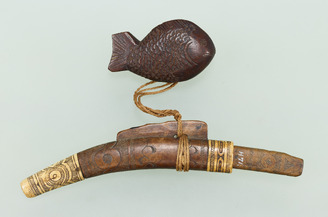
Makiri (Sheath Knife)
<p>These knives were regularly carried by the Ainu men and women. Carving was usually done by men.</p>
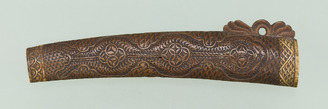
Makiri (Knife Mounting)
両方とも木製の拵えに美しい彫刻を施している。鞘口・尻に鹿角を用いている方は一木でつくられている。もう一方は二枚を合わせ、桜皮を巻いて留めている。
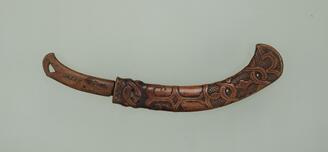
Makiri (Knife and Mounting)
マキリは小刀のこと。アイヌの男女ともに用いる唯一の利器である。常に身からはなさずにもっている。拵えの彫刻は男の工芸の代表的なものとして高い評価がなされている。樺太アイヌのマキリは全体にカーブし、拵の端部が反り返っているものが多い。
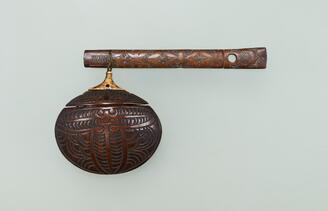
Smoking Set
This tobacco case is carved into the shape of a cicada, a familiar insect for the Ainu.
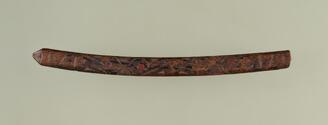
Libation Stick
アイヌの人びとの宗教儀礼上欠くことのできない祭具である。神に酒を捧げるときに用いるもので、イクパスイはアイヌの祈りや願い事を正しく神に伝えてくれる役目をはたすと信じられている。
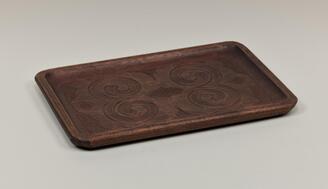
Tray
<p>木製の盆である。表面に渦巻き文、鱗(うろこ)文、刺突(しとつ)文を施す。縁には波状(はじょう)文を刻んでおり、典型的なアイヌの盆である。</p>
Woodcarving techniques
A man carving wood.
Carving on materials such as wood, bone, and horn was the work of men. “Makiri” (small knife) and “ita” (trays) are typical examples.
View More Items
Gallery
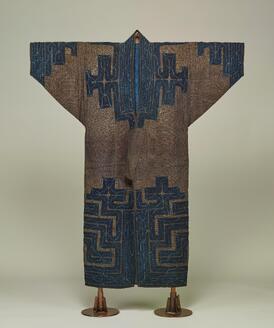
Traditional embroidery passed down among Ainu people.The patterns are a reflection of the beauty of the natural environment where the Ainu have lived since ancient times.
References
“Ainu Embroidery”
https://jpsearch.go.jp/gallery/ndl-A43rrbMQWok
“Shitoki”
Hokkaido Ainu,Gift of Mr. Tokugawa Yorisada, (Tokyo National Museum)
retrieved from ColBase