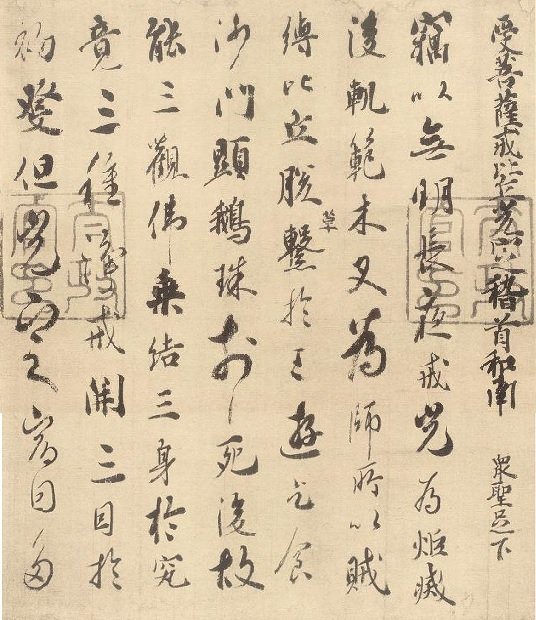
Shinkan: Handwritten Imperial Writings (1)
Notable handwritten imperial writings from the Nara period through the Kamakura period
Shinkan is a term encompassing all types of handwritten writings by emperors. The diverse range of types includes diaries, records, documents (letters and other papers written by hand, in kanji or in kana characters, etc.), eiso (waka draft poems), kaishi (poetry sheets), tanzaku (poetry written on narrow strips of paper), sutra and other scripture transcriptions, postscripts to manuscripts and transcriptions, and inscriptions on paintings.
Two items written by Emperor Shomu of the Nara period (710–794) are the oldest existing examples, followed by items from Empress Koken and Emperor Junnin (one each). From the Heian period (794–1185), writings from Emperors Saga, Uda, Daigo, Gosuzaku, Goshirakawa, and Takakura have been handed down. From the Kamakura period (1185–1333) onward, there are many items from Emperor Gotoba and emperors who preceded him including Tsuchimikado, Gosaga, Gofukakusa, Kameyama, Gouda, Fushimi, Gofushimi, Goninjo, and Hanazono. A considerable number of writings have been preserved from emperors of the Nanboku-cho period (1337–1392), including dozens of items from Emperors Godaigo and Gomurakami. An extremely large collection of writings is extant from emperors of the Muromachi period (1336–1573) through the Edo period (1603–1868), starting with Emperor Gokomatsu.
Principal parts of this collection (excluding items from emperors of the Northern Court) are compiled in the Imperial Academy-edited Shinkan Eiga (“Distinguished Imperial Writings”). Shinkan writings are valuable resources for historical research in all fields, from political and economic matters to studies of religion, scholarship, literature, and art. They also serve as precious cultural properties revealing emperors’ personal histories, individual characters and dispositions, cultural literacy, and so on.