Bellflower
A perennial plant in the Campanulaceae family. In early autumn, produces blossoms of bluish purple.
A perennial plant in the Campanulaceae family, Platycodon grandiflorus, called kikyo in Japanese, counted as one of the seven flowers of autumn (aki no nanakusa). Grows wild in sunny mountain and field settings, producing flowers of bluish purple and white from August through September. The corolla is bell-shaped, with petals separating into five parts toward the tips. Stems stand upright with heights of 0.5–1 m. Leaves are alternate and pointed with sharply serrated margins. Although distributed widely throughout East Asia, including China and Korea in addition to Japan, it is currently designated as an endangered species.
Cherished as an ornamental since ancient times, cultivation of garden varieties flourished during the Edo Period (1603–1868), and many cultivars were developed, including white, pink, blue, spotted, double-flowered, and semi-double-flowered varieties. Cultivars such as Usagimimi Kikyo (“rabbit-eared bellflower”) and Midori no Yaezaki (“double-flowered green bellflower”) that appear in Honzo Tsukan Shozu (“Faithful Illustrations from the Compendium of Medicinal Herbs”), a work published in the Edo Period, are no longer extant. Roots are medicinal, and young shoots can be eaten as well.
A plant associated with autumn, the bellflower makes appearances in waka poetry and Japanese literary works. According to a prevalent theory, the “asagao” (morning glory), included by poet Okura Yamanoue in the Manyoshu (“Collection of Ten Thousand Leaves”) as one of the seven flowers of autumn, corresponds to what is now known as the bellflower (kikyo). In Sei Shonagon’s Makura no Soshi (“The Pillow Book”), the bellflower is introduced alongside morning glory (asagao) and golden valerian (ominaeshi) as a representative example of a flowering plant considered particularly lovely.
Appreciated as an appealing pattern for clothing, implements and more, the bellflower also has considerable artistic value as part of designs featuring plants that flower in autumn for items including byobu folding screens and suzuribako inkstone cases.
Bellflower designs have been featured in crests since ancient times as well, including kamon family crests used by Sengoku-period (1467–1590) military commander Mitsuhide Akechi, Katsuie Shibata, Dokan Ota, and Kiyomasa Kato. Among these, Mitsuhide Akechi’s mizuiro kikyo (light blue bellflower) crest is particularly well known.
Related People, Things and Events
Books
Botanical painting of bellflower
Related Works
Bellflowers painted on crafts
Kikyo painted on the costume
Kikyo crest applied to weapons and crafts
"Katana" Mounting ("Uchigatana"), Named "Akechi Goshirae"
<p>This sword mounting was designed to be worn as it is displayed here—with the blade’s cutting edge facing up. This allowed the blade to be drawn quickly in close quarters. A hidden family emblem suggests that it may have been owned by Akechi Mitsuhide (died 1582), an infamous samurai general who betrayed his master.</p>
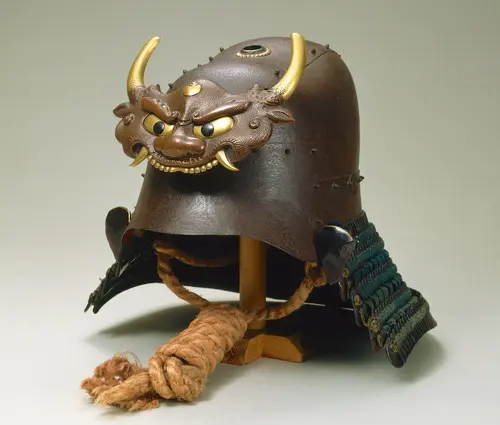
Zunari, Head-Shaped, Kabuto Helmet
兜は江戸時代前期。前立は、中期頃の作である。薄鉄板の五枚張の構成で、矧留鋲は小星である。前方正面の中心に一本角本を打ち、左右脇の下方に切鉄で丸に桔梗(ききょう)紋を打っている。作域は、薄鉄仕上げ、打ち出しは良好で、奈良の春日系の作と推定されている。
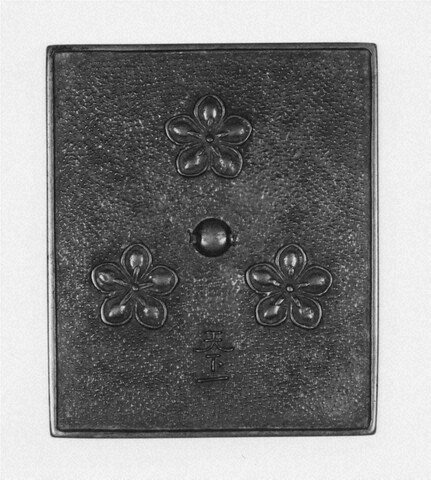
Square Mirror with Three Chinese Bellflowers Crest Pattern
The engraving of a family crest characterizes this mirror. The use of family crests in Japan stems from an ancient aristocratic custom. When Heian nobility commissioned oxcarts, furniture, etc., they incorporated favored objects of their family into a design motif. After generations, the motif developed into a family crest. With the rise of warlords, family crests became indispensable to distinguish friend from foe on battlefields. During the Edo Period, the popularity of family crests spread among the merchant class and lay people, an occurrence which is reflected in the mirrors of the day.
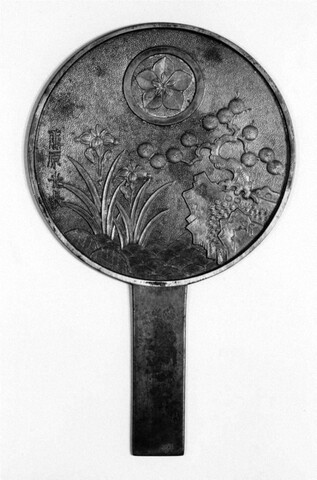
Handled mirror with a pine-and-iris and circular bellflower motifs
Edo Period handled mirrors often carry the signatures of the mirror makers, and some names appear more frequently than others, such as the name Fujiwara Mitsunaga seen on this mirror. The more frequent the name, the more prolific the craftsman. However, upon close scrutiny of the differences in design between years and makes, some mirrors were obviously not made by the same person. One can only conclude that the name of the master craftsman was passed on and that generations of consummated mirror makers practiced under his name.
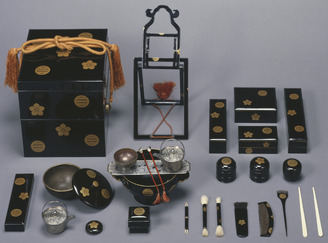
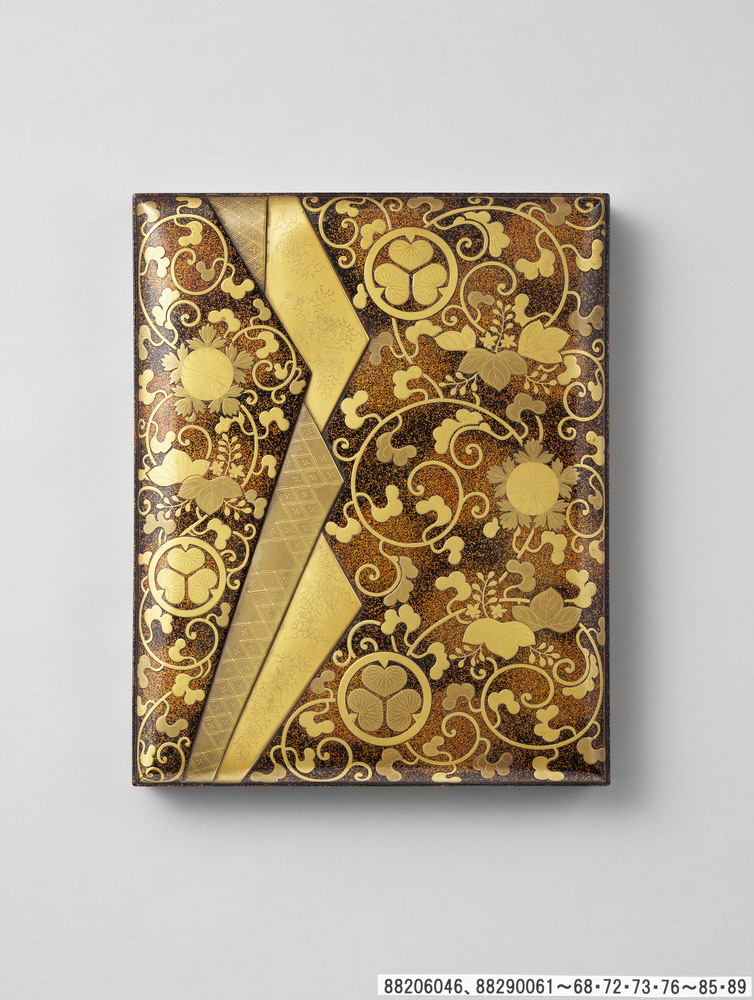
Teeth Blackening Utensil Box with Scattered Three-Striped Circle and Bellflower Crests in Makie
<p>Up through the 1100s, the custom of blackening one’s teeth with an iron solution was a feminine trend. Later, it spread among men of the imperial court and elite warrior class. In the Edo period (1615¬–1868), the practice was discontinued by men, but it became popular among commoners and soon came to symbolize married women.</p>

Videos

8月上旬。富山県中央植物園では、秋の七草のうち、ハギ、オミナエシ、キキョウ、ナデシコが見ごろを迎えていました。特にオミナエシの黄色が鮮やかでした。このあと、8月の終わりごろにはススキが穂を出し始め、フジバカマやクズが咲き始めます。<br><br>(この動画は、2013年に放送したものです。)

この唄の源流は、目の不自由な女性の旅芸人「越後瞽女」が門付唄として歌った「こうといな」といわれています。<br>その替え唄の、新潟・十日町市の「新保広大寺」という唄が、越後瞽女の手によって津軽へ伝えられ「じょうんがら節」に<br>なったということです。<br><br>収録/昭和58年<br><br>【歌詞】<br>ハアーアーアー花のお江戸のその傍らに さても珍し心中ばなし ところ四谷の新宿町よ<br>紺ののれんに桔梗の紋は 音に聞こえし橋本宿で 数多女郎衆の数あるなかに<br>お職女郎衆の白糸こそは 年齢は十九で当世育ち 愛嬌よければみな人さんが(ハイ)<br>われもわれもと名指してあがる あがるお客がどなたと訊けば 鈴木主水お言う侍よ
Institutions and External Links
静岡県の西部遠州森町にある曹洞宗の寺。「ききょう寺」とも呼ばれ、15種類、4万5000株以上の桔梗が6月中旬から開花する。
京都市上京区にある台圓浄宗の本山。紫式部の邸宅跡としても知られ、「源氏庭」では6月末から9月初め頃まで、紫の桔梗が咲く。
京都府亀岡市にある明智光秀公ゆかりの寺。例年6月末から7月末にかけ門前で「ききょうの里」を開催。紫や白色の桔梗をはじめ、珍しいピンクや八重咲きの桔梗も鑑賞できる。
1000種類以上の植物、花の名前がわかる植物図鑑。キキョウの基本情報や育て方などについて、「趣味の園芸」講師陣の専門家が執筆している。
国立科学博物館筑波実験植物園内の植物を検索できる。研究者ノートなど専門的な解説もあり。
熊本大学薬学部 薬草園内の薬用植物を検索できるデータベース。キキョウの写真や化学構造式とともに薬効や用途などが解説されている。
References
- 木村陽二郎 監修,植物文化研究会, 雅麗 編,柏書房
- 平田喜信, 身崎寿 著,東京堂出版
- 講談社 編,講談社
- 山田卓三, 中嶋信太郎 著,北隆館