白鳳文化の彫刻
白鳳文化の彫刻ことについて知りたくなりませんか?そんな様々ある彫刻を解説していきます。
館長からの挨拶
こんにちは、館長です。この博物館は白鳳文化の時にこんなに美しく、意味のある彫刻がたくさんあり、あんな彫刻やこんな彫刻まで!?といった物を一つでも知ってもらいたいと思いました。ごゆっくりご覧ください。
この展示について
来館いただきありがとうございます。僕が中学に入って新日本史図表を見ていたら彫刻のページに目が止まりました。
(昔からこんなすごい彫刻があったのか)と私は思って探究し、博物館にしました。
白鳳文化の彫刻
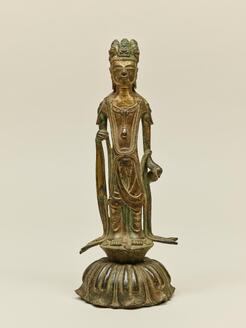
- The Eleven-Headed Bodhisattva Kannon
北又留四郎氏他2名寄贈,Gift of Mr. Kitamata Tomeshirō and two others,東京国立博物館,Tokyo National Museum
<p>This is a statue of Eleven-Headed Bodhisattva Kannon, or Ekadasamukha in Sanskrit. The many faces above the head watch out in all directions as this bodhisattva seeks to guide people to salvation.<br /><br />Let's look at the statue from the front first. The face resembles that of a young child. The body is standing upright, but the left leg is slightly bent to give the impression of subtle movement. A glance from the side shows the bodhisattva standing proud with his chest pulled in and stomach pushed out. These are all characteristics of Buddhist statues produced during the so-called Hakuho, or white-phoenix period that occurred during the late Asuka Period (593-710). </p><br /><p>With eleven faces — one primary and ten more atop its head, this statue was found in what was essentially a time capsule buried over 1,000 years ago. Thought to have been created in the late Asuka period, when realistic expression was first adopted in Japanese sculpture, it is one of the oldest images of this type of deity.<br /></p>
館長からの一言
この十一面観音像は養老5年(721年)にできたとされており、そのうち1体を祀ったのが始まりとされている。また、天平元年(729年)完成の伝承もある。8世紀の奈良時代から平安、鎌倉時代にかけて多数制作された。 この彫刻は、11面の顔があり、あらゆる方向から人を見守るためだとされており、助け、望みに導いてくれるという菩薩である。。正面で見ると、まだ幼い子供のような顔をされており、わずかに動きを感じさせるような彫刻になっている。
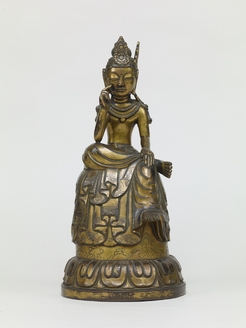
- Bodhisattva Seated with One Leg Pendent
東京国立博物館,Tokyo National Museum
<p>Here we see a figure sitting with one leg crossed over the other and the fingers of the right hand touching the cheek. This pose originated in the Bodhisattva statues of the ancient India kingdom of Gandhara. Later, during the Northern and Southern dynasties period in China, this pose was used to represent the Buddha himself before he abandoned his life as Prince Siddhartha and dedicated himself to religious practice. It is also thought that in Japan, this pose was used to depict the Bodhisattva Maitreya, who resides in and pursues his religious training in the heavenly realm of Tusita. One theory suggests that the mountain images on the base of this sculpture are meant to signify that the figure resides in this kind of heavenly realm.<br />The head is large and the body has a delicate physique, like that of a child. This style of Buddhist sculpture was popular in the latter half of the seventh century, towards the end of the Asuka period. The double eyelids were also often seen in the sculpture of this era. This work also features rich decoration, such as patterns of circles at the hems and borders of the garment. It differs from early Asuka period Buddhist sculptures in that the body appears more natural and has more depth when observed from the side.<br /></p>
館長からの一言
製作年代は、推古天皇(554~628)から持続天皇(645~702)の時代まで諸説あるが、現在では650年前後と考える説が有力である。ほほ笑む表現に堅さが見られず、飛鳥時代前期の仏像に見られるようなアルカイックスマイル(古典的微笑)から一歩進み、より人間的な表情に近づいているからだ。文(えもん)線も左右対称ではなく、比較的自由に表現されているのもその説を裏付ける。そうした観点から飛鳥時代後期、つまり白鳳時代の造像と考えられる。
霊木とされる樟を使った寄木造である。部材ごと丁寧に仕上げて組み合わせていくことで繊細な美しさを生み出している。全身黒光りしているため鋼鉄で作られたような印象を受けるが、表面にと石を粉末状にした「との粉」に生漆を混ぜた「錆漆」が塗られ、その上に白土を重ねてから、さらに彩色されていたことが調査で分かっている。
白鳳文化の彫刻
- The Eleven-Headed Bodhisattva Kannon
北又留四郎氏他2名寄贈,Gift of Mr. Kitamata Tomeshirō and two others,東京国立博物館,Tokyo National Museum
<p>This is a statue of Eleven-Headed Bodhisattva Kannon, or Ekadasamukha in Sanskrit. The many faces above the head watch out in all directions as this bodhisattva seeks to guide people to salvation.<br /><br />Let's look at the statue from the front first. The face resembles that of a young child. The body is standing upright, but the left leg is slightly bent to give the impression of subtle movement. A glance from the side shows the bodhisattva standing proud with his chest pulled in and stomach pushed out. These are all characteristics of Buddhist statues produced during the so-called Hakuho, or white-phoenix period that occurred during the late Asuka Period (593-710). </p><br /><p>With eleven faces — one primary and ten more atop its head, this statue was found in what was essentially a time capsule buried over 1,000 years ago. Thought to have been created in the late Asuka period, when realistic expression was first adopted in Japanese sculpture, it is one of the oldest images of this type of deity.<br /></p>
館長からの一言
この十一面観音像は養老5年(721年)にできたとされており、そのうち1体を祀ったのが始まりとされている。また、天平元年(729年)完成の伝承もある。8世紀の奈良時代から平安、鎌倉時代にかけて多数制作された。 この彫刻は、11面の顔があり、あらゆる方向から人を見守るためだとされており、助け、望みに導いてくれるという菩薩である。。正面で見ると、まだ幼い子供のような顔をされており、わずかに動きを感じさせるような彫刻になっている。
- Bodhisattva Seated with One Leg Pendent
東京国立博物館,Tokyo National Museum
<p>Here we see a figure sitting with one leg crossed over the other and the fingers of the right hand touching the cheek. This pose originated in the Bodhisattva statues of the ancient India kingdom of Gandhara. Later, during the Northern and Southern dynasties period in China, this pose was used to represent the Buddha himself before he abandoned his life as Prince Siddhartha and dedicated himself to religious practice. It is also thought that in Japan, this pose was used to depict the Bodhisattva Maitreya, who resides in and pursues his religious training in the heavenly realm of Tusita. One theory suggests that the mountain images on the base of this sculpture are meant to signify that the figure resides in this kind of heavenly realm.<br />The head is large and the body has a delicate physique, like that of a child. This style of Buddhist sculpture was popular in the latter half of the seventh century, towards the end of the Asuka period. The double eyelids were also often seen in the sculpture of this era. This work also features rich decoration, such as patterns of circles at the hems and borders of the garment. It differs from early Asuka period Buddhist sculptures in that the body appears more natural and has more depth when observed from the side.<br /></p>
館長からの一言
製作年代は、推古天皇(554~628)から持続天皇(645~702)の時代まで諸説あるが、現在では650年前後と考える説が有力である。ほほ笑む表現に堅さが見られず、飛鳥時代前期の仏像に見られるようなアルカイックスマイル(古典的微笑)から一歩進み、より人間的な表情に近づいているからだ。文(えもん)線も左右対称ではなく、比較的自由に表現されているのもその説を裏付ける。そうした観点から飛鳥時代後期、つまり白鳳時代の造像と考えられる。
霊木とされる樟を使った寄木造である。部材ごと丁寧に仕上げて組み合わせていくことで繊細な美しさを生み出している。全身黒光りしているため鋼鉄で作られたような印象を受けるが、表面にと石を粉末状にした「との粉」に生漆を混ぜた「錆漆」が塗られ、その上に白土を重ねてから、さらに彩色されていたことが調査で分かっている。