Description
This is a statue of Eleven-Headed Bodhisattva Kannon, or Ekadasamukha in Sanskrit. The many faces above the head watch out in all directions as this bodhisattva seeks to guide people to salvation.
Let's look at the statue from the front first. The face resembles that of a young child. The body is standing upright, but the left leg is slightly bent to give the impression of subtle movement. A glance from the side shows the bodhisattva standing proud with his chest pulled in and stomach pushed out. These are all characteristics of Buddhist statues produced during the so-called Hakuho, or white-phoenix period that occurred during the late Asuka Period (593-710).
With eleven faces — one primary and ten more atop its head, this statue was found in what was essentially a time capsule buried over 1,000 years ago. Thought to have been created in the late Asuka period, when realistic expression was first adopted in Japanese sculpture, it is one of the oldest images of this type of deity.
Data source
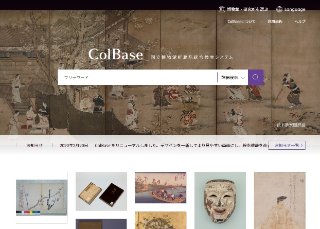
ColBase
"ColBase: Integrated Collections Database of the National Institutes for Cultural Heritage, Japan" is a service that enables a multi-database search of the collections in the four national museums (To...
Contents holder/Provider
Aggregator

National Institutes for Cultural Heritage
The National Institutes for Cultural Heritage (NICH) comprise four National Museums (Tokyo National Museum, Kyoto National Museum, Nara National Museum, and Kyushu National Museum) and two National Research Institutes for Cultural Properties (Tokyo National Research Institute for Cultural Properties, and Nara National Research Institute for Cultural Properties), as well as the International Research Centre for Intangible Cultural Heritage in the Asia-Pacific Region (IRCI) in Sakai City, for a total of seven institutions.
Last updated
October 5, 2026