埴輪の意味
埴輪とは、3世紀後半〜7世紀の古墳時代に、主に有力者の墓(古墳)の墳丘や周囲に並べられた素焼きの土製品のこと。今回は、その様々な形の埴輪に込められた意味や役割をテーマに紹介していく。
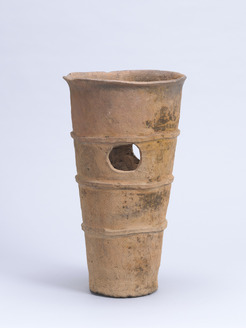
- Haniwa Cylinder
京都国立博物館 Kyoto National Museum,Kyoto National Museum
<p>Cylindrical haniwa developed out of Yayoi period earthenware jars, and they were produced from the 3rd to the 6th century. Numerous such haniwa would be lined up to encircle the top of burial mounds.</p>
円筒埴輪は主に4世紀から6世紀頃の300年以上にわたり多くの古墳で使用され、墳丘に大量に並べられることが基本であった。聖域である古墳を区画・荘厳化して外界と隔てる「結界」としての機能と、墳丘の崩落を防ぐ土留め、さらに故人の魂を守る魔除けの役割を果たしていたとされる。荘厳化とは、古墳などの聖域を美しくおごそかに飾り立て、威厳を持たせること。
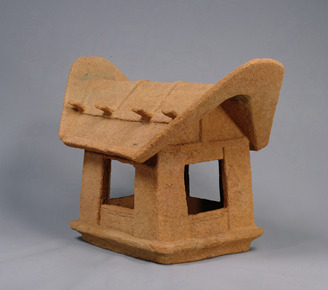
- Tomb Sculpture (Haniwa): House (Ceremonial Structure)
東京国立博物館,Tokyo National Museum
<p>House-shaped tomb sculptures played a central role among others and were often placed on the ground above important sections of a tumuli. Several of them were combined probably to represent a powerful ruler's residence.</p>
家形埴輪は、形象埴輪に分類される。主に古墳の埋葬施設(遺体が納められた場所)の真上などに置かれ、「死者の魂が宿る場所(魂のよりどころ)」や「死後の住まい」としての意味を持っていたと考えられている。また、魔除けや聖域化の役割や、葬られた人物が生前に持っていた経済力や権威を誇示する役割もあったとされる。
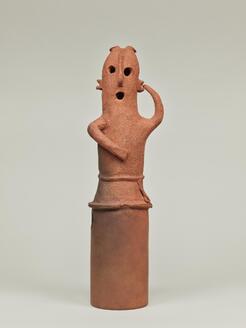
- Tomb Sculpture ("Haniwa"): Dancing Person
東京国立博物館,Tokyo National Museum
<p>These are haniwa, or terracotta tomb figurines. They stand with left arms raised and eyes and mouths wide open. These endearing expressions and striking poses have earned them the name 'Dancing People.' Haniwa were made of clay and placed on or around tumulus known as kofun. Some were placed at the top or base of the tombs, while others were positioned on the surrounding embankments. Early figurines were cylindrical. These were followed by haniwa shaped like houses, tools, weapons, armor, and boats, for example, as well as humans and animals.<br />These two human-shaped figurines are among the most popular haniwa in the Tokyo National Museum's collection, but there is still a lot we don't know about them.<br />For a start, are they male or female? <br />The smaller figurine is wearing a sickle around its waist, while its hair is tied in bunches on either side of the face. This is thought to represent a men's hairstyle known as mizura, so we know the smaller figurine is male. The larger figurine has none of these distinguishing characteristics, so we can't tell if it is male or female.<br />The next question we have to ask is, are they really dancing?<br />Human-shaped haniwa are often found grouped together. This has led some to suggest they were placed in tombs to depict the funeral ceremonies that occurred when the tomb's occupant passed away. Others suggest they depict rituals performed for the gods while the deceased was still alive. Another explanation says they recreate scenes of the deceased's triumphs during life.<br />These haniwa were excavated from the Nohara Tumulus in Kumagaya City, Saitama Prefecture. A number of figurines discovered here seem to represent humans participating in a religious ceremony. It is likely this pair also played some kind of role during a ceremony. So perhaps they danced like this during the rite? Unfortunately, there is no clear answer to this question.<br />However, haniwa striking the same poses are often found with sickles attached to the waist. Furthermore, an increasing number of similar figurines have been found next to horse-shaped haniwa. This has led some to suggest they might be representations of horse leaders or horse keepers. It is certainly easy to imagine this pair pulling the reins of a horse with their raised hands.<br />What do you think the figurines are doing?<br />Incidentally, this museum's official mascot, Tohaku-kun, is modelled on these Dancing People haniwa. </p><br /><p>In Japan, from around the 3rd to the 7th century, powerful rulers were buried in tomb mounds adorned with clay figurines. The two figurines here, though popularly known as “dancing people,” may represent individuals pulling on horses’ reins. They were likely part of a larger arrangement of figurines expressing the ruler’s authority.</p>
この「踊る人々」の解釈には二つの説があり、一つ目は、古墳の主を弔う葬儀(儀礼)の場で歌い踊っている姿とする説。この場合、死者の魂を鎮めたり、悪霊を追い払ったりするための宗教的な役割を担っていたと考えられている。二つ目は、馬の手綱を引いている姿とする説。この場合、亡くなった王が死後の世界で乗るための馬を世話する「馬飼」の役割があるとされている。
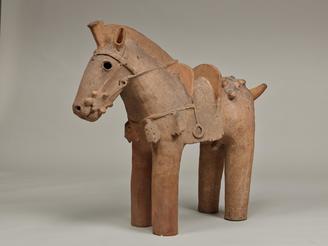
- Tomb Sculpture ("Haniwa"): Horse
東京国立博物館,Tokyo National Museum
<p>This sculpture represents a horse with a decorative harness featuring bells. As horses became prevalent from the latter half of the 400s to the 500s, more horse-shaped tomb sculptures were made during this period.</p><br /><p>Haniwa are unglazed terracotta clay ornaments that were placed on or around the burial mounds of kings and other powerful figures from the 3rd to the 7th century. Horse-shaped haniwa were produced in volume from the mid-Kofun period onwards, particularly in the Kanto region. This was around the time horses first arrived and spread throughout Japan. This haniwa is particularly well-preserved and we can still make out the details of the harness, for example. The horse's mane is brushed up and fastened at the top of the head, while the tail hair is also tied up neatly. The bit mouthpiece has six bells attached on either side, while four larger bells hang down from the chest belt. Three plum-leaf decorations adorn the horse's flanks in three directions. These also have bells attached. The horse also sports a saddle, stirrups, and mudguards. It presents a magnificent sight with all these beautiful adornments.<br />The trappings on this horse faithfully recreate the trappings commonly found among the burial goods excavated from tumuli from that era. The bells on real trappings were made of bronze and they must have gleamed brightly. This haniwa shows how these horses must have looked as they trotted along with their bells chiming. Such well-groomed and lavishly-attired horses must have made a striking visual and aural impression at that time. They also symbolized the prestige and authority of their powerful owners.</p>
古墳時代、馬は朝鮮半島から伝わったばかりの「最先端の乗り物」であり、非常に希少で価値の高いものだった。その馬の形をした埴輪に豪華な馬具(鞍や鐙など)を装着して並べることで、その被葬者が生前に強力な権力や財力を持っていたことを示したとされている。
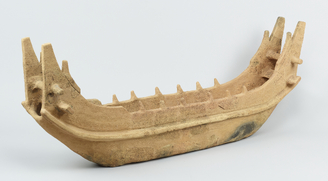
- Tomb Sculpture ("Haniwa"): Boat
東京国立博物館,Tokyo National Museum
<p> This is a haniwa shaped like a boat. Haniwa are unglazed terracotta clay ornaments that adorned the kofun burial tumuli of powerful figures or kings. The sides of the boat's body have plank-like walls. These are fastened together horizontally by two pieces of lumber at the bow and two at the stern. The boat was not made by simply hollowing a block of wood. The upper section has a firm structure, so the boat looks equipped to deal with the gentle ripples of a harbor and the wild waves of the open seas.<br /> The boat has neither a mast to hoist a sail nor an engine, so it was propelled forward by rowers with oars. There are twelve protuberances around the edge, six on each side. These are the rowlocks where the oars would fit. Each rower would hold an oar by both hands and would row facing backward. That is why the rowlocks are inclined in the opposite direction to the forward-facing bow. The boat might not actually have required 12 rowers: perhaps the artisan wanted to create the impression of a boat impressive enough to require 12 rowlocks. The design seems quite simple, but it still provides a good glimpse at how boats were built back then. This boat-shaped haniwa paints a picture of oceanic exchange at the time. Perhaps it also symbolized how the soul of the tomb's occupant had embarked on a new journey.<br /></p><br /><p>This sculpture of a large boat intended for sailing on the open sea may have symbolized the departure of the soul of the tomb's occupant. The design seems quite simple, but it provides a good glimpse at how boats were built back then. </p>
船形埴輪は、亡くなった首長や有力者の魂を乗せ、海や川を渡ってあの世へと送り出す「葬送の儀礼」を象徴していると考えられている。また、被葬者が生前に水上交通を支配していたことや、海外(朝鮮半島や中国大陸)との交渉に関わっていたという強力な経済力を示す役割もあったとされる。
いかがだったでしょうか。埴輪は埴輪でも形によって意味や役割が違うことを知ってもらえたでしょうか。埴輪について関心が深まったり興味を持ったりしたら幸いです。