企画展 埴輪の顔面
館長挨拶
この度、古今東西様々な埴輪を「顔」をテーマに集めてまいりました。それはなんの表情なのか、それぞれの表情はどのように作られていたのか、思いを馳せながら見ていただければ幸いです。
企画展内容
多くの埴輪がある中で埴輪の「顔」、「表情」を中心に私の感性に響いたものを選びました。
1章 頭部 生首
- 埴輪土偶首
和田芳吉氏寄贈,東京国立博物館
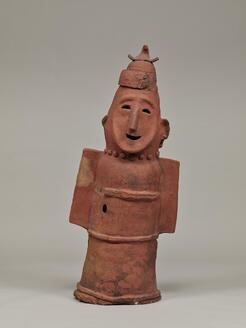
常陸国、現在の茨城県から出土した埴輪です。微笑みながらも不気味な表情をしています。わざとらしいからそう見えるのでしょうか?埴輪などの像の笑みには魔除けの効果があると信じられていたとも言われています。頭に被っているのは帽子か兜とでしょう。これを掘り出したら少し嫌ですね。
- 埴輪 女子
東京国立博物館
先ほどの埴輪とは首だけという点では同じですが、どうもこちらの方が印象がいいですね。垂れ目で口も微笑んでいます。群馬県から出土した物です。頭にシャンプーハットの様なものを被っていますが、よく見ると割れた様な跡があるので、何かシャンプーハットよりはいい物を被っていたのでしょう。
- Tomb Sculpture (Haniwa): Head of a Man Wearing a Hat
東京国立博物館,Tokyo National Museum
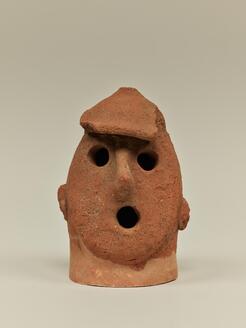
<p>いわゆる踊る人々と同じ古墳から出土した人物像です。これらの他に馬や矛などの埴輪も出土しています。振分け髪で下げ美豆良を表現した男子は中心人物となる可能性があります。笠を被った男子は踊る人々と同様に目や口が丸く開けられています。<br /></p>
埼玉県から出土した埴輪です。今までの埴輪より派手な表情をしているこの埴輪はかの有名な埴輪「踊る人々」と同じ古墳から出土したとか!穴を三つ開けるてるだけなので作るのは簡単そうに見えますね。他と比べれば。


2章 全身を使った表情
- 埴輪 壺を持つ女子
九州国立博物館
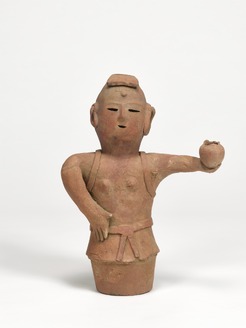
<p>古墳に立て並べられた人物埴輪で、右手を腰帯に当て、左手で小壺を持つ上半身の女性像である。基台の最下部や左腕の一部などに欠損が認められるほか、頭部はすべて後補の可能性が高い。両肩にたすきをかけ、腰には腰帯を表現し中央で留め、右手を帯に添える。左手は横に伸ばし、掌に小壺をつかむ。群馬県荒砥町(現在の前橋市内)出土と伝わる。</p>
「ほれよ」だとか「えっへん」だとか言ってこちらに手を差し伸べる様な雰囲気を醸し出すこの埴輪は埴輪「壺を持つ女子」です。右手は下腹部に添え、左手はピンと張り小壺を持っているこの姿勢に意味があるのでしょうか。全体を総じて表情を表しているのが愛らしいですね。
- Tomb Sculpture (Haniwa): Man Holding a Shield
東京国立博物館,Tokyo National Museum
<p>Haniwa are terracotta tomb sculptures placed on or around the tumuli of powerful figures in Japan from the 3rd to the 6th century. Human-shaped haniwa proliferated in the 6th century, with shield-bearing figurines like this playing the role of tomb guards. Shield-bearing haniwa have been found all across Japan, with most of them placed around the perimeter of tumuli rather than inside. Their job was probably to prevent evil from entering the tombs. They are characterized by their expressive facial features. The large ears seem to be listening for any unusual activity nearby, for example. Many also have smiling faces like this one, while others have open-eyed, startled features or threatening countenances. Perhaps smiling or angry expressions were believed to ward off evil spirits. <br /><br />The status of haniwa is revealed by the way their bodies are depicted. Haniwa with arms and legs represent high-ranking figures like kings or priestesses. Next up are haniwa with arms but no legs, while the lowest ranked haniwa are given neither arms nor legs. These shield-bearing haniwa are also limbless, so they probably had a low status. Early examples had clearly-defined shields, but the shield depictions were simplified as the original forms were copied down the ages. Eventually, the guards went from holding shields to seeming part of the shield itself, with these later haniwa guarding the tumuli with their entire bodies.</p>
ガードマンとの役割を果たすために魔除けのために笑みも利用しているのでしょうか。だいぶパンチのある表情です。兜や甲冑の作りも細かいですね。少し斜めなのはミスだと思いますが、その制作の過程にも想いを馳せられていいです。
3章 人外
- Tomb Sculpture ("Haniwa"): Monkey
東京国立博物館,Tokyo National Museum
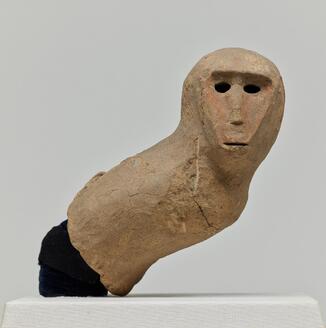
<p>This haniwa, or terracotta tomb figurine, splendidly portrays a monkey in mid-movement, as if startled by a sound.<br />As both arms and the lower half of the body are missing, the figurine's original shape is a mystery. However, a large mark indicates something was attached to the back, so it is thought this monkey may have once carried a baby. If this is the case, then perhaps the monkey is turning its face to the side to look at its child. Maybe this is a depiction of a mother caring for her young.<br />The face creates a striking impression with its overhanging forehead, childlike mouth, wide, almond-shaped eyes, and upper lip extending down from the small nose. The face is still tinged with a faint redness, too. All in all, the figurine brilliantly captures the characteristics of a monkey, despite its simplified, unsophisticated shape. No other monkey-shaped haniwa have been found, so this piece is also extremely valuable for the study of diversity in haniwa.<br />This figurine is attributed to the Okisu Dainichizuka Tumulus – scallop-shaped tumulus around 40 meters in length. A horizontal stone chamber, made of a rock called mica schist, still exists at the site today.<br /></p><br /><p>Tomb sculptures depicting monkeys are extremely rare. Traces on this monkey's back suggest it once carried a baby, which is now lost. The head is slightly turned as if to check on its baby. The maker deftly portrayed the expression of this mother monkey.</p>
肌が出ている部分を凹ませることで体毛を表現しているのが上手いですね。もしかしたら全身があるのではないかと思うと面白いかも知れません。一体なぜ猿を作ろうとしたのでしょう?
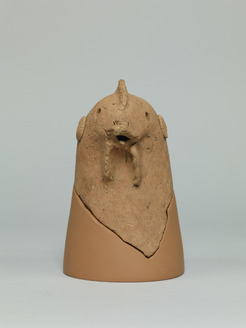
- Tomb Sculpture (Haniwa): Chicken
東京国立博物館,Tokyo National Museum
<p>Roosters were regarded by ancient people of Japan as sacred birds. They were believed to bring light into the world, for they crowed at dawn, signaling the arrival of the morning. </p>
なんとも言えない漫画チックな表情が面白いですね。笑ってるわけでもしかめっつらな訳でもない微妙な表情がリアルな側面もあって大変興味深いです。しかし何に使うのでしょうね。
最後に
この様に顔に注目してみてもいろいろと取り上げるものはわんさか出てきます。これからも顔にパンチのある埴輪が出土することを願って待ちましょう。
⭐️懸賞⭐️
埴輪の顔の絵を描き、それを抽選券に埴輪グッズが当たる!