Description
Haniwa are terracotta tomb sculptures placed on or around the tumuli of powerful figures in Japan from the 3rd to the 6th century. Human-shaped haniwa proliferated in the 6th century, with shield-bearing figurines like this playing the role of tomb guards. Shield-bearing haniwa have been found all across Japan, with most of them placed around the perimeter of tumuli rather than inside. Their job was probably to prevent evil from entering the tombs. They are characterized by their expressive facial features. The large ears seem to be listening for any unusual activity nearby, for example. Many also have smiling faces like this one, while others have open-eyed, startled features or threatening countenances. Perhaps smiling or angry expressions were believed to ward off evil spirits.
The status of haniwa is revealed by the way their bodies are depicted. Haniwa with arms and legs represent high-ranking figures like kings or priestesses. Next up are haniwa with arms but no legs, while the lowest ranked haniwa are given neither arms nor legs. These shield-bearing haniwa are also limbless, so they probably had a low status. Early examples had clearly-defined shields, but the shield depictions were simplified as the original forms were copied down the ages. Eventually, the guards went from holding shields to seeming part of the shield itself, with these later haniwa guarding the tumuli with their entire bodies.
Data source
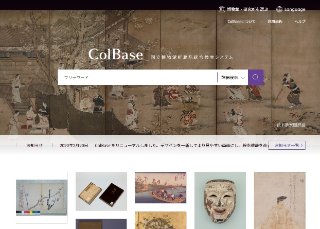
ColBase
"ColBase: Integrated Collections Database of the National Institutes for Cultural Heritage, Japan" is a service that enables a multi-database search of the collections in the four national museums (To...
Contents holder/Provider
Aggregator

National Institutes for Cultural Heritage
The National Institutes for Cultural Heritage (NICH) comprise four National Museums (Tokyo National Museum, Kyoto National Museum, Nara National Museum, and Kyushu National Museum) and two National Research Institutes for Cultural Properties (Tokyo National Research Institute for Cultural Properties, and Nara National Research Institute for Cultural Properties), as well as the International Research Centre for Intangible Cultural Heritage in the Asia-Pacific Region (IRCI) in Sakai City, for a total of seven institutions.
Last updated
July 20, 2026