音楽と楽器
音楽についての、昔の楽器やその楽器を使った人、その時代の背景が分かるような展示にしてますので、どうぞ気楽に見て行ってください。
〈館長挨拶〉
こんにちは。館長です。僕は趣味としてピアノをやっているため、みなさんにも興味を持ってもらえると良いなと思い、音楽関連の物をこのギャラリーにまとめました。楽器やオーケストラ、作曲家の人などを載せていて、音楽に関係のある絵など、幅広く載せていて、楽器を使った人や、その時代の背景も知れるため、音楽をあまり知らない人でも、ちゃんと楽しめるようにしているので、興味を持ってくれるとありがたいです。
〈企画展内容〉
作曲家、楽器、音楽に関係ある絵画など、様々な音楽の歴史を集めました。音楽についてもですが、その楽器を使った人や、その時代にはこんな物がある。という事が分かるような展示にしています。
作曲家、絵画、楽器
- Ludwig van Beethoven
A.W.Fr.キスター社,A.W.Fr.Kister GmbH,ライプツィヒ民族学博物館寄贈,Gift of Leipzig Museum of Ethnology,東京国立博物館,Tokyo National Museum
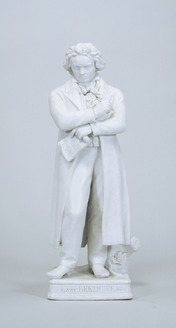
<p> ルートヴィヒ・ヴァン・ベートーヴェン(1770~1827年)は、ボンで生まれ、ウィーンで活躍しました。苦悩の中から旋律を搾り出していく様が、苛立ちのこもったつま先に表現されています。天才肌のモーツァルトの像と対をなして制作されました。<br /></p>
〈館長からの一言〉
誰もが一度は聞いたことがある名前ではないでしょうか。本名は、ルートヴィヒ・ヴァン・ベートーヴェンで、主にオーストリアのウィーンという場所で活躍され、『交響曲第5番ハ短調「運命」』、『ピアノ・ソナタ第23番ヘ短調「熱情」』、『交響曲第9番 ニ短調「合唱」』、『エリーゼのために』交響曲第9番 ニ短調「合唱」など、どれもとても有名な曲です。これは、モーツァルトと対をなして作成され、苦悩の中から旋律を搾り出していく様が、苛立ちのこもったつま先に表現されています。
- Krishna and Radha on a Swing (Hindol Raga)
東京国立博物館,Tokyo National Museum
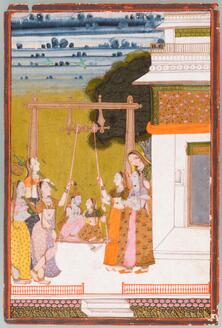
<p>Depicted here is an illustration based on the [Hindol Raga], a piece of classical Indian music that celebrates the arrival of the rainy season. Hindol means swing, on which the Hindu god Krishna and his wife Radha sit in this painting.</p><br /><p>The art of “miniature painting” is one of India’s best-known genres. These paintings use elaborate brushwork and vibrant colors to depict a variety of themes, including: Indian myths; Hindu gods, such as Shiva and Vishnu; portraits of kings; scenes from history; and love stories. Miniature paintings can also be enjoyed for their distinct regional styles that reflect India’s rich history of cultural diversity.<br /><br />One form of Indian miniature painting is called Ragamala painting. Ragas are traditional melodies from northwestern India. Ragamala paintings depict the poetic stories of men and women that are told in those melodies. In this genre, men’s melodies are called raga, women’s melodies are called ragini, and melodies for their children are called ragaputra and ragaputri. This painting is an illustration of the Hindol Raga, a melody for a man. The word hindol means “swing.” <br /><br />The blue-skinned man is the Hindu god Krishna, the most widely revered deity in Hinduism. The woman beside Krishna is his wife Radha. The couple sit together lovingly on a swing. The surrounding women rock the swing for them and play a variety of musical instruments. In the background, rain clouds are depicted filling the sky.<br /><br />The Hindol Raga was originally a melody expressing joy at the arrival of the rainy season, but in the world of miniature painting that sentiment is expressed in combination with a tale of romance.</p>
この絵画については以下の様に述べられています。
『ヒンドル・ラーガという、雨季の到来を喜ぶ音楽を絵画化したものです。ヒンドラはブランコのことで、画面下方には、青い肌のクリシュナとその妻ラーダーが乗り、周りの女はブランコを【こ】ぎ、また音楽を奏でています。遠景の空には雨と結びつく雲が描かれています。』
(出典:文化庁「文化遺産オンライン」)
〈館長からの一言〉
この絵は、18世紀末から19世紀初頭のインドの北デカンで制作された細密画で、青い肌の神クリシュナとその恋人のラーダーが一緒にブランコに乗り、雨季の到来を祝うヒンドル・ラーガを描いたもので、周囲の女性が揺らすブランコで、二人の仲の良い姿を鮮やかな色彩により表現した美術品です。
- The New Thirty-Six Immortal Poets
狩野探幽(1602~74)筆,By Kanō Tan'yū (1602–74),東京国立博物館,Tokyo National Museum
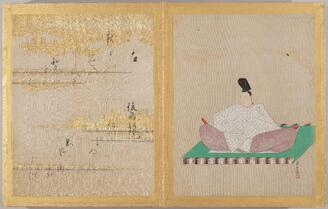
<p>This is an example of a kasen-e, or a painting depicting famed historical poets of Japanese waka poems. These works feature portraits of the so-called immortal poets accompanied by their poems. This Album of the New Thirty-six Immortal Poets depicts 36 poets who were chosen by Emperor Gotoba during the Kamakura period. These are introduced across two booklets, known as the Right Booklet and the Left Booklet. Each two-page spread features a poet and one of their representative poems. With the Right Booklet, the poet is painted on the left page and the poem is written on the right page. This order is reversed in the Left Booklet. When the two booklets are lined up and the pages turned simultaneously, the poets appear to face each other across their respective poems. Perhaps the purpose was to create an imaginary poetry contest between the pair.<br /><br />This album was a gift from the Minister of the Right, a government official at the time, to his daughter, who was marrying into the shogunal family. The paintings are by Kano Tan'yu. He was active at the start of the Edo period and he became the first official painter of the Edo shogunate. The delicate, elegant depictions of the clothes, hair and facial expressions have been rendered using an elaborate color scheme. The poems were also written by renowned members of the nobility at that time. This magnificent, resplendent work was certainly a fitting gift for a shogunal wedding ceremony.</p>
歌仙絵については以下のように述べられています。
『歌仙絵とは和歌に秀でた歌人の画像で、普通歌人の肖像にその歌の一首を、ときに略伝を添えたものを指します。鎌倉時代から江戸時代に非常に流行し、藤原公任 (966-1041) 撰の「三十六人撰」所収歌人を称した「三十六歌仙」をはじまりとする種々の歌仙絵が制作されました。歌仙絵は和歌文学、日本美術、また、装束や色彩といった日本文化全般にわたる古典文化研究を深める上で、貴重な資料のひとつといえます。
本画帖の「新三十六歌仙」は後鳥羽院 (1180-1239) が撰んだといわれる歌仙を描き、表に絵色紙、裏に詞色紙を貼付しています。「新三十六歌仙」は「三十六歌仙」との対比の上で重要な作品であり、また後鳥羽院の問題、鎌倉歌人の後代の受容など、多くの研究課題を有した作品です。
作者の狩野洞雲は本名益信、 11 歳で狩野探幽の養子となるが、探幽に実子が誕生したため離別し、駿河台狩野家を興します。徳川家光に寵遇され、功績を積んだものに贈られる位階の一つである法眼(ホウゲン)に叙せられました。』
出典:(https://www.library.ferris.ac.jp/digital-collection/collection01/ 参照日 2026.2.15 )
〈館長からの一言〉
新三十六歌仙図帖は、江戸時代初期の幕府御前絵師・狩野探幽が1664年に描いた、鎌倉時代の名歌人36人の肖像と歌を記した歌仙絵で、後鳥羽院が選んだ歌人を右と左に18人ずつに分け、見開きで向かうように描かれていて、婚礼用として作られた緻密で雅な作品です。
- Seven-stringed Chinese Zither (Qin)
東京国立博物館,Tokyo National Museum
<p>This is a seven-stringed instrument called a qin that was made in Tang China and brought to Japan during the Nara period in the 8th century. It is made of paulownia wood coated in black lacquer. The Japanese koto is an instrument with 13 strings, each of which has its own bridge, limiting each string to one note. With the qin however, the strings are pressed down with the fingers in different locations, making each string capable of producing a range of sounds. Embedded in the fingerboard of this qin are thirteen round pieces of shell that indicate where the strings are to be depressed. The piece that protrudes from one end is where the strings would be passed through and anchored, while the underside of the instrument has two sound holes that run parallel to the strings.<br />Inside the hollow body is an inscription in ink noting that the instrument was made near what is now Chengdu in Sichuan province in 724, when Emperor Xuanzong ruled Tang China. It is the oldest qin in the world for which both the time and place of manufacture are known, and so holds an extremely important place in the history of East Asian music.<br /></p><br /><p>A masterpiece of the Tang dynasty, this qin has an inscription in the hollow of its base revealing that it was created in 724 in the Pengzhou area of Sichuan Province. It is made of black-lacquered paulownia wood.</p>
七弦琴については以下のように述べられています。
『主に独奏楽器として、演奏技法や複雑な表現が尊重されています。改造の激しい中国の楽器の中では珍しく原型が保たれ、2003年、ユネスコの世界無形遺産に指定されました。日本には奈良時代に伝来し、現在も一部で演奏されています。中国ではグーチン(古琴)とも呼びます。木製の胴に黒い漆(うるし)を塗り、13個の徽(き)(勘所(かんどころ))が付いています。左手で徽を押さえ、右手の指で弦を弾きます。』
出典:(独立行政法人日本芸術文化振興会.”七弦琴“.文化デジタルライブラリー.www2.ntj.jac.go.jp,(参照日 2026,02,15)
〈館長からの一言〉
これは、唐の時代に中国で作られた物で、制作された年と場所が明らかな琴としては、世界最古の作例で奈良時代に日本に伝えてられ七弦琴という楽器で、一つの弦で高低様々な音色を奏でることができ、724年に四川省彭州で作られたことが分かっている七弦琴の名品です。3000年以上の歴史を持ち、古琴という別名もあります。
- 金銅製雛形五弦琴
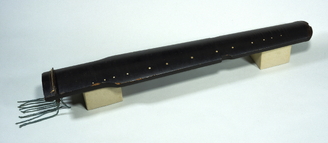
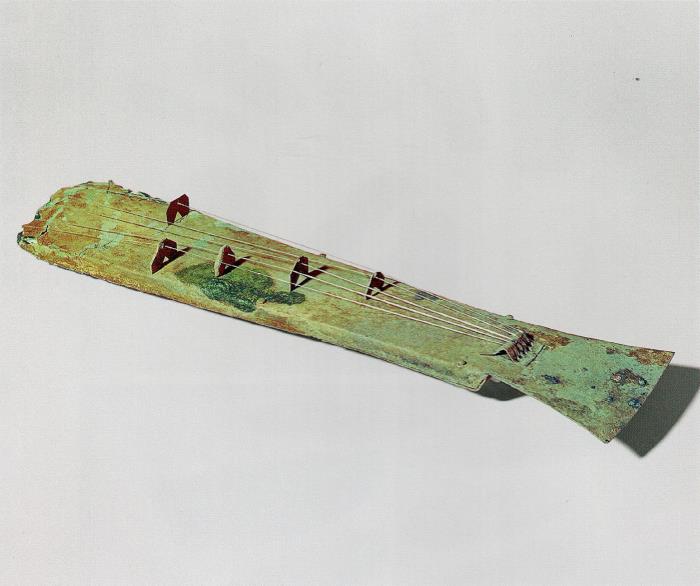
わが国固有の弦楽器である倭琴のミニチュア品。祭祀において楽を奏するものを雛形化して幣帛としたものであろう。金銅製で、琴尾部の弦を掛ける突起が欠失しているが、琴頭部に5つの小孔が開いており、5つの琴柱も遺存していることから、本来、5本の弦が張られていたことがわかる。1枚の金銅板を折り曲げて上板と側板を1体で作り、金銅底板と金銅鋲で留めた「甲作り(断面がП形の共鳴槽を持つ)」の琴である。本品は、琴頭を鵄の尾のように台形状に作り出しており、『延喜式』に伊勢内宮神宝として記載されている鵄尾琴の前身にあたるものといわれる。現存する伊勢内宮神宝、鵄尾御琴とも形状が類似しており、律令祭祀の発現と継承を考える上で重要なものとなっている。
金銅五弦琴については以下のように述べられています。
『この弦楽器は、倭琴として知られる日本固有の琴のミニチュア版です。この琴の最大の特徴は、琴の頭の形が、広がった「鵄の尾」であることです。これは、同様に神宝館で展示されている金銅製高機と同じ沖ノ島の祭場で発見されました。このミニチュア琴の弦は実際に音を出すことが出来ます。同様の琴は、皇室の祖先を祀る主要な神社である伊勢神宮の神宝の一つでもあります。このことから、沖ノ島での儀式が「律令国家」として知られる 8 世紀の改革された中央集権制の下で後に行われた儀式を先行していたことを示唆しています。』
出典:(https://www.mlit.go.jp/tagengo-db/common/001553792.pdf 参照日 2026.2.15)
〈館長からの一言〉
これは、沖の鳥島の祭祀遺跡から出土した国宝で、日本固有の弦楽器である倭琴のアマチュア版で、長さ三十センチ程と、実物の約半分程で、金メッキを施した銅で出来ていて、特徴は、琴の頭の形が広がった鵄の尾の形をしている事で、これは、伊勢神宮の神宝にも同様の形状の琴が見られることから、律令国家時代の祭祀との関連が示唆されています。
- Wind Instrument ("Shō") with Bell Crickets and Eulalia Grass, Named "Bell Cricket"
東京国立博物館,Tokyo National Museum
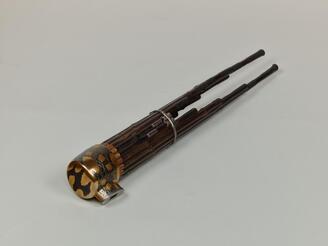
<p>この笙@しょう@は鈴虫@すずむし@という銘をもちます。笙は、木製の匏@ほう@というものの上部に十七本の竹管を立て、その下部に金属製の簧@こう@(リード)を付けて、匏の側面の吹口で息を吸ったり吐いたりして音を奏でる楽器です。本器は古いものとされていますが、補修が施されており、匏部は黒漆塗りにして薄と鈴虫を蒔絵で表わしています。</p>
笙については以下のように述べられています。
『笙は、日本の伝統文化である雅楽のうち、「唐楽」(とうがく:中国から日本に伝来した唐代の音楽)、「催馬楽」(さいばら:平安時代の歌謡)、「朗詠」(ろうえい:日本における歌曲の形式で、詩吟に類似する)に用いられる管楽器のひとつです。
「簧」(した)や「リード」と呼ばれる薄片(はくへん:薄い弁のこと)が空気の流れによって自由に振動する自由リード楽器。なかでも、最も古いと言われているのが「笙」(しょう)です。笙は、「匏」(ほう)や「かしら」と呼ばれるお椀状の部位に15~17本の長さが異なる「竹管」(たけかん)を環状に立てて並べた形。翼をたたんで休んでいる鳳凰(ほうおう)の姿にも似ているため、「鳳笙」(ほうしょう)と呼ばれることもあります。』
(出典:日本の歴史を動かした「有名な力」の謎を解く!」.刀剣ワールド、www.touken-worla.jp.2025年2月15日閲覧.)
〈館長からの一言〉
笙は、主に日本の雅楽で用いられる管楽器(笛)の一種で、17本の竹管を環状に立てて並べた構造で、鳳凰が羽根を休めている姿に似ているとされることから、鳳笙と呼ばれる事もあり、その音色は「天の声」と評され、さらに和音(合竹)を奏でる事で、音楽に独特の広がりと荘厳な雰囲気をもたらすことができる、古くから伝わる伝統的な邦楽器です。
- Stringed Instrument ("Shamisen") with a Blooming Plum Tree
石村直作,By Ishimura Tadashi,東京国立博物館,Tokyo National Museum
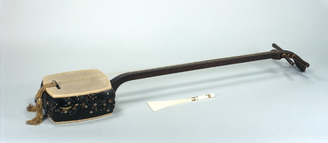
<p>This stringed instrument is made of rare imported woods such as cassia and rosewood and decorated with inlay of gold, silver, and ivory.<br /></p>
三味線は本来、中国より伝来した楽器であるといわれています。
室町時代に中国の「三絃」が琉球へ渡来し「三線」となり、それを日本の楽器として改良、発展させたものが「三味線」です。日本に正式に伝わったのは16世紀ごろと言われています。
「三線」は日本の音楽に合わせた自由な改良がおこなわれ、約半世紀ほどで、旋律楽器でもあり打楽器的要素ももつ、日本固有の弦楽器「三味線」が生まれました。
楽器を改良し三味線を創造したのは琵琶法師たちとも、「三味線組歌」を創始した盲目音楽家であるとも伝えられています。
出典(https://www.okoto.jp/information/shamisen_history/ 参照日:2月15)
〈館長からの一言〉
三味線(しゃみせん)は、16世紀頃に琉球の三線が日本へ伝わり改良された、3本の弦を持つ日本の代表的な伝統的な撥弦楽器で、イチョウの葉のような形をした物で弦をで弾いて演奏します。
以上の事を、まとめました!(内容は変わりません)ぜひ、参考にして下さい!!!
<p> ルートヴィヒ・ヴァン・ベートーヴェン(1770~1827年)は、ボンで生まれ、ウィーンで活躍しました。苦悩の中から旋律を搾り出していく様が、苛立ちのこもったつま先に表現されています。天才肌のモーツァルトの像と対をなして制作されました。<br /></p>
<p>Depicted here is an illustration based on the [Hindol Raga], a piece of classical Indian music that celebrates the arrival of the rainy season. Hindol means swing, on which the Hindu god Krishna and his wife Radha sit in this painting.</p><br /><p>The art of “miniature painting” is one of India’s best-known genres. These paintings use elaborate brushwork and vibrant colors to depict a variety of themes, including: Indian myths; Hindu gods, such as Shiva and Vishnu; portraits of kings; scenes from history; and love stories. Miniature paintings can also be enjoyed for their distinct regional styles that reflect India’s rich history of cultural diversity.<br /><br />One form of Indian miniature painting is called Ragamala painting. Ragas are traditional melodies from northwestern India. Ragamala paintings depict the poetic stories of men and women that are told in those melodies. In this genre, men’s melodies are called raga, women’s melodies are called ragini, and melodies for their children are called ragaputra and ragaputri. This painting is an illustration of the Hindol Raga, a melody for a man. The word hindol means “swing.” <br /><br />The blue-skinned man is the Hindu god Krishna, the most widely revered deity in Hinduism. The woman beside Krishna is his wife Radha. The couple sit together lovingly on a swing. The surrounding women rock the swing for them and play a variety of musical instruments. In the background, rain clouds are depicted filling the sky.<br /><br />The Hindol Raga was originally a melody expressing joy at the arrival of the rainy season, but in the world of miniature painting that sentiment is expressed in combination with a tale of romance.</p>
<p>This is an example of a kasen-e, or a painting depicting famed historical poets of Japanese waka poems. These works feature portraits of the so-called immortal poets accompanied by their poems. This Album of the New Thirty-six Immortal Poets depicts 36 poets who were chosen by Emperor Gotoba during the Kamakura period. These are introduced across two booklets, known as the Right Booklet and the Left Booklet. Each two-page spread features a poet and one of their representative poems. With the Right Booklet, the poet is painted on the left page and the poem is written on the right page. This order is reversed in the Left Booklet. When the two booklets are lined up and the pages turned simultaneously, the poets appear to face each other across their respective poems. Perhaps the purpose was to create an imaginary poetry contest between the pair.<br /><br />This album was a gift from the Minister of the Right, a government official at the time, to his daughter, who was marrying into the shogunal family. The paintings are by Kano Tan'yu. He was active at the start of the Edo period and he became the first official painter of the Edo shogunate. The delicate, elegant depictions of the clothes, hair and facial expressions have been rendered using an elaborate color scheme. The poems were also written by renowned members of the nobility at that time. This magnificent, resplendent work was certainly a fitting gift for a shogunal wedding ceremony.</p>
<p>This is a seven-stringed instrument called a qin that was made in Tang China and brought to Japan during the Nara period in the 8th century. It is made of paulownia wood coated in black lacquer. The Japanese koto is an instrument with 13 strings, each of which has its own bridge, limiting each string to one note. With the qin however, the strings are pressed down with the fingers in different locations, making each string capable of producing a range of sounds. Embedded in the fingerboard of this qin are thirteen round pieces of shell that indicate where the strings are to be depressed. The piece that protrudes from one end is where the strings would be passed through and anchored, while the underside of the instrument has two sound holes that run parallel to the strings.<br />Inside the hollow body is an inscription in ink noting that the instrument was made near what is now Chengdu in Sichuan province in 724, when Emperor Xuanzong ruled Tang China. It is the oldest qin in the world for which both the time and place of manufacture are known, and so holds an extremely important place in the history of East Asian music.<br /></p><br /><p>A masterpiece of the Tang dynasty, this qin has an inscription in the hollow of its base revealing that it was created in 724 in the Pengzhou area of Sichuan Province. It is made of black-lacquered paulownia wood.</p>
わが国固有の弦楽器である倭琴のミニチュア品。祭祀において楽を奏するものを雛形化して幣帛としたものであろう。金銅製で、琴尾部の弦を掛ける突起が欠失しているが、琴頭部に5つの小孔が開いており、5つの琴柱も遺存していることから、本来、5本の弦が張られていたことがわかる。1枚の金銅板を折り曲げて上板と側板を1体で作り、金銅底板と金銅鋲で留めた「甲作り(断面がП形の共鳴槽を持つ)」の琴である。本品は、琴頭を鵄の尾のように台形状に作り出しており、『延喜式』に伊勢内宮神宝として記載されている鵄尾琴の前身にあたるものといわれる。現存する伊勢内宮神宝、鵄尾御琴とも形状が類似しており、律令祭祀の発現と継承を考える上で重要なものとなっている。
<p>This stringed instrument is made of rare imported woods such as cassia and rosewood and decorated with inlay of gold, silver, and ivory.<br /></p>
<p>この笙@しょう@は鈴虫@すずむし@という銘をもちます。笙は、木製の匏@ほう@というものの上部に十七本の竹管を立て、その下部に金属製の簧@こう@(リード)を付けて、匏の側面の吹口で息を吸ったり吐いたりして音を奏でる楽器です。本器は古いものとされていますが、補修が施されており、匏部は黒漆塗りにして薄と鈴虫を蒔絵で表わしています。</p>
以上の事を音楽の歴史として、年表式にまとめました。
紀元前2000から700年
1500年から1900年
1770年から1827年まで生きていました。11歳で作曲をし始めて、55歳(亡くなる約5ヶ月前)で作曲を終了しました。
館長です。展示を最後まで観てくれてありがとうございました!!!
気に入った展示品はありましたか?見つからなくても全然大丈夫です!これを機に少しでも音楽に興味を持ってくれるとありがたいです!!!
以上のことは、文化遺産オンラインというページに多く載っています!
そこには多くの文化遺産が載っているため、興味があれば是非観てみると良いと思います!!!
リンク載せておきます! ⤵︎
3月17日に辻井伸行×三浦文彰 究極の協奏曲コンサートというものをやっています!!!是非観て下さい!!!
チケットはここから ⤵︎
https://l-tike.com/classic/mevent/?mid=614164