Description
This is a seven-stringed instrument called a qin that was made in Tang China and brought to Japan during the Nara period in the 8th century. It is made of paulownia wood coated in black lacquer. The Japanese koto is an instrument with 13 strings, each of which has its own bridge, limiting each string to one note. With the qin however, the strings are pressed down with the fingers in different locations, making each string capable of producing a range of sounds. Embedded in the fingerboard of this qin are thirteen round pieces of shell that indicate where the strings are to be depressed. The piece that protrudes from one end is where the strings would be passed through and anchored, while the underside of the instrument has two sound holes that run parallel to the strings.
Inside the hollow body is an inscription in ink noting that the instrument was made near what is now Chengdu in Sichuan province in 724, when Emperor Xuanzong ruled Tang China. It is the oldest qin in the world for which both the time and place of manufacture are known, and so holds an extremely important place in the history of East Asian music.
A masterpiece of the Tang dynasty, this qin has an inscription in the hollow of its base revealing that it was created in 724 in the Pengzhou area of Sichuan Province. It is made of black-lacquered paulownia wood.
Data source
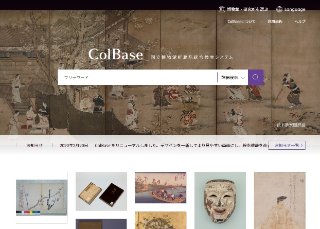
ColBase
"ColBase: Integrated Collections Database of the National Institutes for Cultural Heritage, Japan" is a service that enables a multi-database search of the collections in the four national museums (To...
Contents holder/Provider
Aggregator

National Institutes for Cultural Heritage
The National Institutes for Cultural Heritage (NICH) comprise four National Museums (Tokyo National Museum, Kyoto National Museum, Nara National Museum, and Kyushu National Museum) and two National Research Institutes for Cultural Properties (Tokyo National Research Institute for Cultural Properties, and Nara National Research Institute for Cultural Properties), as well as the International Research Centre for Intangible Cultural Heritage in the Asia-Pacific Region (IRCI) in Sakai City, for a total of seven institutions.
Last updated
July 20, 2026