Initial note
仏教と般若
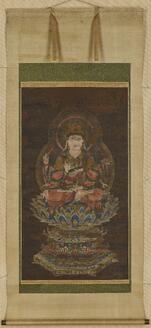
<p>Buddhism teaches that we become Buddhas once we attain the ability to see all things correctly and understand the truth. Hannya Bosatsu is said to be the personification of this perfect wisdom. The deity is also known as Butsumo, or mother of the Buddhas, because just as how a mother begets children, so perfect wisdom begets Buddhas.<br />Hannya Bosatsu is depicted with superhuman traits, such as six arms and a third eye on the forehead. The six hands each form a different mudra, with one of the left hands holding a folded-up book of sutras. The deity is clad in armor, though the garment sleeves are decorated with frills.<br />The painting predominantly features cool colors like blue and green, with highlights and gradations used to convey a sense of luminosity. Each motif is demarcated clearly with thick outlines. Buddhist paintings from the Heian period use thin outlines and soft, warm color schemes, with shades of the same hues used to add more expression. In contrast, paintings from the Kamakura period feature clearly-defined lines, with subdued, darkish tones used to lend the works a sense of lucidity.<br />Hannya Bosatsu is unique to Esoteric Buddhism, a new school of Buddhism that arrived on Japan's shores at the start of the Heian period. She is one of the most important deities in Esoteric Buddhism. She is commonly depicted in mandalas, which depict the Esoteric Buddhist pantheon in visual form, but this very rare example depicts the deity without accompaniment.</p><br /><p>This Buddhist god is painted with great skill, his body outlined with fluid brushstrokes and his clothes decorated with intricate patterns. He represents the wisdom that leads to enlightenment, the ultimate goal in Buddhism. His six arms represent the six practices that people must follow to become enlightened.<br /></p>
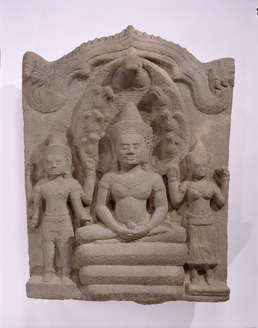
<p>This triad features the Buddha seated on Nāga, a snake deity that is worshipped as a god of water in Southeast Asia. Such depictions became popular during the reign of Jayavarman VII (r. 1182/83–1218), when Buddhism gained a fervent following.<br /></p><br /><p>The central figure is the Buddha. The figure to your left is the four-armed bodhisattva Lokesvara, and the one to your right is the bodhisattva Prajnaparamita.<br /><br />The Khmer Empire (also known as the Angkor Empire), which became the basis for present-day Cambodia, existed from the 9th century to the 15th century. King Jayavarman VII, who reigned from the late-12th century into the early-13th century, was a devout follower of Buddhism. Numerous triads of Buddhist images like this one are said to have been created during his reign as offerings to temples. It is also said that the Buddha represents the king himself and the figures on either side his parents.<br /><br />Take a closer look at the central figure. The Buddha is seated on the coiled, cobra-like body of the seven-headed snake god Naga. This depiction is based on the tale that heavy rain fell while the Buddha was meditating, and so Naga spread his heads out above the Buddha like an umbrella to shelter him. Statues of this type spread to Cambodia from southern India during the Angkor period and became highly popular. Before the arrival of Buddhism and Hinduism, the Cambodian people, who had been suffering due to water shortages, worshipped water spirits. As a result, the water god Naga attracted fervent worship.<br /><br />Faces with joined eyebrows and thick lower lips are characteristic of Angkor-period Khmer sculpture.</p>
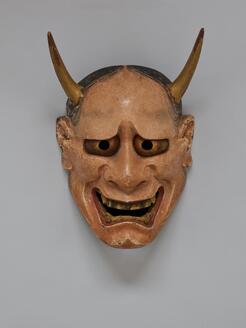
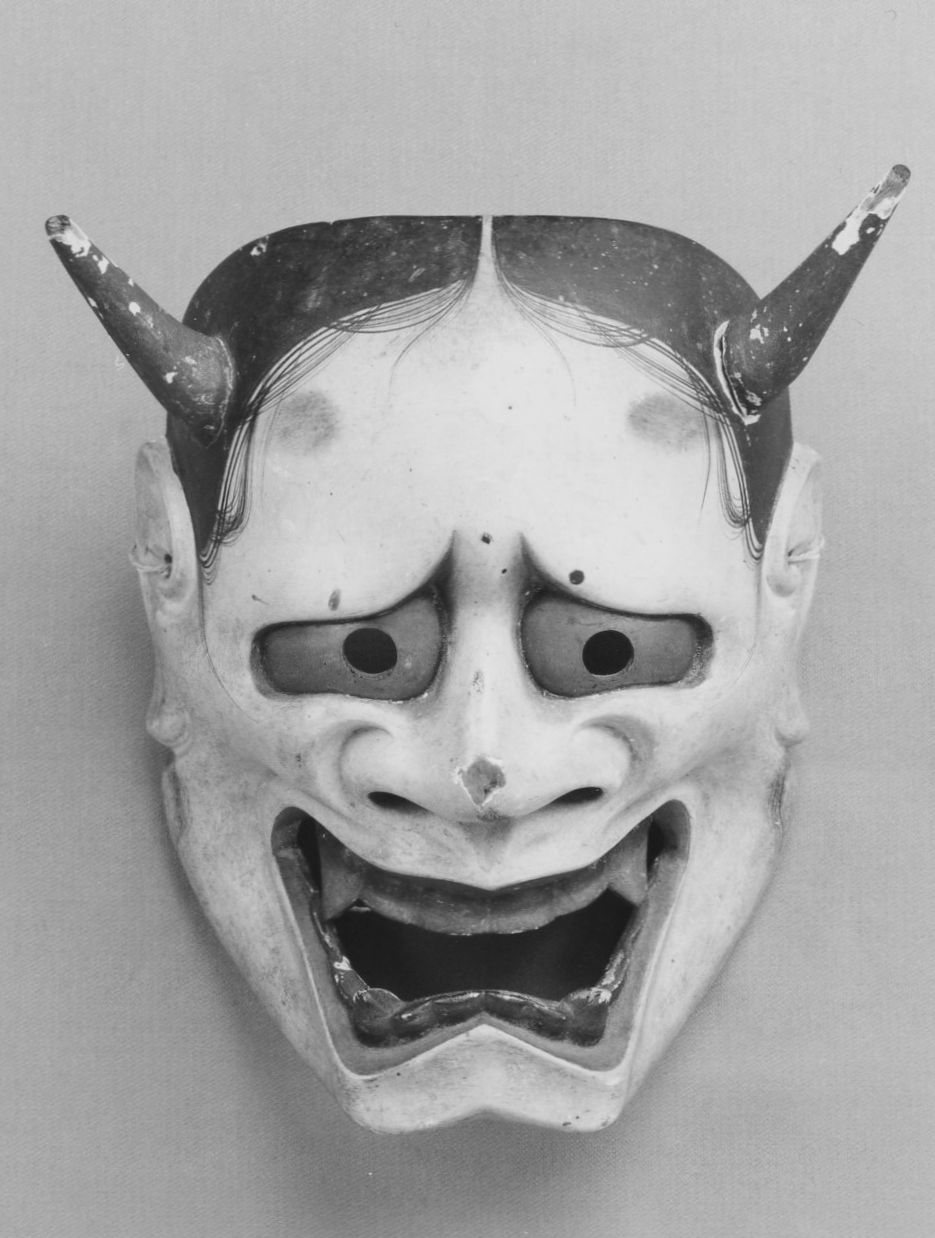
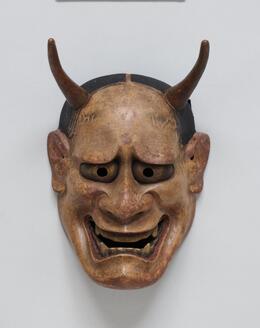
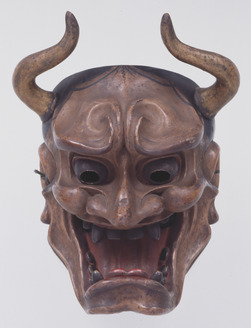
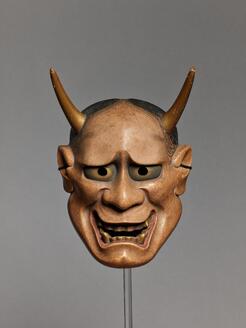
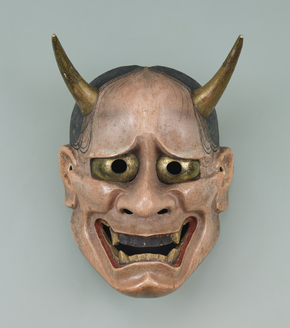
<p>This mask represents a woman who was driven mad with jealously and became a vengeful demon. The brow and disheveled hair suggest her deep sorrow.(20180320_h14特集)<br /></p>
般若面の種類
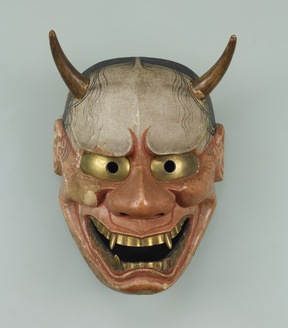
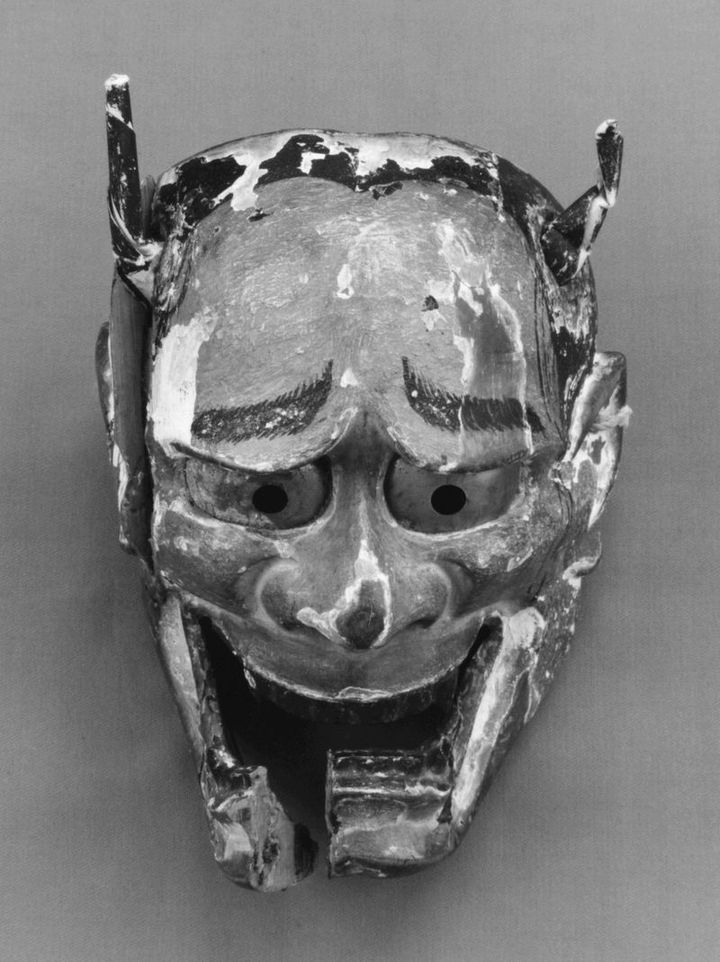
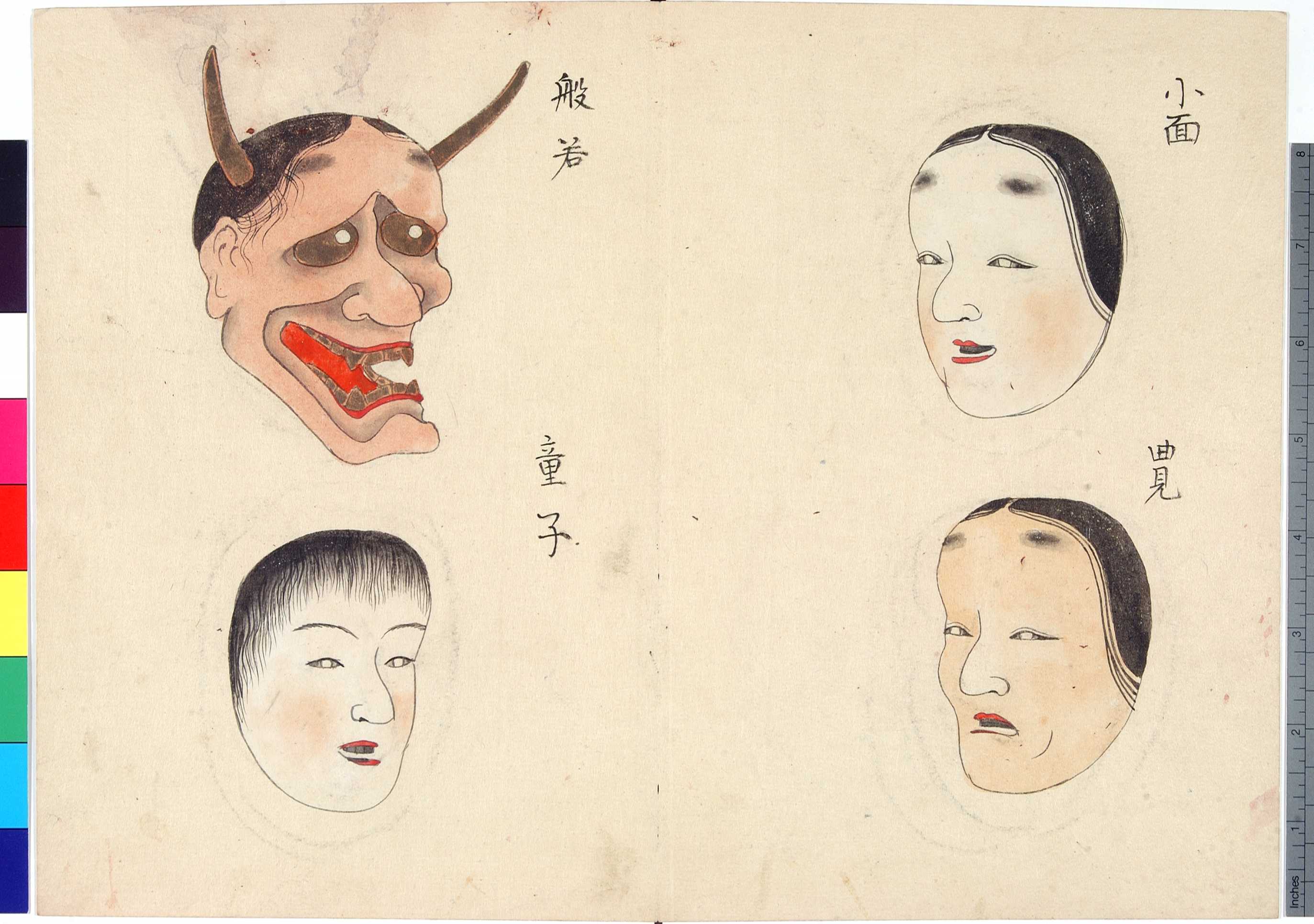
般若面には実は3つの種類があるのをご存知でしょうか?そもそも般若とは怒りや嫉妬といった負の感情から鬼になってしまう女性を表した面です。その怒りの段階において種類分けされます。
終わりに
いかがでしたでしょうか?その見た目のインパクトから現在の日常生活の中にも創作物の中に出てきたりする般若の面。今後もし見かけた際にここで知ったことを「あーそんなんあったなー」程度に思い出していただけたら幸いです。
関連イベントについて
もし現実に般若面展を開くことができるなら
・My 般若面造り(自分で色やデザインを変えて自分だけの般若面を作るコーナー)
・外国人ウケしそうなTシャツやスカジャンなどのグッズ販売
などをやってみたいです。
使用文化財一覧
- Noh Mask: Hannya
東京国立博物館,Tokyo National Museum
<p>The two notches between the nostrils on the back of this mask are the mark of the mask maker Kawachi (d. 1645). The chrysanthemum-like carvings around the eyes and distinctly elongated recess for the nose ridge indicate it was copied from a mask that belonged to the Konparu school of Noh actors. <br /></p>
- Noh Mask: "Hannya"
東京国立博物館,Tokyo National Museum
<p>般若は、『葵上(あおいのうえ)』『道成寺(どうじょうじ)』などに用いられる鬼女の面。2本の角、金属で覆(おお)い金色に表した眼が光り、髪が乱れ、口角が大きく裂ける。八の字の眉は激しい恨みの奥に秘めた、高貴な美しい女性の深い孤独と悲しみ、苦しみを感じさせる。(150707_h14)<br /></p>
- Noh Mask, Hannya type
「林喜兵衛作」墨書,With inscription in ink Created by Hayashi Kihei,東京国立博物館,Tokyo National Museum
<p>金(こん)春(ぱる)家(け)の面を管理していた諦(てい)楽(らく)舎(しゃ)の札に「鉄輪」と記されるが、鉄輪という鬼の面は他になく、前夫を呪詛しようとする『鉄輪』の後シテでは「橋(はし)姫(ひめ)」が使われることが多い。額が白く、目より下が赤いのは「橋姫」に似るが、この様な彩色の例はあるので般若と称すべきである。<br /></p>
- Noh Mask “Han'nya”
東京国立博物館,Tokyo National Museum
<p> 鋭い角が生え、目も鍍金による強い光を放つ。恐ろしい鬼だが、まゆが吊り上がらず少し哀しいような目つき、頭部に残る髪筋にまだ人間のこころが残っていることが示される。 <br /></p>
- 木造能面(般若)(能舞面 鬼)
青森県史文化財部会,東通村教育委員会(旧目名不動院)
- 木造能面(般若)
青森県史文化財部会,岩木山神社
- Noh Mask, Hannya type
東京国立博物館,Tokyo National Museum
- The Bodhisattva Hannya
東京国立博物館,Tokyo National Museum
<p>Buddhism teaches that we become Buddhas once we attain the ability to see all things correctly and understand the truth. Hannya Bosatsu is said to be the personification of this perfect wisdom. The deity is also known as Butsumo, or mother of the Buddhas, because just as how a mother begets children, so perfect wisdom begets Buddhas.<br />Hannya Bosatsu is depicted with superhuman traits, such as six arms and a third eye on the forehead. The six hands each form a different mudra, with one of the left hands holding a folded-up book of sutras. The deity is clad in armor, though the garment sleeves are decorated with frills.<br />The painting predominantly features cool colors like blue and green, with highlights and gradations used to convey a sense of luminosity. Each motif is demarcated clearly with thick outlines. Buddhist paintings from the Heian period use thin outlines and soft, warm color schemes, with shades of the same hues used to add more expression. In contrast, paintings from the Kamakura period feature clearly-defined lines, with subdued, darkish tones used to lend the works a sense of lucidity.<br />Hannya Bosatsu is unique to Esoteric Buddhism, a new school of Buddhism that arrived on Japan's shores at the start of the Heian period. She is one of the most important deities in Esoteric Buddhism. She is commonly depicted in mandalas, which depict the Esoteric Buddhist pantheon in visual form, but this very rare example depicts the deity without accompaniment.</p><br /><p>This Buddhist god is painted with great skill, his body outlined with fluid brushstrokes and his clothes decorated with intricate patterns. He represents the wisdom that leads to enlightenment, the ultimate goal in Buddhism. His six arms represent the six practices that people must follow to become enlightened.<br /></p>
- Buddha Triad
東京国立博物館,Tokyo National Museum
<p>This triad features the Buddha seated on Nāga, a snake deity that is worshipped as a god of water in Southeast Asia. Such depictions became popular during the reign of Jayavarman VII (r. 1182/83–1218), when Buddhism gained a fervent following.<br /></p><br /><p>The central figure is the Buddha. The figure to your left is the four-armed bodhisattva Lokesvara, and the one to your right is the bodhisattva Prajnaparamita.<br /><br />The Khmer Empire (also known as the Angkor Empire), which became the basis for present-day Cambodia, existed from the 9th century to the 15th century. King Jayavarman VII, who reigned from the late-12th century into the early-13th century, was a devout follower of Buddhism. Numerous triads of Buddhist images like this one are said to have been created during his reign as offerings to temples. It is also said that the Buddha represents the king himself and the figures on either side his parents.<br /><br />Take a closer look at the central figure. The Buddha is seated on the coiled, cobra-like body of the seven-headed snake god Naga. This depiction is based on the tale that heavy rain fell while the Buddha was meditating, and so Naga spread his heads out above the Buddha like an umbrella to shelter him. Statues of this type spread to Cambodia from southern India during the Angkor period and became highly popular. Before the arrival of Buddhism and Hinduism, the Cambodian people, who had been suffering due to water shortages, worshipped water spirits. As a result, the water god Naga attracted fervent worship.<br /><br />Faces with joined eyebrows and thick lower lips are characteristic of Angkor-period Khmer sculpture.</p>
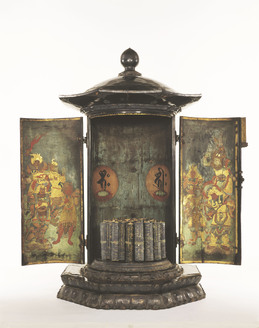
- Feretory for Daihannya (Mahā prajñā) sūtras and 166 scrolls of Daihannya sūtras
奈良国立博物館,Nara National Museum
<p>{i=>[zushi, Great Perfection of Wisdom Sutra, Mahāprajñāpāramitā-sūtra, Mohe bore boluomiduo jing, Daihannya kyō, bīja, shuji], content=>[This is a shrine (, ) for a set of the , (Skt. , ; Ch. , ; J. , ). Its six-hundred scrolls were divided between this and another shrine, three-hundred scrolls in each; the scrolls themselves are the principal object of worship enshrined within. The back of the shrine’s interior has the Sanskrit seed syllables (Skt. , ; J. , ) for the Buddhas Shaka (Skt. Śākyamuni) and Amida (Skt. Amitābha). The inner surfaces of the doors of both shrines, which come from Shinkōin Temple in Kyoto, feature paintings of the Sixteen Protective Deities who serve as the guardians of the enshrined sutra.]}</p><br /><p>This cylindrical feretory of the palace style is made of black lacquered wood. Its base consists of two layers of lotus seats: one seat is octagonal and consists of a double layer of petals, whereas the other seat has a single layer of sixteen petals. There is another lotus seat within the cylindrical feretory. Below the eaves of the roof, a lotus flower with eight petals is engraved as a decoration, and a hōju (magic jewel)-shaped ornament is attached at the top of the roof. It is conceivable that this feretory originally was one of a pair of feretories each of which had contained three hundred volumes of Daihannya-kyō (Mahāprajñyā sūtra). Its counterpart is now kept in the Cleveland Museum of Art in the United States of America. Four Buddhist deities are painted on each panel of the double-hinged doors, and thus originally sixteen deities were depicted, since one feretory has two double-hinged doors. Two disks are painted onto the back wall of the feretory, onto which Sanskrit symbols representing Shaka (Śākyamuni or Buddha) and Amida (Amitābha) are written. A canopy is engraved into the ceiling of the feretory. These decorations follow the style found on feretories for Buddhist statues. The images of sixteen deities painted on the doors are not included in the Besson-zakki a book on iconography. Judging from the exotic armor suits depicted in the images they probably follow the examples of Chinese icons during the Tang dynasty. The elegant and pleasant painting style of these deities is similar to the Buddhist paintings made during the late Heian and early Kamakura periods.</p>
- Hannya with Curved Horns No Mask
京都国立博物館 Kyoto National Museum,Kyoto National Museum
- 能面「般若」
中村直彦作
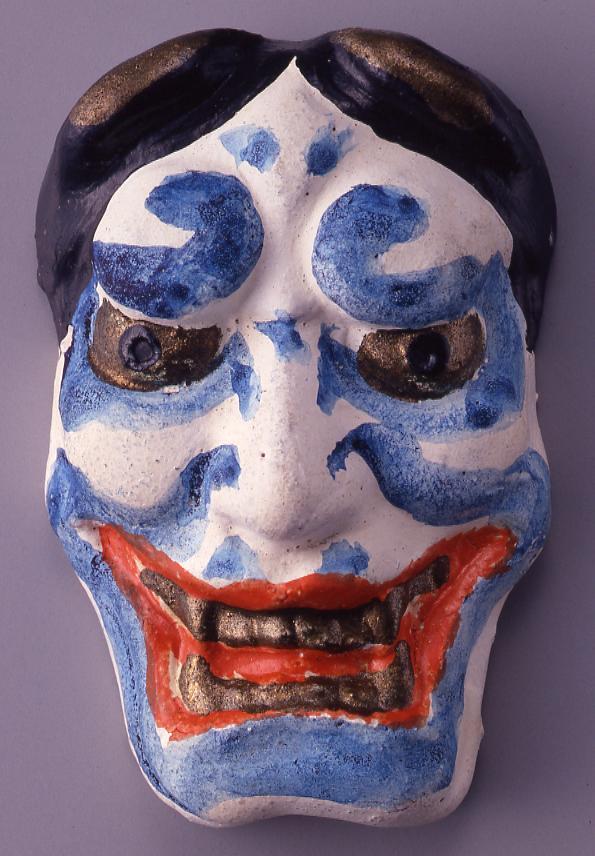
- 今戸人形 面 般若
金沢春吉/作
- Noh Mask: "Han'nya"
「近江打」朱書,Inscribed in red: "Omi utsu",東京国立博物館,Tokyo National Museum
<p>This mask represents a woman who was driven mad with jealously and became a vengeful demon. The brow and disheveled hair suggest her deep sorrow.(20180320_h14特集)<br /></p>
- 能の幽玄と花
野上豊一郎 著,岩波書店