Organization
Organizations connecting their database to the Japan Search
11 organizations
Tokyo Metropolitan Foundation for History and Culture
The Tokyo Metropolitan Foundation for History and Culture is charged with managing the cultural initiatives and assets of the Tokyo Metropolitan Government. We provide support and essential infrastructure for arts and culture, thereby working to foster a thriving artistic and cultural scene in Tokyo and pass down the history and culture of Edo and Tokyo. The Foundation operates 12 cultural facilities: the Tokyo Metropolitan Teien Art Museum, the Edo-Tokyo Museum, the Edo-Tokyo Open Air Architectural Museum, the Tokyo Photographic Art Museum, the Museum of Contemporary Art Tokyo, the Tokyo Shibuya Koen-dori Gallery, Tokyo Arts and Space, Tokyo Arts and Space Residency, the Tokyo Metropolitan Art Museum, the Tokyo Bunka Kaikan, the Tokyo Metropolitan Theatre, and the Tokyo Performing Arts Support Center (Suitengu Pit), in addition to running the Arts Council Tokyo. These activities ensure the preservation, use, and enjoyment of artworks and historical materials; the encouragement, cultivation, and wider education of musical and performing arts; and the infrastructure for and promotion of arts and culture.

National Institutes for Cultural Heritage
The National Institutes for Cultural Heritage (NICH) comprise four National Museums (Tokyo National Museum, Kyoto National Museum, Nara National Museum, and Kyushu National Museum) and two National Research Institutes for Cultural Properties (Tokyo National Research Institute for Cultural Properties, and Nara National Research Institute for Cultural Properties), as well as the International Research Centre for Intangible Cultural Heritage in the Asia-Pacific Region (IRCI) in Sakai City, for a total of seven institutions.

Tokyo Metropolitan Teien Art Museum
- The main building of the Tokyo Metropolitan Teien Art Museum was built in 1933 as the former residence of Prince Asaka. Designed in the Art Deco style, it represents the best of French decorative arts, from the interior decoration to the furniture and furnishings. The Art Deco mansion has been designated as an Important Cultural Property. - The museum collects and stores not only artworks and materials related to the Former Residence of Prince Asaka, but also paintings, sculptures, and handicrafts produced during the Art Deco period, which are displayed during the annual "Looking at Architecture" exhibition. - The museum's website introduces the collection, including works and materials related to the Former Residence of Prince Asaka, through photographs and explanations. - Signature collection: René Lalique; Vase, ORAN / Henri Rapin, Sèvres (kiln); Covered vase, form Rapin 21, etc.
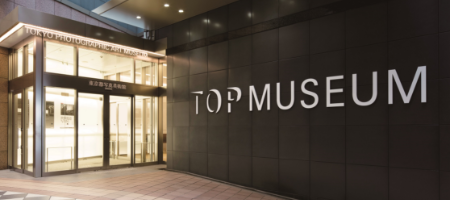
Tokyo Photographic Art Museum
- As Japan's first comprehensive museum devoted to photography and film, the TOP collection includes a wide range of works and materials that promote understanding of photography and film culture, with a focus on original photographic prints. - In addition to its focus on historically acclaimed works, the museum strives to discover artists and works that have received accolades in exhibitions and other venues, collecting contemporary works that suggest the future of photographic art. - The collection also includes domestic and international photographic artworks that express and document Tokyo. - Signature collection: the museum has designated certain prominent Japanese artists as priority collection targets, and has collected enough works to provide retrospective views of these artists’ entire creative careers (AKIYAMA Shotaro , ISHIMOTO Yasuhiro, UEDA Shoji, KAWADA Kikuji, KIMURA Ihee, etc.). - Number of items in the collection: Approx. 36,000

The Museum of Contemporary Art Tokyo
- The Museum of Contemporary Art Tokyo systematically researches, collects, preserves, and exhibits a wide range of contemporary art from Japan and abroad, with a focus on Japanese postwar art. - In addition to systematically collecting postwar art from a historical perspective, the museum collects works by young artists that clearly show the current state of art. - MOT Collection exhibitions are held in order to share the diverse appeal of contemporary art, each displaying 100-200 works chosen as part of a specific theme. - Signature collection: Roy LICHTENSTEIN, Girl with Hair Ribbon / Anthony CARO, Tower of Discovery / MIYAJIMA Tatsuo, Keep Changing, Connect with Everything, Continue Forever, etc. - Number of items in the collection: Approx. 5,500
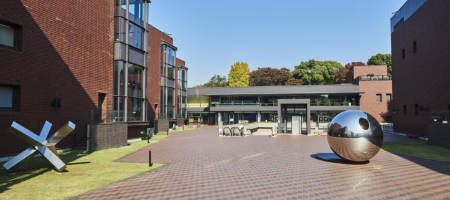
Tokyo Metropolitan Art Museum
- Opened in 1926 as the Tokyo Prefectural Art Museum, the first public art museum in Japan. The collection was transferred to the Museum of Contemporary Art Tokyo when it opened, with part of the collection re-transferred when the museum was renovated in 2012. - Currently, the collection consists of 12 sculptures, which are permanently displayed at the Museum, and 36 calligraphic works. - The museum’s Collection & Archives Search provides access to artworks in the collection as well as documents from since the museum’s founding. - Signature collection: INOUE Bukichi, my sky hole 85-2: light and shadow, 1985 / AOYAMA San'u, Busy with Coaches and Horses, etc. - Number of items in the collection: 48
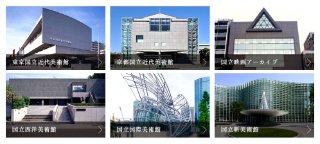
Independent Administrative Institution National Museum of Art
The Independent Administrative Institution National Museum of Art stands as the nexus of art advancement in Japan, charged with fostering the creation and development of art and culture in Japan, and the cultivation of aesthetic awareness among the Japanese people. Through its six art museums — The National Museums of Modern Art, Tokyo and Kyoto, National Film Archive of Japan, the National Museum of Western Art, Tokyo, the National Museum of Art, Osaka, and the National Art Center, Tokyo — the National Museum of Art carries out diverse and distinctive activities that fully utilize the unique character of each member museum.
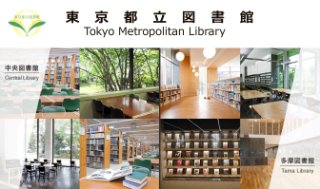
Tokyo Metropolitan Library
The Tokyo Metropolitan Library consists of the the Central Library and the Tama Library. It is one of the largest public libraries in Japan and has a wealth of materials. We support a range of activities from research to information collection useful for every day life. Approximately 10% of the materials are written in foreign languages.
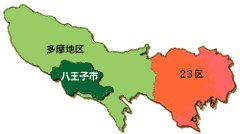
Hachioji City
About 40 kilometers of Hachioji City is located in the distance of the about 40 minutes by train from Shinjuku to west from a Tokyo center. The topography is like a basin for the most part, and the north, west and the south are circled in about 800 meters of hills from 200 meters of sea level, and the east leads to Kanto-heiya. This city met 100 years (per 2017 years) in 2017 from enforcement of municipalism in 1917 (1917). It'll be a core city in the first Tokyo in (in 2015) April, 2015, and the development is continued as Gakuen-toshi where a university of 21 was held as a leading city in Tama area of about 580,000 people of population.
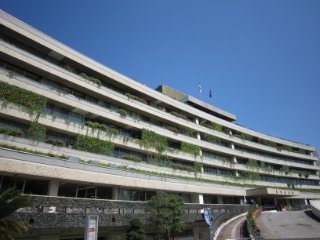
Arakawa City
Arakawa Ward covers an area of 10.16 square kilometers and is located in the northeastern part of Tokyo, bordering Taito, Bunkyo, Kita, Adachi, and Sumida wards. It is long from east to west, and most of it is flat with little elevation change. However, a portion of the Yamanote Plateau is located in the east and west, and the Sumida River flows through the northeastern part of the ward. The population is 224,376 (127,741 households). The average household size is 1.8 people, and 21.6% of the population is 65 years of age or older (as of August 1, 2025).

Sagamihara City
Sagamihara City is a designated city located in the northern part of Kanagawa Prefecture with a population of approximately 720,000. It boasts high convenience, being only an hour from central Tokyo, while also offering a "perfect mix of urban life and nature," where residents can feel close to rivers and mountains. Twelve institutions, including the public archives, museums, and libraries, collaborate to operate the "Sagamihara Digital Archive," which digitizes the city's materials and other resources, making them searchable and accessible to the public.