Description
This well-proportioned jar with a short stand is a type of stoneware known as sueki.
With a height of 55.5 cm, it is one of the largest long-necked sueki jars in Japan. Of particular note is the way a deep green glaze seems to pour over the jar's body. This effect was not intentional, as it was in later eras. Instead, it was created naturally during the firing when ash from the kiln dropped down over the jar to create a glaze-like impression.
The sueki technique travelled to Japan from the Korean peninsula around the 5th century. Before then, Japanese earthenware had taken the form of Yayoi or Haji ware. These types of earthenware were fired in the open air and were subsequently quite brittle. However, Sue objects were fired at high temperatures in tunnel-shaped anagama kilns, so they had harder surfaces and a characteristic ashy color. This jar was found in the Ise-Shima region in Mie prefecture. It was excavated from Kaniana Tumulus on Toshijima, an island that sits at the mouth of Ise Bay. It was recovered intact from a stone burial chamber. Ise Bay formed part of a major sea route for Japan's ancient Yamato government. The owner of this splendid jar may have played an important role mediating between the Ise-Shima region and the Yamato rulers.
Data source
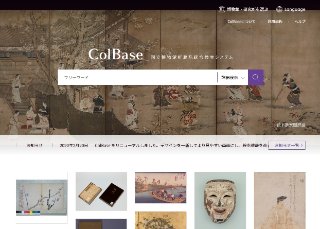
ColBase
"ColBase: Integrated Collections Database of the National Institutes for Cultural Heritage, Japan" is a service that enables a multi-database search of the collections in the four national museums (To...
Contents holder/Provider
Aggregator

National Institutes for Cultural Heritage
The National Institutes for Cultural Heritage (NICH) comprise four National Museums (Tokyo National Museum, Kyoto National Museum, Nara National Museum, and Kyushu National Museum) and two National Research Institutes for Cultural Properties (Tokyo National Research Institute for Cultural Properties, and Nara National Research Institute for Cultural Properties), as well as the International Research Centre for Intangible Cultural Heritage in the Asia-Pacific Region (IRCI) in Sakai City, for a total of seven institutions.
Last updated
July 20, 2026