Description
This Buddhist figure sits with one leg crossed, resting his right elbow on his knee and his chin in his hand. His slightly rounded back, tilted head, and the way the fingers of his right hand just barely touch his cheek lend the statue an air of naturalness.
His armlets and the way his hair is gathered into a bun on top of his head tell us that he is a bodhisattva. In Japan, statues posed contemplatively with one leg crossed and one leg pendant, like this one, often depict the bodhisattva Miroku, who was worshipped in Japan as a bodhisattva who would save humanity.
This gilded bronze statue was excavated from a sutra mound at Mt. Nachi, a famous sacred mountain in Wakayama Prefecture. A sutra mound is a place where cylinders containing sutras, mirrors, Buddhist statues, or other similar artifacts are buried in the earth. In the late Heian period (794–1192), it was widely believed that Buddhist teachings would decline 2,000 years after the death of the buddha Shaka. Many people of the time believed that the bodhisattva Miroku would appear in 5,670,000,000 years to save humanity. People made sutra mounds to preserve Buddhist teachings until that time. You could say that this statue was put in a time capsule meant for people 5,670,000,000 years in the future.
Here, a Buddhist deity sits in deep meditation, with one leg crossed over the other. Statues in this distinctive pose were made throughout Asia. In Japan, they were often worshipped as Maitreya, an enlightened being who will appear in the future and lead humanity to salvation. This example was excavated from Mount Nachi, a sacred site in western Japan.
Data source
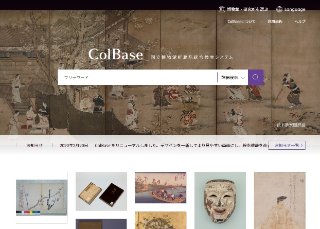
ColBase
"ColBase: Integrated Collections Database of the National Institutes for Cultural Heritage, Japan" is a service that enables a multi-database search of the collections in the four national museums (To...
Contents holder/Provider
Aggregator

National Institutes for Cultural Heritage
The National Institutes for Cultural Heritage (NICH) comprise four National Museums (Tokyo National Museum, Kyoto National Museum, Nara National Museum, and Kyushu National Museum) and two National Research Institutes for Cultural Properties (Tokyo National Research Institute for Cultural Properties, and Nara National Research Institute for Cultural Properties), as well as the International Research Centre for Intangible Cultural Heritage in the Asia-Pacific Region (IRCI) in Sakai City, for a total of seven institutions.
Last updated
September 21, 2026