Description
This is a statue of Bishamon Ten, or Vaisravana in Sanskrit. The deity is shown here holding a one-storied pagoda in one hand. As a member of the Shitenno, or the four heavenly kings who watch over the four directions, this deity is known as Tamon Ten, the guardian of the northern quarter. However, he also attracted many followers in his own right as Bishamon Ten.
The image exudes an overall aura of calm and stillness. The deity's clothes have been painted with lavish green, blue, orange and red hues. Further inspection reveals how the entire surface has been decorated with intricate patterns formed from thin strips of gold leaf, a technique known as kirikane. This elegant, ornate decoration is characteristic of Buddhist paintings and statues from the late Heian period. However, some features foreshadow the more realistic Buddhist statuary that would grow popular in the following Kamakura period. These include the taut facial expressions and the use of inlaid crystal to make the eyes shine.
110 prints featuring 513 depictions of Bishamon Ten were also found inside the statue. These were printed from a wooden block carved in the shape of the statue. Also found inside was a beautifully-colored Buddhist painting. The colors of the painted Bishamon Ten's clothes essentially match those of the statue. This suggests the painting was placed there when the statue was made. The statue must have inspired a lot of devotion for someone to individually stamp out so many images.
In 1162, a team of expert artisans carved this statue from wood and decorated its armor with intricate patterns in gold leaf. The statue portrays Bishamonten, one of the most widely worshiped guardian gods in Japanese Buddhism. He tramples a demon representing evil and ignorance, while holding a miniature pagoda symbolizing the Buddha. Crystal eyes imbue the face with a sense of life.
Data source
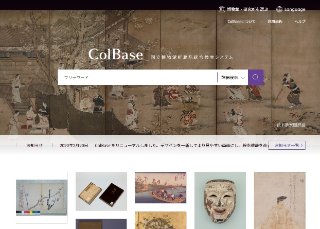
ColBase
"ColBase: Integrated Collections Database of the National Institutes for Cultural Heritage, Japan" is a service that enables a multi-database search of the collections in the four national museums (To...
Contents holder/Provider
Aggregator

National Institutes for Cultural Heritage
The National Institutes for Cultural Heritage (NICH) comprise four National Museums (Tokyo National Museum, Kyoto National Museum, Nara National Museum, and Kyushu National Museum) and two National Research Institutes for Cultural Properties (Tokyo National Research Institute for Cultural Properties, and Nara National Research Institute for Cultural Properties), as well as the International Research Centre for Intangible Cultural Heritage in the Asia-Pacific Region (IRCI) in Sakai City, for a total of seven institutions.
Last updated
July 20, 2026