Description
This painting depicts the graceful face of the Madonna shrouded by a blue mantle. Tears from her downcast eyes roll down her cheek, while her thumb peeks discreetly from the garment's sleeve. The artist has skillfully imbued the work with a sense of texture, from the smooth, translucent skin of the Madonna to the lustrous material of her mantle.
The Italian missionary Giovanni Battista Sidotti brought this painting to Japan during the era when Christianity was outlawed. Known as the Madonna of the Thumb, it closely resembles works by Carlo Dolci, a painter of religious works who was active in Florence, Italy, and who lived from 1616 to 1686. Sidotti was arrested on Yakushima island in 1708 and he subsequently passed away in the dungeons of the Kirishitan Yashiki, or House of Christians, a building located in Edo, as Tokyo was formerly known. This work was seized by the Nagasaki Magistrate's Office and it remained hidden there for a long time, which may explain why it is in such a good condition. Though an oil painting on a copper plate, the small size suggests it was probably made for private worship. The painting takes on a different light when we consider the strong feelings that prompted Sidotti to bring it all the way to faraway Japan to hear his prayers.
Japan's government implemented a policy of national isolation in the early 1600s. Despite this, an Italian missionary named Giovanni Sidotti entered the country illegally in 1708, bringing this painting of the Virgin Mary with him. The blue color of Mary's mantle represents her grief following the death of Jesus.
Data source
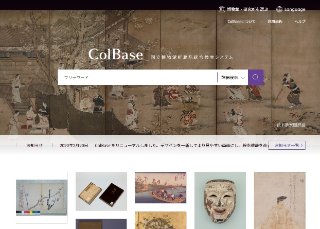
ColBase
"ColBase: Integrated Collections Database of the National Institutes for Cultural Heritage, Japan" is a service that enables a multi-database search of the collections in the four national museums (To...
Contents holder/Provider
Aggregator

National Institutes for Cultural Heritage
The National Institutes for Cultural Heritage (NICH) comprise four National Museums (Tokyo National Museum, Kyoto National Museum, Nara National Museum, and Kyushu National Museum) and two National Research Institutes for Cultural Properties (Tokyo National Research Institute for Cultural Properties, and Nara National Research Institute for Cultural Properties), as well as the International Research Centre for Intangible Cultural Heritage in the Asia-Pacific Region (IRCI) in Sakai City, for a total of seven institutions.
Last updated
June 15, 2026