Description
Tokugawa Ieyasu was the head of Japan's military government at the start of the 17th century. He wrote this letter during his later years. It is addressed to the lady in waiting of his granddaughter, Senhime, though the contents are meant for Senhime. Senhime's husband died during a huge battle after his side were attacked and vanquished by Tokugawa Ieyasu himself. How must Senhime have felt about her grandfather? In the letter, Ieyasu expresses his concerns for his grieving granddaughter and asks how she is coping.
The Japanese write vertically, with lines running from right to left. The fourth line begins from an elevated position. This marks the start of the letter. The line's first character is jet black, a sign that Ieyasu began writing with a brush thick with ink. The writing gradually lightens thereafter, though the ink becomes thick again in the second half of the first line of the letter, which suggests Ieyasu paused to dip his brush in ink again at this point. As we follow the writing, we can observe how these pauses become more infrequent. It seems he skipped this action in his passion to communicate his feelings. He essentially stopped refilling his brush by the end, with the final line a faint blur on the paper. The letter exudes the sense of a man spilling his heart out without any concern for how the writing looks on the page. Though Ieyasu found great success as a military leader, he inflicted sadness and loss on those he loved. This must have been a source of great regret, with his psychological turmoil at the time still vividly apparent in this letter.
This letter was written by Tokugawa Ieyasu (1542–1616), the first shogun of the Edo period (1603–1868). Addressed to his granddaughter, Lady Sen (1597–1666), the letter expresses his concern for her after he had betrayed and effectively killed her husband, Toyotomi Hideyori, in the Siege of Osaka (1614–1615). He had done so to ensure his dominance in Japan.
Data source
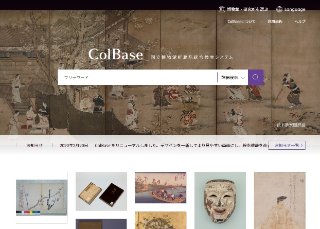
ColBase
"ColBase: Integrated Collections Database of the National Institutes for Cultural Heritage, Japan" is a service that enables a multi-database search of the collections in the four national museums (To...
Contents holder/Provider
Aggregator

National Institutes for Cultural Heritage
The National Institutes for Cultural Heritage (NICH) comprise four National Museums (Tokyo National Museum, Kyoto National Museum, Nara National Museum, and Kyushu National Museum) and two National Research Institutes for Cultural Properties (Tokyo National Research Institute for Cultural Properties, and Nara National Research Institute for Cultural Properties), as well as the International Research Centre for Intangible Cultural Heritage in the Asia-Pacific Region (IRCI) in Sakai City, for a total of seven institutions.
Last updated
July 20, 2026