Description
This pair of folding screens depicts symmetrical pairs of roosters and hens facing front, back, and other directions in an appealing way. The screens also incorporate auspicious motifs such as pines and plum trees.
The animals are skillfully rendered in varied gradations of ink. The feathers of the roosters’ tail and pine needles are depicted with vigorous dynamism, while the fowls’ plumage appears in more subtle gradations of ink. If you look closely at the stone lantern on the right folding screen, you can see that it is composed of countless points of varying sizes. Delicate variation in the gradation of ink is used to express the three-dimensionality and texture of the stone. Although the dominant color is black ink, the plum blossoms, roosters’ crests and plumage are colored in yellow, red and white, which is a subtle but effective accenting technique.
The artist, Itō Jakuchū, was a painter active in Kyoto during the 18th century. Jakuchū valued what he could see with his eyes and often painted familiar subjects such as flowers and birds. Roosters were his specialty. Jakuchū was known as the “painter of roosters” and kept roosters in his own garden, where he observed and painted them. The roosters painted on these folding screens may be the ones kept by Jakuchū.
Data source
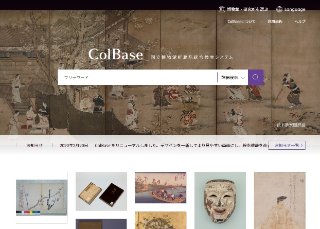
ColBase
"ColBase: Integrated Collections Database of the National Institutes for Cultural Heritage, Japan" is a service that enables a multi-database search of the collections in the four national museums (To...
Contents holder/Provider
Aggregator

National Institutes for Cultural Heritage
The National Institutes for Cultural Heritage (NICH) comprise four National Museums (Tokyo National Museum, Kyoto National Museum, Nara National Museum, and Kyushu National Museum) and two National Research Institutes for Cultural Properties (Tokyo National Research Institute for Cultural Properties, and Nara National Research Institute for Cultural Properties), as well as the International Research Centre for Intangible Cultural Heritage in the Asia-Pacific Region (IRCI) in Sakai City, for a total of seven institutions.
Last updated
July 20, 2026