Description
This scroll recounts the tale of warrior brothers who lived in the Kanto region. It provides vivid depictions of warriors' lives in the Kamakura period (1192-1333).
This narrative picture scroll recounts the tale of two warrior brothers who lived in Japan's Kanto region during the Kamakura period.
The older brother, Yoshimi Jiro, is attracted by the glamorous Kyoto lifestyle. He marries a beautiful woman who once served in the court. His younger brother, Obusuma Saburo, is dedicated to the military arts. He weds the ugliest woman in the Kanto region.
The start of the scroll depicts Jiro and his wife with beautiful, black hair living like aristocrats. His wife is gazing leisurely at a painting in a room containing a koto and a biwa, two Japanese stringed instruments.
Saburo, on the other hand, devotes all his time to military training. The scenes of Saburo practicing regular or mounted archery are familiar to many Japanese people from history textbooks.
One day, Jiro and his wife have a beautiful daughter, who they name Jihi. Saburo and his wife are also blessed with a child. The girl looks just like her mother and is depicted here with a wide face, frizzy hair, a hooked nose, and big, round eyes – features deemed unattractive at the time.
The scene now changes and we see the two brothers heading to Kyoto to serve on guard duty. Jiro is attacked by bandits and his lack of military training shows through when his throat is cut and he dies.
The tale continues for a while after, but to cut a long story short, Jiro's wife and daughter Jihi are taken into Saburo's household as servants, doing chores such as collecting water from the well.
During this time, a provincial governor hears about Jihi's great beauty and asks for her hand in marriage. However, Saburo decides to marry off his own daughter instead and we are shown the governor's disgusted reaction to the daughter's ugliness.
The end.
Given the abruptness of the ending, it is thought the story may have continued thereafter.
Some hypothesize that this illustrated scroll was commissioned by a member of the nobility. This was a time when the warrior class was rising to power, so perhaps the scroll was meant to convey the message that military men from the provinces should not try to emulate nobles from the capital Kyoto.
Data source
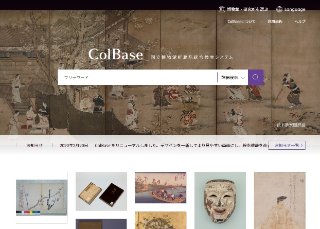
ColBase
"ColBase: Integrated Collections Database of the National Institutes for Cultural Heritage, Japan" is a service that enables a multi-database search of the collections in the four national museums (To...
Contents holder/Provider
Aggregator

National Institutes for Cultural Heritage
The National Institutes for Cultural Heritage (NICH) comprise four National Museums (Tokyo National Museum, Kyoto National Museum, Nara National Museum, and Kyushu National Museum) and two National Research Institutes for Cultural Properties (Tokyo National Research Institute for Cultural Properties, and Nara National Research Institute for Cultural Properties), as well as the International Research Centre for Intangible Cultural Heritage in the Asia-Pacific Region (IRCI) in Sakai City, for a total of seven institutions.
Last updated
July 20, 2026