Description
This folding screen painting depicts a landscape as viewed from a high place. The scenery on the left and right screens is not contiguous. Judging from the red-tinged trees on the left-hand screen, this side seems to be portraying autumn. If so, perhaps the right-hand screen is portraying spring by way of contrast. The presence of sailboats tells us the painting is depicting a wide, mighty river. With its fine, delicate brushwork, the painting almost seems like a work of pointillism. Shading is used to imbue the mossy rocks with a weighty feel and to express gentle shifts of hues.
The artist is Sakaki Hyakusen, an Edo-period painter born in Nagoya. Many painters at the time were attracted to modern Chinese culture. Hyakusen was one of these and his works were influenced by a style of literati painting from Ming- and Qing-dynasty China. In Japan, literati painting developed into a uniquely Japanese style of painting. Hyakusen was a pioneer of this new genre.
Nanga paintings can be enjoyed in many ways. Let's try one now. Put yourself in the shoes of a character within the painting, walking freely throughout the landscape. As you imagine walking along the pathways, climbing the mountains, and crossing the river by boat, you can fully appreciate the idyllic world conjured up by the artist.
Data source
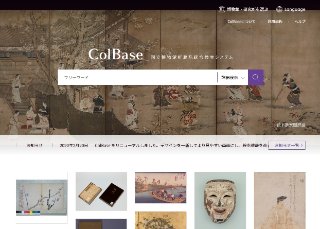
ColBase
"ColBase: Integrated Collections Database of the National Institutes for Cultural Heritage, Japan" is a service that enables a multi-database search of the collections in the four national museums (To...
Contents holder/Provider
Aggregator

National Institutes for Cultural Heritage
The National Institutes for Cultural Heritage (NICH) comprise four National Museums (Tokyo National Museum, Kyoto National Museum, Nara National Museum, and Kyushu National Museum) and two National Research Institutes for Cultural Properties (Tokyo National Research Institute for Cultural Properties, and Nara National Research Institute for Cultural Properties), as well as the International Research Centre for Intangible Cultural Heritage in the Asia-Pacific Region (IRCI) in Sakai City, for a total of seven institutions.
Last updated
July 20, 2026