Description
The new teachings of Esoteric Buddhism arrived in Japan at the start of the Heian period. The universe of Esoteric Buddhism contains several Buddhas with superhuman forms. The deity in this painting has 18 arms, for example. Cundi is known as the mother of countless other Buddhas. This painting was hung up in temple halls during rituals to pray for fertility and safe births.
Cundi sits in the center with a gentle countenance and a well-rounded body. The soft colors add to the overall feeling of serenity. Thin, golden lines can also be seen in the clothes and the lotus-shaped dais. These are rendered using a technique called kirikane. With kirikane, gold is hammered into a very thin sheet, which is then cut in fine strips of gold leaf. Finally, these are pasted onto a surface to create gorgeous, shiny patterns. These techniques were common features of Buddhist paintings during the late Heian period. They create a sense of solemnity and refinement within an overall aura of benevolence.
Indian forms of expression are also on display in the way the arms elegantly extend from the body and the way the hands open up. Flowers and leaves resembling peonies bloom thickly around the base of the dais. The depiction of the dais is unusual for Japanese Buddhist paintings and it appears to be influenced by paintings from China. Furthermore, a pattern composed of several circular shapes sits behind the dais. This uses a technique similar to pointillism, whereby lines are eschewed in favor of small dots. This pattern is also commonly found in Chinese Buddhist paintings from the Southern Song period.
As this shows, this work combines the graceful aesthetic sense of Heian-period Buddhist paintings with several elements borrowed from overseas.
Jundei is worshipped as the mother of innumerable Buddhist gods and goddesses. This painting of her was displayed inside a temple during prayers for fertility and safe childbirth. With its soft forms and gentle colors, it illustrates a style of Buddhist painting that was popular among the court nobility during the Heian period (794–1192).
Data source
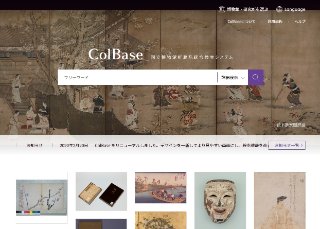
ColBase
"ColBase: Integrated Collections Database of the National Institutes for Cultural Heritage, Japan" is a service that enables a multi-database search of the collections in the four national museums (To...
Contents holder/Provider
Aggregator

National Institutes for Cultural Heritage
The National Institutes for Cultural Heritage (NICH) comprise four National Museums (Tokyo National Museum, Kyoto National Museum, Nara National Museum, and Kyushu National Museum) and two National Research Institutes for Cultural Properties (Tokyo National Research Institute for Cultural Properties, and Nara National Research Institute for Cultural Properties), as well as the International Research Centre for Intangible Cultural Heritage in the Asia-Pacific Region (IRCI) in Sakai City, for a total of seven institutions.
Last updated
October 12, 2026