Description
This jar with a three-colors glaze is known as the Nara-style sancai (three-colors glaze ware). It is Japan’s first pottery with such colored glaze that is modeled after the Tang sancai. Using slightly yellowish ash white clay, the jar was fired at a relatively high temperature to make it hard. The clay material is first shaped using the himozukuri forming technique, in which the base is made and long strings of clay are coiled spirally upward on top of the base until the approximate shape is formed. Next, the workpiece is further shaped using a potter’s wheel. Then, the surface is smoothened with a spatula. This jar has a calm and generous character featuring a flattened round shape, gradually narrowing downward from the wide shoulder to the bottom. The wide mouthrim tucks inward with its flat brim thoroughly smoothened. At the base is the flaring conical foot. The bottom of the foot reveals three marked areas. After coating the surface with white clay using a brush, a layer of sancai glaze is added, and a greenish transparent glaze is applied on the inside and bottom. The glossy sancai glaze consist mainly of the green glaze with the brown glaze added in between. Tang sancai ceramics were introduced to Japan during the Asuka period (592–710), In the Nara period (710–94), production of Nara-style sancai began under the influence of the Tang ceramic ware. Today, many such pots and jars are unearthed throughout Japan, particularly in the Kansai region. The Shōsōin repository holds 57 such works. Tang sancai ceramics were used as burial ware but Nara-style sancai was designed for practical use. In Japan, the glaze was applied upon Haji pottery (reddish bisque ware) and Sueki pottery (grayish bisque earthenware fired at a higher temperature). Among the Nara-style sancai works, this object has particularly bright colors and is well preserved. This jar originally came with a lid and is thought to have been used as a cremation urn.
Data source
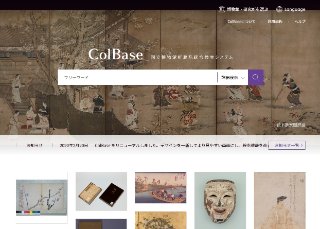
ColBase
"ColBase: Integrated Collections Database of the National Institutes for Cultural Heritage, Japan" is a service that enables a multi-database search of the collections in the four national museums (To...
Contents holder/Provider
Aggregator

National Institutes for Cultural Heritage
The National Institutes for Cultural Heritage (NICH) comprise four National Museums (Tokyo National Museum, Kyoto National Museum, Nara National Museum, and Kyushu National Museum) and two National Research Institutes for Cultural Properties (Tokyo National Research Institute for Cultural Properties, and Nara National Research Institute for Cultural Properties), as well as the International Research Centre for Intangible Cultural Heritage in the Asia-Pacific Region (IRCI) in Sakai City, for a total of seven institutions.
Last updated
July 20, 2026