Description
Here we see an image of a Buddha seated with garments spread wide. The style is very similar to the image of Sakyamuni at the Golden Hall of Hōryūji temple in Nara. The image at Hōryū ji was made in 623 by Tori, the first notable sculptor in Japan, and this work appears to reflect his style. The figure has large, almond-shaped eyes, arching eyebrows, a high-bridged nose, and a subtle smile. In addition to his long face and thin physique, these are all characteristics of Buddhist sculptures made during the Asuka period, between the end of the sixth century and first half of the seventh century.
In contrast to the hands reaching forward, the body has far less presence and reflects an emphasis on symmetry. The statue is thus highly stylized while retaining a mysterious air of dignity. Moreover, the pleats around the stomach and legs form U shapes, giving this otherwise static work a sense of rhythmical motion. Overall, this style is based on the statuary of the Northern and Southern dynasties of China, and was transmitted to Japan via the Korean peninsula.
Data source
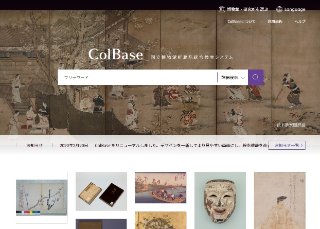
ColBase
"ColBase: Integrated Collections Database of the National Institutes for Cultural Heritage, Japan" is a service that enables a multi-database search of the collections in the four national museums (To...
Contents holder/Provider
Aggregator

National Institutes for Cultural Heritage
The National Institutes for Cultural Heritage (NICH) comprise four National Museums (Tokyo National Museum, Kyoto National Museum, Nara National Museum, and Kyushu National Museum) and two National Research Institutes for Cultural Properties (Tokyo National Research Institute for Cultural Properties, and Nara National Research Institute for Cultural Properties), as well as the International Research Centre for Intangible Cultural Heritage in the Asia-Pacific Region (IRCI) in Sakai City, for a total of seven institutions.
Last updated
July 20, 2026