Description
These are haniwa, or terracotta tomb figurines. They stand with left arms raised and eyes and mouths wide open. These endearing expressions and striking poses have earned them the name 'Dancing People.' Haniwa were made of clay and placed on or around tumulus known as kofun. Some were placed at the top or base of the tombs, while others were positioned on the surrounding embankments. Early figurines were cylindrical. These were followed by haniwa shaped like houses, tools, weapons, armor, and boats, for example, as well as humans and animals.
These two human-shaped figurines are among the most popular haniwa in the Tokyo National Museum's collection, but there is still a lot we don't know about them.
For a start, are they male or female?
The smaller figurine is wearing a sickle around its waist, while its hair is tied in bunches on either side of the face. This is thought to represent a men's hairstyle known as mizura, so we know the smaller figurine is male. The larger figurine has none of these distinguishing characteristics, so we can't tell if it is male or female.
The next question we have to ask is, are they really dancing?
Human-shaped haniwa are often found grouped together. This has led some to suggest they were placed in tombs to depict the funeral ceremonies that occurred when the tomb's occupant passed away. Others suggest they depict rituals performed for the gods while the deceased was still alive. Another explanation says they recreate scenes of the deceased's triumphs during life.
These haniwa were excavated from the Nohara Tumulus in Kumagaya City, Saitama Prefecture. A number of figurines discovered here seem to represent humans participating in a religious ceremony. It is likely this pair also played some kind of role during a ceremony. So perhaps they danced like this during the rite? Unfortunately, there is no clear answer to this question.
However, haniwa striking the same poses are often found with sickles attached to the waist. Furthermore, an increasing number of similar figurines have been found next to horse-shaped haniwa. This has led some to suggest they might be representations of horse leaders or horse keepers. It is certainly easy to imagine this pair pulling the reins of a horse with their raised hands.
What do you think the figurines are doing?
Incidentally, this museum's official mascot, Tohaku-kun, is modelled on these Dancing People haniwa.
In Japan, from around the 3rd to the 7th century, powerful rulers were buried in tomb mounds adorned with clay figurines. The two figurines here, though popularly known as “dancing people,” may represent individuals pulling on horses’ reins. They were likely part of a larger arrangement of figurines expressing the ruler’s authority.
Data source
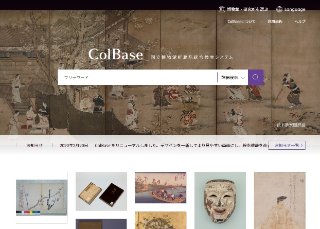
ColBase
"ColBase: Integrated Collections Database of the National Institutes for Cultural Heritage, Japan" is a service that enables a multi-database search of the collections in the four national museums (To...
Contents holder/Provider
Aggregator

National Institutes for Cultural Heritage
The National Institutes for Cultural Heritage (NICH) comprise four National Museums (Tokyo National Museum, Kyoto National Museum, Nara National Museum, and Kyushu National Museum) and two National Research Institutes for Cultural Properties (Tokyo National Research Institute for Cultural Properties, and Nara National Research Institute for Cultural Properties), as well as the International Research Centre for Intangible Cultural Heritage in the Asia-Pacific Region (IRCI) in Sakai City, for a total of seven institutions.
Last updated
June 29, 2026