Nihonbashi
Nihonbashi Bridge spans the Nihonbashi River in Tokyo's Chuo district, and is the starting point of the five main highways, Go-kaido.
Nihonbashi Bridge spans the Nihonbashi River in the north of Tokyo’s Chuo-ku district. A year after its construction in 1603, the bridge was defined as the base point (kilometer zero) for Japan’s national roads. Nihonbashi is also the starting point of the country’s ‘Five Ways’ (the Tokaido, Nakasendo, Nikko Kaido, Oshu Kaido, and Koshu Kaido roads).
Hiroshige Utagawa’s ukiyo-e painting, ‘Fifty-Three Stations of the Tokaido Road --Nihonbashi--Morning Scene’, is a representative work illustrating the Nihonbashi Bridge, and showing various classes of people mixing together. Through paintings such as this, it is understood that Nihonbashi developed into an area where many different people, artifacts and cultures blended together.
The district became the center of trade, with Uogashi (riverside fish markets) built on both banks of the Nihonbashi River, and also other markets selling supplies, such as rice and lumber. This led to commerce and industry evolving in the surrounding areas. Various wholesalers and rows of large-scale stores, managed by wealthy merchants, collected in the area. Kinza and Ginza (Gold and silver guilds) also established bases in the district.
Originally built as an arched wooden bridge, the Nihonbashi Bridge burned down several times throughout the Edo era and was rebuilt each time. The current stone arch, 49m in length and 27m wide, was built in 1911 and influenced by Renaissance designs. Even now, ‘kilometer zero’ can be found at the foot of the bridge. Ever since its original construction, Nihonbashi has been considered the center of Japan.
Related People, Things and Events
Books
Related Works
Nihonbashi seen in Ukiyo-e
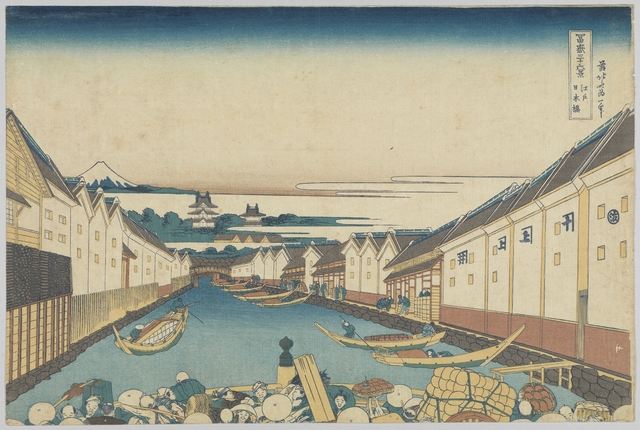
葛飾北斎 富嶽三十六景・江戸日本橋
歌川広重 新撰江戸名所・日本橋雪晴図
歌川広重 東都名所・日本橋雪中
歌川広重 東都名所・日本橋真景并ニ魚市全図
Clear Skies after Snowfall at Nihonbashi Bridge from the Series Three Famous Views of Edo
歌川広重 名所江戸百景・日本橋 江戸ばし
歌川広重 名所江戸百景・日本橋 雪晴
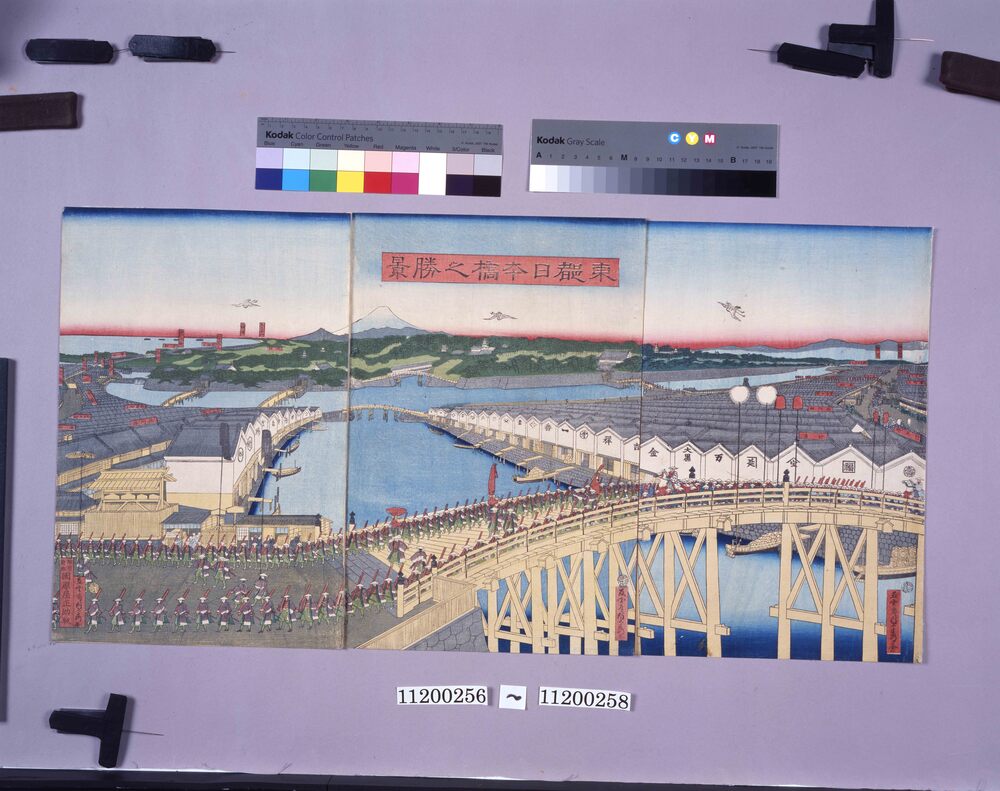
歌川貞秀 東都日本橋之勝景
歌川国貞 東海道 日本橋
歌川国貞 紅毛油画名所尽・日本橋
東海道五十三次(広重)の日本橋
Fifty-three Stages of the Tokaido Highway
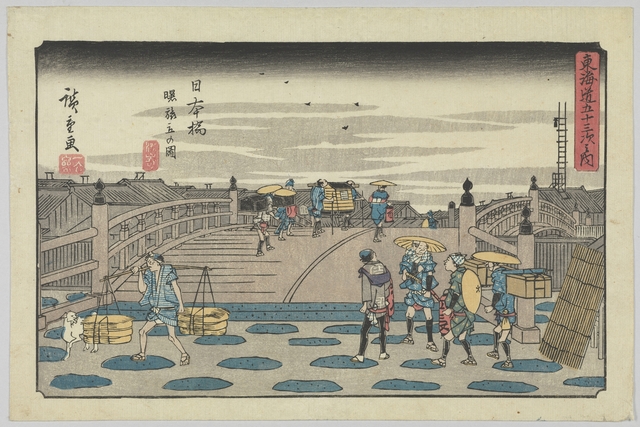
東海道五拾三次(行書東海道) 日本橋
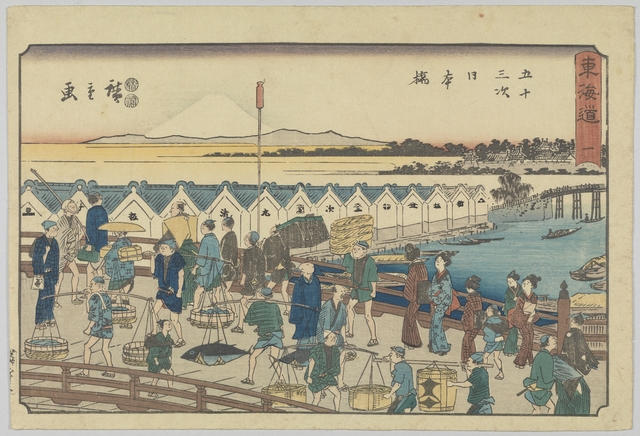
東海道五拾三次(隷書東海道) 日本橋
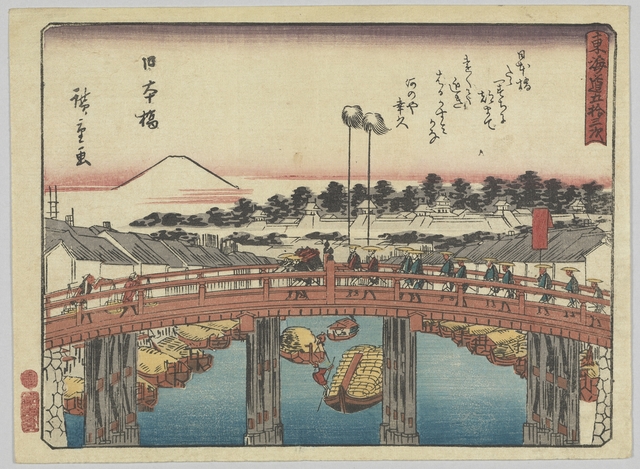
東海道五拾三次(狂歌入東海道) 日本橋
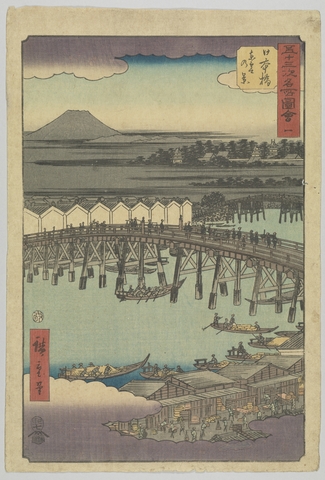
五十三次名所図会(竪絵東海道) 日本橋
明治以降の浮世絵
Nihombashi Bridge (Dawn)
Videos
Past Exhibitions
| Title | shusai | Place | open | close |
|---|---|---|---|---|
External Links
東京の観光公式サイト。日本橋へのアクセス方法や見どころを紹介。
日本橋のタウン誌である「月刊日本橋」によるサイト。日本橋の歴史やお店などの情報を含む魅力を伝える。