Telescope
Optical instruments for magnifying distant objects.
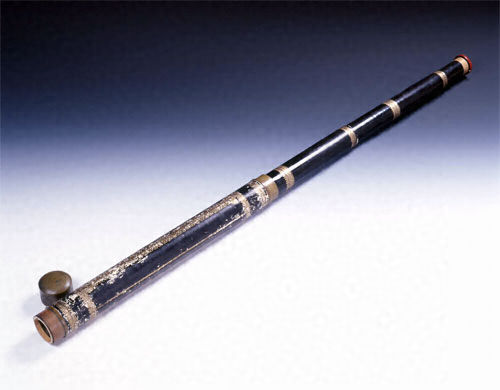
A telescope is an instrument used to produce a real image of a distant object with an objective lens attached to one end of a cylinder, and view a magnified, virtual image of the object with an eyepiece lens on the other end of the cylinder. It is thought to have been invented in Europe in the early 17th century, and there are records of Dutch optician Hans Lipperhey applying for a patent to manufacture a telescope in 1608. The following year, the Italian scientist Galileo Galilei manufactured the "Galilean telescope", which used a convex objective lens and a concave eyepiece. He observed the surface of the moon and Jupiter's satellites, and published the results in his book, "Sidereus Nuncius" in 1610. In 1611, Johannes Kepler of Germany invented the "Keplerian telescope" with a convex eyepiece, and this form is the basis of the refracting telescopes used today.
The first record of the device coming to Japan, a telescope about 1.8 meters in length, can be found in a list of articles that were presented to Tokugawa Ieyasu from Captain John Saris, commander of the East India Company's fleet, when he met the Shogun to obtain permission for trade in 1613. After that, the shogunate and the feudal lords became the main customers, and foreign-made telescopes were continuously imported through the Dutch trading house in Nagasaki.
On the other hand, the production of domestic telescopes seems to have begun in the early 18th century, and prominent early telescope makers include Mori Nizaemon of Nagasaki, who built several telescopes under the order of Tokugawa Yoshimune, and Iwahashi Zenbei of Osaka, who held Japan's first astronomical viewing parties. Also, during the Tempou era (1830-1844), Kunitomo Toubei, a gunsmith from Shiga, built Japan's first reflecting telescope through which he observed.
Related People, Things and Events
Books
Related Works
Japanese heron (a member of the pelican family)
Telescope depicted in paintings
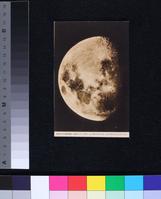
Records of observations made with a telescope
本館備付の天体望遠鏡にて撮影せる月
昭和6年(1931)~昭和戦前
Videos
Institutions and External Links
Established in 1877, the National Museum of Nature and Science (Kahaku) is one of the oldest museums in Japan. It is also the only national museum in the country that offers a comprehensive exhibition of natural history and the history of science and technology. It collects and preserves a variety of collections, such as natural history specimens, historical objects, and scientific and technical documents, and so on.
毎月2回、口径50センチの公開望遠鏡を用いた定例観望会(定員・申込制)を開催。明るい東京の夜空でも観望しやすい月、惑星、二重星などを中心に、観望天体を設定している。
日本国内最大、公開望遠鏡としては世界最大の口径2mの経緯台式望遠鏡「なゆた望遠鏡」をはじめ、観測用の望遠鏡を数多く備える天文台。宿泊施設もあり、宿泊者は毎日、その他の人は土日に観望会に参加可能。
江戸時代の望遠鏡製作者・岩橋善兵衛の偉業を称えて開館。善兵衛の望遠鏡や測量器具、著書類をはじめとした関係資料を展示。天体観測ドームも備え、観望会を開催。
全国から寄贈された大小さまざまな天体望遠鏡を展示する博物館。大型望遠鏡観測室のほか、2mドーム一基と12台の小型・中型望遠鏡が使用できる屋上観測フロアもある。
望遠鏡工業および、その関連産業の発展を図るために設立された団体。望遠鏡や双眼鏡の歴史、仕組み、楽しみ方などを紹介。
The Ueda City Museum exhibits and houses historical, folkloric, and natural materials that provide a general view of the history of the Ueda area since the Middle Ages. The annex exhibits mainly materials related to the Sanada clan. The museum's unique collection includes armor of the Sanada, Sengoku, and Matsudaira clans (successive lords of the Ueda domain) and other materials related to the Ueda domain, a Kawa-Dofuku (National Important Cultural Property) used by Nobunaga Oda, a reflecting telescope (National Important Cultural Property), a Someya-yaki collection (National Important Intangible Folk Cultural Property), sericultural materials, and old documents.
References
- リチャード・ラーナー 著,小尾信弥 [ほか]訳,朝倉書店
- 塚原東吾 編,日本評論社
- 「望遠鏡」の項
- 「望遠鏡」の項