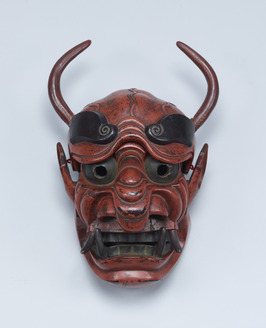
Oni (Demons)
An oni is a human-like monster with horns and fangs. Throughout Japan, there are many legends featuring oni, portraying them as ruthless and horrible creatures with immense physical strength.
An oni is a human-like monster with horns and fangs. In China, the characters that make up the word oni (鬼 demon) refer to the deceased or dead. However, in Japanese, the word oni originally came from the character for on (隠), meaning ‘to conceal’ or in reference to anything invisible to people, such as evil matters and vengeful spirits. Due to the influence of Buddhism and the belief in Yin-Yang, images created of oni were elaborated on from Gokusotsu (ogres from hell) and Yasha (Buddhist guardian deities cursed to become demonic warriors). The oni came to be depicted as evil demons, often illustrated with sharp tusks, bull-like horns, and grinning from ear to ear. Images often also showed these demons naked, except for tiger-fur wraps draped around their bodies, and holding long, metal rods.
Oni legends can be found throughout various regions of Japan. For example, Otogi-zoshi (Illustrated Short Stories) tells the tale of the Oeyama Demon (Shuten Doji) who appears in Kyoto and kidnaps the noble princesses of the city during the reign of Emperor Ichijo. Shuten Doji was exterminated by a samurai, Minamoto no Yorimitsu. This story is well known by the people of Japan.
During the Heian era, an annual event known as Tsuina (a ritual to exorcise oni) was held at the palace on the evening of December 31. Hososhi (Court priests), would wear cruel-looking masks, and were responsible for expelling any demons. Later, Hososhi began to be expelled as oni, which shaped the current form of ‘demons’ during Setsubun (The Bean-Throwing Festival). During Setsubun, to ward off evil things or events, people throw beans, calling ‘The demon is outside. The fortune is inside.’ This tradition of throwing beans can be seen in records from the Muromachi era. During the Sengoku period, renga poet, Socho, wrote in his diary, ‘Good luck is inside. Demons see the beans and pick them up, thinking they are a treat. Before they know it, they are outside.’
Related People, Things and Events
Books
Related Works
Videos
Past Exhibitions
| Title | shusai | Place | open | close |
|---|---|---|---|---|
Institutions Holding Related Materials
京都府福知山市(旧加佐郡大江町)の大江山麓にある鬼伝説をテーマとする博物館
External Links
鬼に象徴される厄を祓い、招福を祈願する節分祭・追儺式の様子が紹介されている。