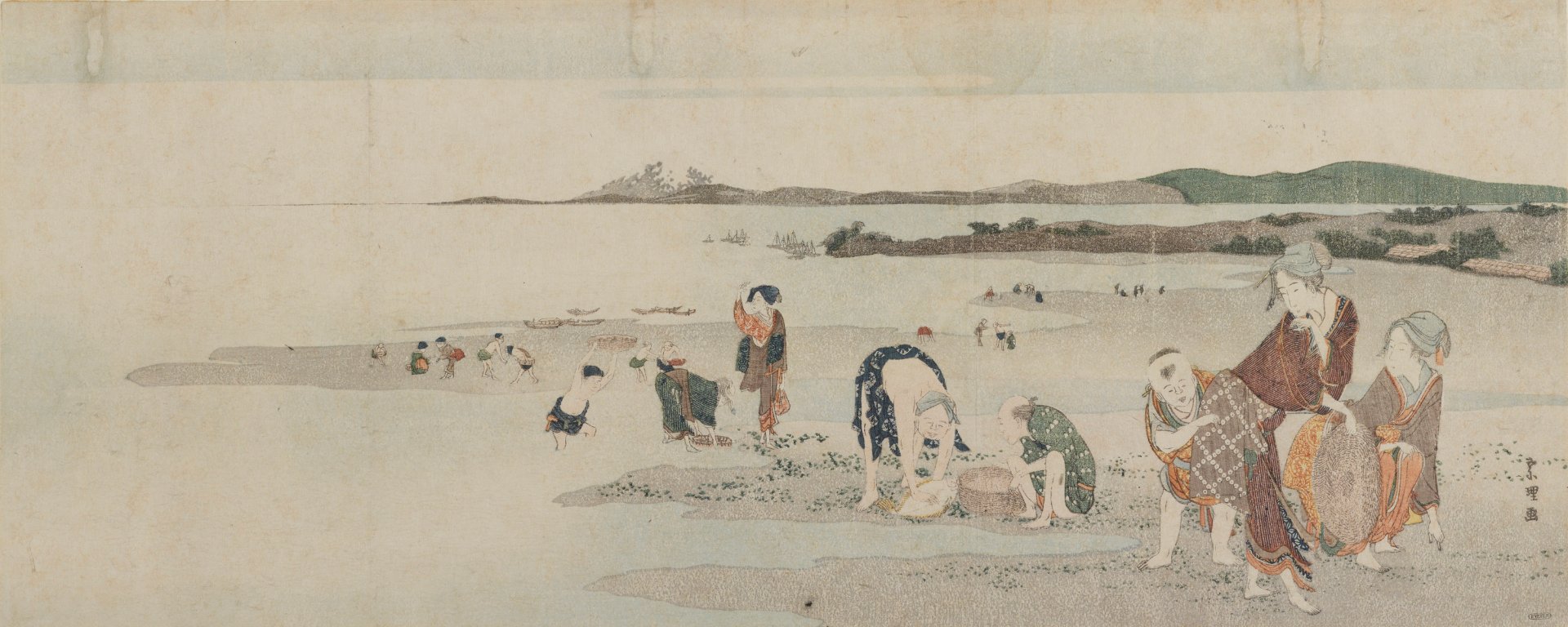
Clam Digging (Shiohigari)
This Japanese spring tradition is the fun activity of catching shellfish and small fish on the beach at low tide
Clam digging is going out to the beach in the spring during low tide and having fun catching shellfish and small fish. The Japanese word for clam digging, shiohigari, is also a seasonal word for spring. The best days for clam digging is during the spring tides between April and May (between the Third Month and Fourth Month of the lunar calendar), when the difference between high tide and low tide is large. This activity is done in various parts of Japan, but it is particularly popular along the Pacific coast, the coast of the Seto Inland Sea, northwestern Kyushu, and Okinawa, where the difference in tides is large, but it is rarely seen along the coast of the Sea of Japan.
In Hitachi no Kuni fudo ki (The Climate and Customs of Hitachi Province), compiled early in the Nara period (710-792), there is a description of people gathering in the spring to dig clams in a sandbar, which tells us that clam digging has been practiced in Japan since ancient times.
In agricultural and fishing villages, it was customary to dig for clams at the beach and eat the delicious morsels caught, for the Joshi Season Festival (the 3rd of the Third Month in the lunar calendar). On Amami Oshima and the Okinawa islands, an event called Hamakudari (or Hamauri or Sanizu) is held on this day. Then women cleanse themselves by soaking their hands and feet in seawater, dig for clams, and enjoy a feast. It is believed that these customs are derived from customs of purification in a river on the day of Shangsi (Joshi in Japanese) in ancient China.
Places famous for clam digging were, in Tokyo, the suburbs of Shibaura, Takanawa, Shinagawa, and Susaki, and in Osaka, Sumiyoshi and Sakai.
In the Edo period (1603-1867), the coast of Japan had wide sandy beaches, and at low tide, various creatures such as shellfish, octopuses, and small fish appeared. Regardless of rank, age and sex, people rolled up the hems of their kimonos and enjoyed digging for clams. Daughters of wealthy merchants and good samurai families wore gorgeous short-sleeved kimono for digging clams. Such scenes were often depicted as a spring tradition in colored woodblock prints and picture books.
Related People, Things and Events
Books
Related Works
Drawings of clam digging in paintings (Edo, Tokyo)
Drawings of clam digging in paintings (Other)
Photographic materials of clam digging
Videos
Institutions Holding Related Materials
原始・古代から現代までの品川の歴史を学ぶことができる施設。潮干狩りで賑わった江戸時代の品川の様子を知ることができる。
自然の砂浜の海岸に、ハマグリ・ホッキガイ・コタマガイなど、天然の貝が生息している。
千葉県立富津公園に隣接した遠浅の海岸で、3月から7月まで潮干狩りを楽しむ事ができる。
木更津海岸部は、干潮時には沖合い数百メートルの自然干潟が広がり東京湾一の広さを誇る。アサリやハマグリなどを採取できる。
アサリなどの貝類が自然繁殖しており、3月中旬から9月中旬頃にかけて、潮干狩りを楽しむことができる。
愛知県蒲郡市内にある、水神海岸・三谷温泉海岸・形原海岸などの潮干狩り場を紹介。
愛知県西尾市内にある、潮干狩り場5ヵ所を紹介。3月から7月頃まで潮干狩りを楽しむことができる。
県立自然公園に指定された、約17kmに及ぶ連続した海岸線がある。春から夏にかけて潮干狩りが楽しむことができ、ハマグリ、マテ貝、バカガイ、アサリなどが獲れる。
全長約1kmの砂浜。4~6月頃潮干狩りを解禁。
瀬戸内海国立公園に指定された、約1.5kmにわたる遠浅海岸。4~6月頃潮干狩りが楽しめる。
熊本県玉名市内に開設される潮干狩り場を紹介。
「ナンゲ」と呼ばれるナミノコガイやオキアサリなどが生息し、春先から秋にかけて潮干狩りが楽しめる。
全国の潮干狩り場の情報を提供。
References
- 福田アジオ, 菊池健策, 山崎祐子, 常光徹, 福原敏男 著,吉川弘文館
- 五十嵐謙吉 著,八坂書房
- 日立デジタル平凡社,平凡社