Sweet flag
A perennial plant of the Araceae family. Called shobu in Japanese, a name that can also refer to hanashobu flowers of the Iridaceae family.
A perennial plant of the Araceae family, Acorus calamus var. angustatus, with a distinctive fragrance. Now called shobu in Japanese, older names for the plant include ayame and ayamegusa. Forms colonies, growing in locations such as the edges of ponds and rivers in all regions of Japan. Its rhizomes are pale red and thick, spreading across the ground surface. Leaves are biseriate, reciprocal, sword-shaped and linear, with lengths of about 70 cm. In early summer, flower stems grow from between the leaves and produce dense arrangements of small, pale yellow flowers that form cylindrical spadices.
Due to its perfumed fragrance, it is believed to have the power to repel noxious vapors and pestilence. For the Boy’s Day Festival (Tango no Sekku, May 5), the leaves have been cut into the shapes of arrow feathers and inserted in the hair, wrapped around the head like headbands, tied in bundles and inserted in the eaves of houses, etc. to provide ceremonial cleansing effects. They are also added to bathwater to make shobu-yu baths and to sake to make shobu-zake.
Sweet flag has been mentioned in poetry dating back as far as the Manyoshu (“Collection of Ten Thousand Leaves”), and works completed in the Heian Period (794–1185) such as Makura no Soshi (“The Pillow Book”) and Kagero Nikki (“The Mayfly Diary”) describe Tango no Sekku customs that make use of the plant. In the days of samurai, due to the sword-like shape of the leaves and the way the name echoes the pronunciation of a homonym, shobu (military spirit), events like shobu-uchi were held, a game involving slapping the leaves on the ground to make the loudest sound, and the plant came to be associated with the seasonal festival held for boys.
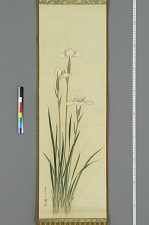
A different plant, the hanashobu Japanese iris flower (Iris ensata var. ensata) of the Iridaceae family is also sometimes called shobu, and the word shobu-en refers to a garden with hanashobu flowers. This flower, a cultivar developed from improvement of the nohanashobu (I. ensata var. spontanea) that grows wild in Japan, produces beautiful flowers with colors including purple, white, and variegated hues. Leaves are sword-shaped and grow in biseriate, alternate arrangements. Though similar in appearance to other Japanese irises such as kakitsubata (I. laevigata) and ayame (I. sanguinea), kakitsubata is aquatic and ayame terrestrial. Hanashobu itself grows both on land and in the water.
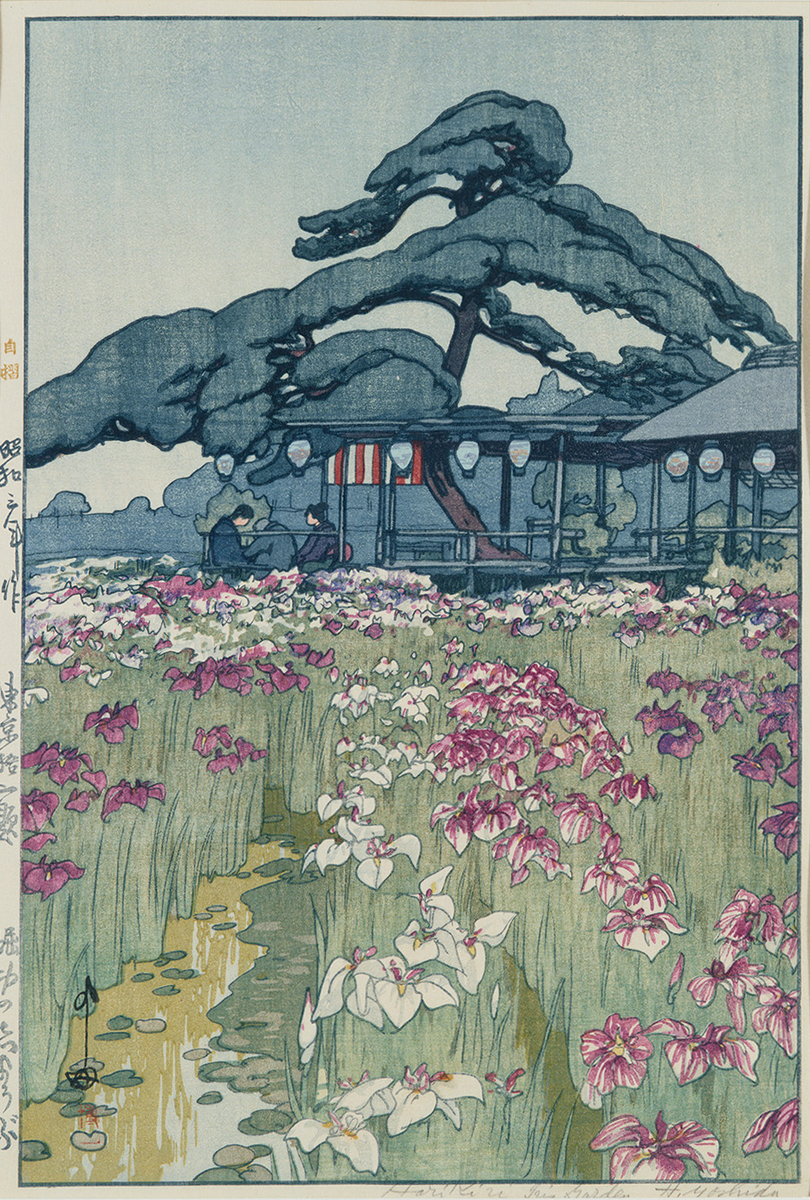
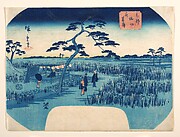
Cultivar improvement flourished in the Edo Period (1603–1868), producing a diverse range of flower varieties with differing colors, shapes, sizes, and other characteristics. The Horikiri district in Katsushika City, Tokyo is a famous location for viewing hanashobu flowers and provided the setting for woodblock prints by many ukiyo-e artists, including Hiroshige Utagawa.
Related People, Things and Events
Books
Sweet flag
Japanese iris
花菖培養録
著者松平定朝(さだとも、号は菖翁、1773-1856)は幕臣で、京都町奉行を長く勤めた。花菖蒲の改良で名高く、本書はその花菖蒲(ハナショウブ)の専書で、まず自序があり、続いて父の代からその改良に関わり、さまざまな品種を作り出すまでの苦心を述べる。ついで名花21品を図示したのちに、「盆植培養」「実生培養」「虫患」「肥しの製法」の項目を立てて栽培法や害虫の駆除法を記す。じつは、本書は弘化3年(1846)に『花鏡』の題で執筆されたのが最初であり、同4年序本(同題:以上は当館に無し)、嘉永元年(1848)序本(『花菖培養録』と改題:当館書名『花菖蒲培養録』、195-155本)、同2年序本(『花菖培養録』、特1-938本)、同5年序本(当館に無し)、同6年序本(本資料および『花菖培養録』、W373-N30本)と改訂が続けられた。改訂のたびに本文に多少手を入れ、図示する種類も数も改めている。ただ、品種の一覧は以上の資料に無いが、別の著作『花菖蒲花銘』(寄別6-3-1-8)があり、これに、重複を除いて119の品種名が記載されている。:『百花培養考』解題参照(磯野直秀)
花菖蒲図譜(外題) 4巻 存巻1
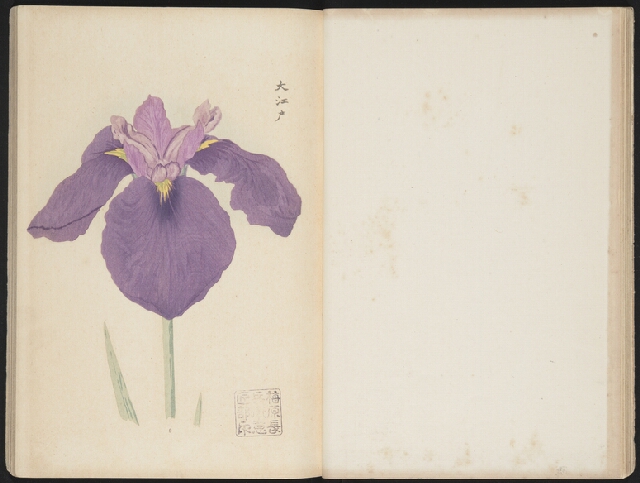
『花菖蒲図譜』は日本の植物学の先駆者で、花菖蒲の研究における第一人者として知られる三好学による書。「江戸自慢」「大江戸」「松ヶ枝」「座間の森」「蜀江錦」など、花菖蒲のさまざまな品種の彩色図譜が収録されている。大正11年(1922)刊。
楳嶺花鳥画譜 菖蒲・鷺
江戸時代末から明治初期にかけて活躍した日本画家、幸野楳嶺(こうのばいれい)による絵手本集『楳嶺花鳥画譜』から「菖蒲・鷺」。『楳嶺花鳥画譜』は、大倉陶園の創業者・大倉孫兵衛が 陶磁器業を始める以前に家業としていた大倉書店より出版されたもので、幸野楳嶺が得意とする写生的な花鳥画を33作品収録している。
梅園草木花譜夏之部 3
『梅園草木花譜 夏之部』から「花菖蒲」の図。本書は春4・夏8・秋4・冬1の計17帖から成り、約1300品を収録した江戸時代屈指の植物図譜。
芸術資料 第一期 第三冊
大正・昭和期の美術記者・金井紫雲(かない しうん)が編んだ『芸術資料』第一期 第三冊「燕子花 花菖蒲 卯の花」。よく似た花としてあげられる燕子花と花菖蒲などに関する資料をまとめており、乾山筆「花菖蒲圖」が掲載されているほか「花菖蒲の品種」「花菖蒲の名所」の項がある。
嘉永六年癸丑花暦
江戸時代後期には、その年の梅・桜などの開花期の予想を記した「花暦」(はなごよみ)が各地で刊行された。本資料は江戸の花暦の一例であり、正月~十二月に分けて「鴬・梅・彼岸桜‥‥」計32の項目を載せ、「梅、自正月廿一日廿二日比(ころ)、杉田村・蒲田村‥‥根岸梅園・浅艸寺奥山」のように、予想される開花の月日と名所とされる地名・園名を記す。名所の大半は江戸か江戸に隣接する地域だが、梅の筆頭にある杉田・蒲田のように江戸からやや離れた土地を入れることもある。32項目のうち草木が27項目を占め、それ以外は「鴬・郭公(ホトトギス)・水鶏(クイナ)・虫聞・看雪」の5項目だけである。『[嘉永二年己酉]花暦』(特1-1955)は本資料とまったく同じ構成の木活字本で、ただ本資料の「花菖蒲」の代わりに「白膠」が入っている、古風な漢字名が用いられているなどの違いがあるだけである。その末尾に「毎年改」とあるので、嘉永3~5年本も刊行された可能性が高い。(磯野直秀)
花菖蒲花銘
『花菖蒲花銘』は、江戸時代後期の旗本・松平定朝の著。松平定朝は菖翁(しょうおう)と号し、「宇宙(あおぞら)」や「不背玉」など百数十種におよぶ花菖蒲の改良種を育成した。提出本は安政3年(1856)刊行の写本。
十二月ノ内 皐月生花会
画題:十二月ノ内・皐月・生花會
Related Works
Sweet flag
「稚遊五節句之内 端午」
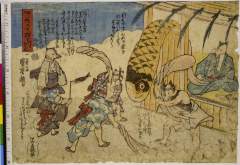
江戸時代後期の浮世絵師・歌川国芳の作品で、菖蒲打ちをして遊ぶ子どもたちを描いている。菖蒲打ちとは、端午の節句に行われた男子の遊びで、菖蒲の葉を編んで縄のようにし、互いに地面に叩きつけて音の大きさを競い、また先に葉が切れたものが負けとした。
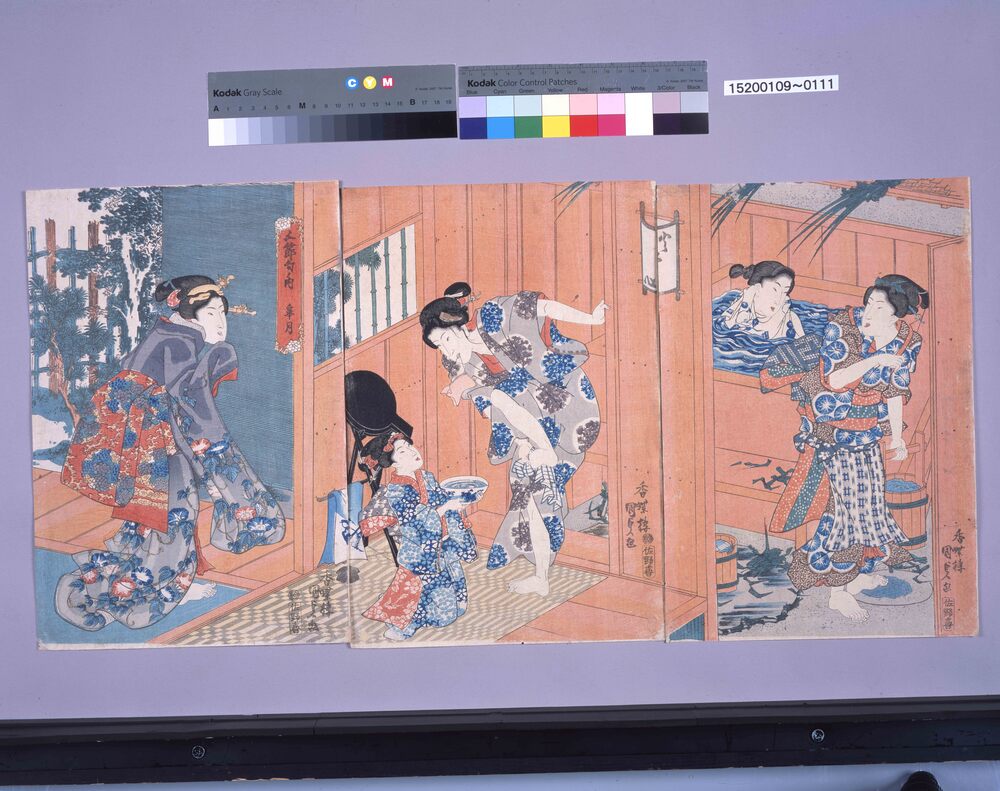
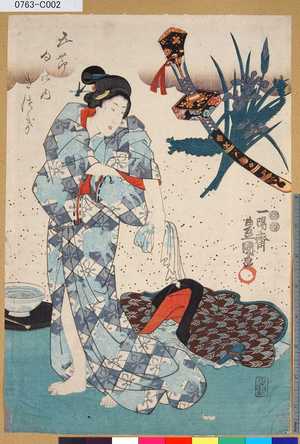
The Five Seasonal Festivals : May
江戸時代後期の浮世絵師・歌川国貞による、端午の節句の様子を描いた作品。菖蒲湯に入る姿が描かれており、その手前の女性は頭に菖蒲を巻いている。その上の軒には菖蒲の葉が挿してある。これは「菖蒲葺き」といって端午の節句の前夜に菖蒲と蓬の束を軒に挿すことで邪気を払う風習である。
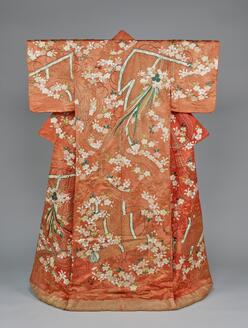
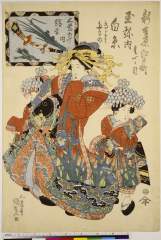
Formal Outer Kimono ("Uchikake") with Bamboo Curtains, "Kusudama", and Cherry Blossoms
<p>Uchikake are kimono worn on formal occasions. They are still worn by brides at wedding ceremonies today. This lavish uchikake features designs over glossy red figured satin.<br /><br />The motifs are tie-dyed or embroidered using gold and silk threads. The ground is also dyed an expensive red. All this suggests the garment was worn by a woman of high social standing. The opulent colors may conjure up an image of a young lady, but this is actually a short-sleeved type worn by married women. It was probably worn on special occasions by a young wife.<br /><br />Let's take a closer look at the designs. Cherry blossoms bloom across the surface of the garment. A number of techniques have been used to create subtle variations in the colors of the flowers. Some blossoms are embroidered using silk or gold threads, for example, while others are tie-dyed. The dye has also been removed in places to create flower shapes on the white ground. The most extravagant motif is probably the ornamental herbal decoration at the top right. Herbal decorations were made by placing herbs and other things in a brocaded pouch. Imitation flowers and iris leaves were then fastened to the bag and strings of five colors were hung down from the finished decoration. These decorations were traditionally hung up on May the fifth to ward off evil spirits. The five-colored strings and bamboo blinds together create a dynamic, sweeping design.</p>
“The Boys' Festival” from the Series Children during the Five Seasonal Festivals
<p>The picture depicts children playing at the Boys’ Festival. The banners behind them feature Kintaro and other figures from Japanese folklore.<br /></p>
端午の祝
江戸時代中期の浮世絵師・勝川春潮(生没年不詳)が描いた、端午の節句の様子。抱えられた赤子の頭に、菖蒲の葉が巻かれている。
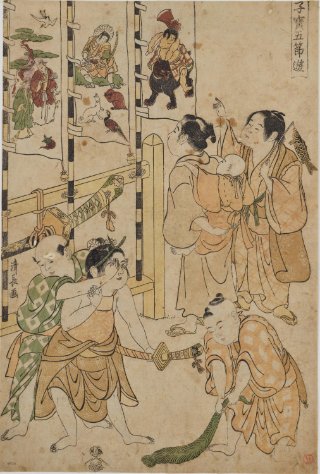
端午
江戸時代中期の浮世絵師・鳥居清長の作品。上部を見ると、軒に菖蒲の葉が挿してあるのがわかる。
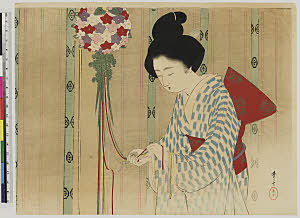
薬玉之図
「薬玉之図」弘化元年(1844)本間連文(写)。端午の節句には邪気をさけるまじないとして、柱などに薬玉をかけた。薬玉とは、麝香(じゃこう)、沈香(じんこう)、丁子(ちょうじ)などの香料を錦の袋に入れて造花などで飾り、菖蒲や蓬などの葉を添えて挿し、五色の糸飾りを長く垂れ下げたもの。
美取神社大祭
美取神社春の大祭には大太鼓・鉾・幟・榊・御輿の順で行列をし、神社から本庄まで行った。麒麟獅子は本庄と太田との両集落から出し、2頭で各家庭を回っていた。現在は榊と本庄の獅子が各家庭を回っている。
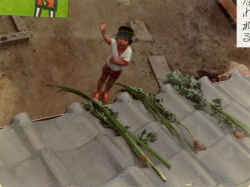
端午の節句には、屋根に菖蒲の葉とよもぎを飾り、病気や災厄を払う。
端午の節句には、屋根に菖蒲の葉とよもぎを飾り、病気や災厄を払う。

Japanese iris
「名所江戸百景」 「堀切の花菖蒲」
江戸後期の浮世絵師、歌川広重の『名所江戸百景』より「堀切の花菖蒲」。大きく画かれた花菖蒲の後ろには、花見客の姿も見える。広重は代表作「東海道五十三次」をはじめ、多くの名所絵や風景画を手掛け地位を確立した。また花鳥画にも優れた資質を見せ、情緒あふれる佳作を残している。
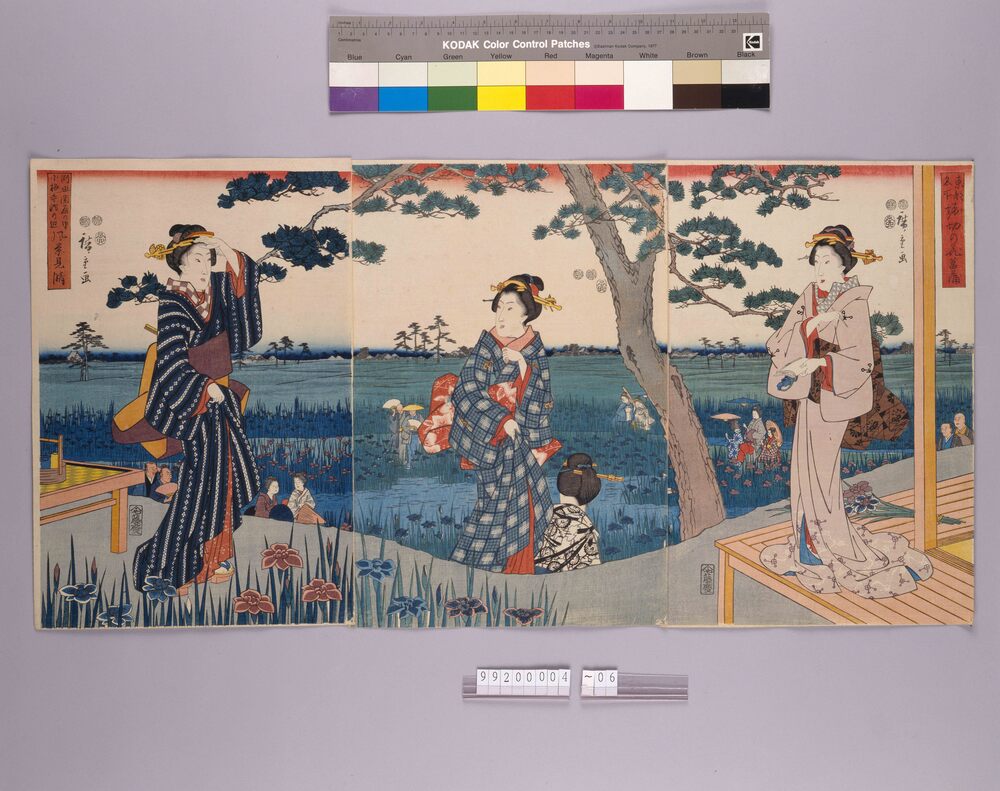
「三十六花撰」「東京堀切花菖蒲」 「二十」
江戸時代末期から明治初期にかけての浮世絵師・二代 歌川広重(喜斎立祥)の作品。『三十六花撰』では江戸の花の名所として、36種の花を取り上げている。
菖蒲文蒔絵文庫
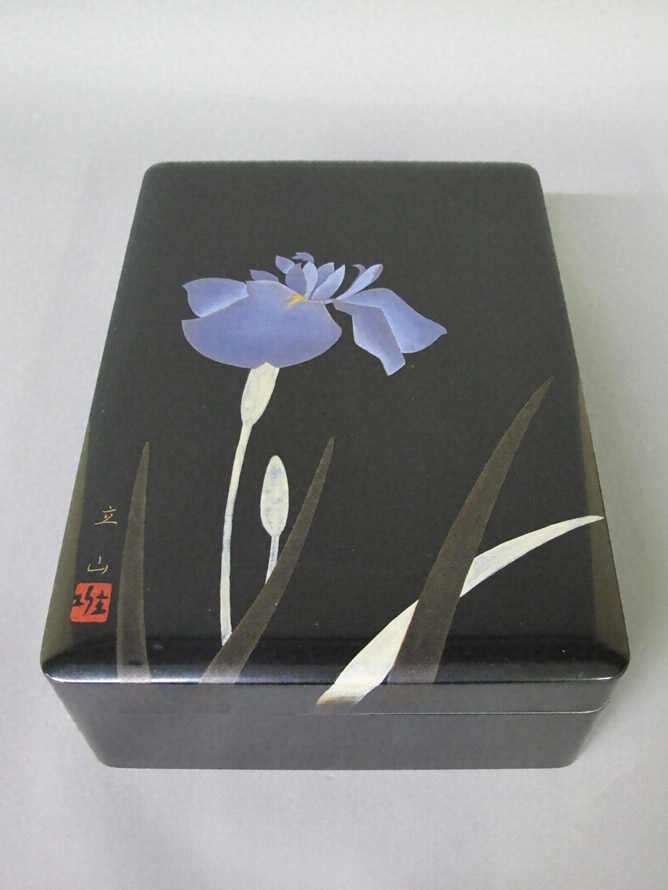
高岡市出身の漆芸家・山崎立山による文庫である。 全面に黒漆が塗られ、蓋表には菖蒲の文様が蒔絵で表現されている。
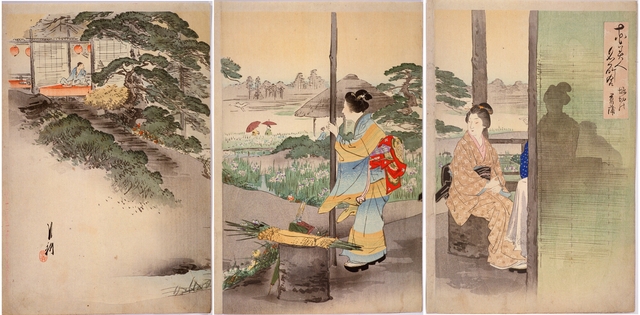
「東京名所」「堀切菖蒲」
幕末から明治時代の浮世絵師・楊洲周延(ようしゅうちかのぶ)の作品。堀切で花菖蒲を鑑賞する女性たちを描いている。
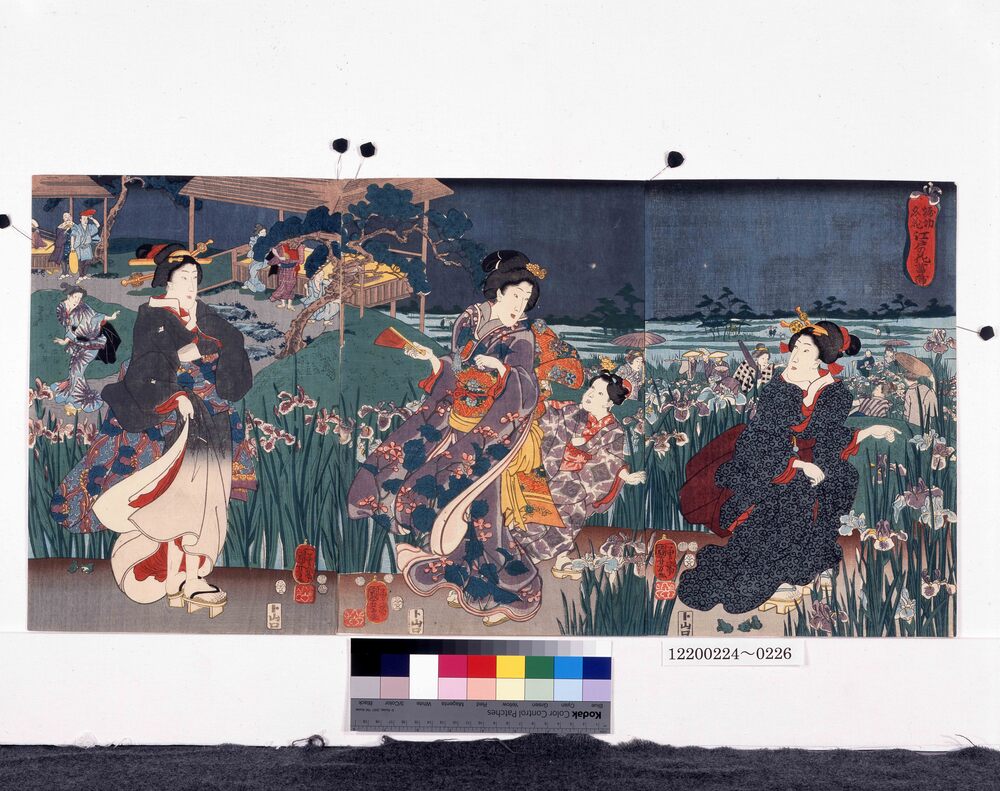
Horikiri's Famous Flowers : Iris Flowers in Edo
江戸時代後期の浮世絵師・歌川国芳の作品で、夜の菖蒲園を描いたもの。奇想天外な構図と斬新な画風で知られる歌川国芳だが、その作域は、風景画、美人画、役者絵、花鳥画、武者絵、風刺画、戯画、版本の挿絵など幅広い。
東京自慢十二ヶ月 五月 堀切の菖蒲
江戸時代末期から明治時代の浮世絵師・月岡芳年の『東京自慢十二ヶ月』から「五月 堀切の菖蒲」。『東京自慢十二ヶ月』は東京の名所や花を背景に、当時の芸者や遊女を描いた美人画シリーズ。






Videos
Past Exhibitions
| Title | shusai | Place | open | close |
|---|---|---|---|---|
Institutions and External Links
東京都葛飾区にある植物園。昔から花菖蒲の名所として知られ、その種類は約200種、6000株におよぶ。6月上旬から中旬が見頃。
明治神宮御苑の菖蒲田では、約150種、1500株の花菖蒲が咲く。明治12年(1879)に堀切の江戸花菖蒲を移し開設された。
国立科学博物館附属自然教育園内に生息している生物の種名や写真を調べることができる。
国立科学博物館筑波実験植物園内の植物を検索することができる。研究者ノートなど専門的な解説もあり。
熊本大学薬学部 薬草園内の薬用植物を検索できるデータベース。ショウブとハナショウブのページもあり、写真とともに薬効や用途などが解説されている。
1000種類以上の植物、花の名前がわかる植物図鑑。ハナショウブの種類や育て方などについて、「趣味の園芸」講師陣の専門家が執筆している。
References
- 山田卓三, 中嶋信太郎 著,北隆館
- 木村陽二郎 監修,植物文化研究会, 雅麗 編,柏書房
- 平田喜信, 身崎寿 著,東京堂出版