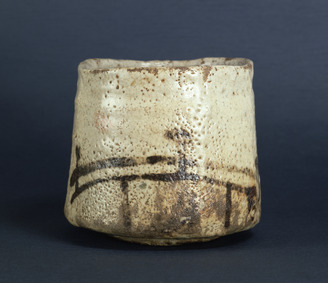
Tea ceremony ware (1): Seto ware, Mino ware
Seto and Mino tea ware
The term “chato” refers to the ware used in the tea ceremony, which includes tea bowls, jars, water jugs, flower containers, and kaiseki (traditional Japanese cuisine) ware. Tea ceremony ware from Seto and Mino, the two largest manufacturing regions of glazed ceramic ware in medieval Japan, has been used in tea ceremony since the dawn of this art.
Seto-yaki (Seto ware)
愛知県瀬戸市一帯で作られた陶器。瀬戸は、焼き物の代名詞「せともの」の語源にもなっている重要な窯場。13世紀に道元に従って宋に渡り、陶法を習得した伝説的陶工・加藤四郎左衛門景正(しろうざえもんかげまさ)による開窯と伝わり、日本六古窯の一つ。鎌倉時代から、植物を燃やした灰から作られる灰釉などを用いて日本で唯一施釉陶器を焼き、当時珍重されていた中国陶器を模した施釉の茶陶を生産。室町時代には、中国の建窯で焼かれた茶碗(建盞)を写した天目茶碗などを焼成する一方で、日用雑器も作るようになった。鎌倉時代から室町末期ごろまでのものを「古瀬戸」と呼ぶ。
Mino-yaki (Mino ware)
現在の岐阜県多治見市を中心に、かつての美濃国で作られた陶器。その起源は古墳時代の須恵器の製造にあるといわれる。平安時代には、灰釉陶器や農民向けの無釉の山茶碗を焼き、室町時代には瀬戸焼の傘下に入り、瀬戸系の施釉陶器を生産した。桃山時代に入ると、淡黄色の肌をした「黄瀬戸」、漆黒の「瀬戸黒」、白い長石釉を掛けた「志野」といった新様式の陶器の開発に成功し、これらはわび茶の茶人に愛好され、日本独自の茶陶として発展した。桃山時代後半には、千利休の高弟で、当時の茶道界の指導的立場にあった茶人・古田織部の好みといわれる「織部焼」も加わり、斬新な形状と意匠による前衛的な茶器が次々と生み出された。
Kiseto ware
Shino ware
Oribe ware
Related gallery
The implements used in tea ceremony are divided into the following broad categories:
• Ornamental items
The scroll hanging in the alcove
The flower vase in the alcove
• Items used to make the tea
The kettle
The tea bowl
The tea scoop
• Items used for the simple meal before tea
Plates
Bowls
Sake cups
• Washroom utensils
A water bucket
A water ladle
As one can see, a great variety of handcrafted items are used as tea ceremony utensils, and these items are made from all sorts of materials: ceramics, metal, wood, bamboo, lacquer, dyed cloth, paper, etc.
During the Kamakura period (1180-1333) when the Song manner of appreciating tea was introduced to Japan, all sorts of tea implements were also brought over. Tea implements made in China during the Song (960-1279), Yuan (1279-1368), and Ming (1368-1644) dynasties, called Kara-mono (Chinese ware) in tea ceremony circles, are most prized even today.
With the spread of tea ceremony culture in the Muromachi period (1336-1573), kilns like those in Seto and Mino started imitating Chinese tea ceramics and calling what they produced Wa-mono (Japanese ware). In due time, Sen no Rikyu's austere tea culture (wabicha) became the fashion in tea circles, and with this development, tea bowls called Korai-mono (Korean ware), from private kilns on the Korean peninsula, became the main type of tea bowls used in Japan. Separately, Japanese ware tea implements also changed to conform to the aesthetic of austere tea culture, developing in ways unique to Japan.
So that the tea ceremony becomes a heightened aesthetic experience, participants are encouraged not just to use tea implements in the tearoom, but also to appreciate them in their use and for their beauty. Moreover, careful consideration is also given to which tea implements to use together on a particular occasion. The tea master first considers the theme of the tea gathering and selects a particular hanging scroll for the alcove. Then he selects tea implements, tea bowls, a tea scoop, and so on, making sure that they go together in color and artistic design.
References
- 茶道資料館 編,淡交社
- 仁木正格 著,主婦の友社
- 陶工房編集部 編,誠文堂新光社