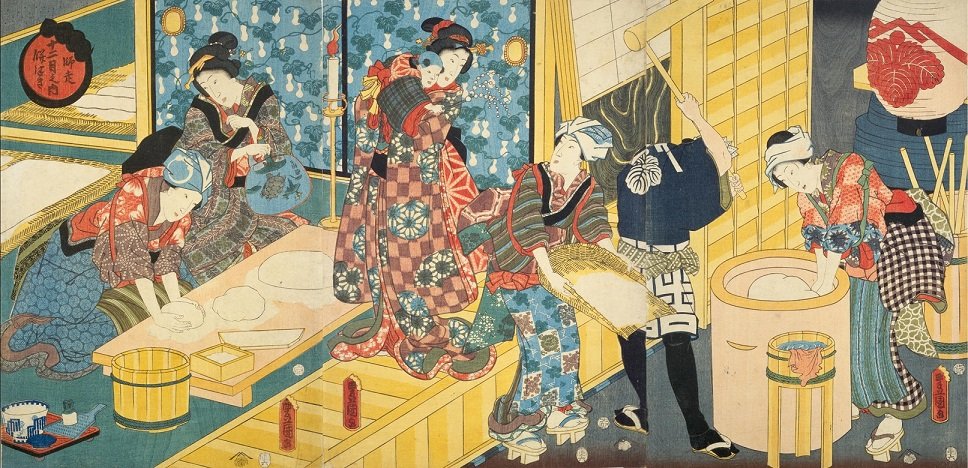
Shiwasu (December)
Shiwasu is the lunar calendar name for December. The term continued to be used after the introduction of the solar calendar during the Meiji era and is still used today.
Shiwasu is a lunar calendar name for December. It can also be called goku-getsu or ro-getsu (the twelfth lunar month).
During Shiwasu, monks travel to houses throughout Japan to perform Buddhist rituals, such as sutras. There are various theories relating to the origin of the word shiwasu. One such possibility is the word being derived from 師馳す shihasu (visits from monks) which refers to the business of the monks as they move through the area. Another theory states the word came either from 四極月 shihatsu, meaning the four seasons (shiiji) end in that month, or 年果つ toshi hatsu which was later changed to shihasu.
As the impression of the term corresponds with the end-of-the-year rush within society, the term shiwasu continued to be used after the introduction of the solar calendar during the Meiji era, and is still used today.
While temples are busy with their Buddhist services, people start preparing for the upcoming new year. Tools required for the New Year celebrations are taken out on December 8 for kotohajime (start of things for Shogatsu). Susuharai (the end-of-year house-cleaning) commences on December 13, and dirt remaining from the year is removed.
During the Edo Era, business owners would check their accounts (including the borrowing and lending lists) during Obon (Bon festival days). Then, during Shiwasu, they would try to collect money owed by buyers, however, most of the time, arguments would go back and forth between them. This unfinished business left people feeling regretful as they entered the new year. This feeling is perfectly described in a senryu (Japanese short poem): Miso koshi no, soko ni tamarishi ohmisoka, kosuni kosarezu, kosarezu ni kosu. In English: At the end of the year, there are chunks of miso left at the bottom of the strainer; we cannot force others to strain it before the dawn of the new year. The poem is a comical satire referring to the state of debt some people may find themselves in at the end of the year.