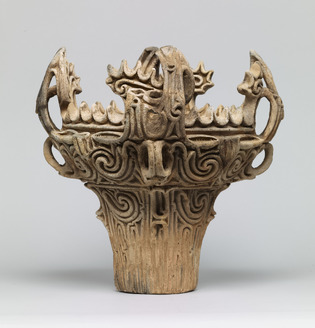
Jomon Doki
Jomon Doki refers to earthenware pottery which was made and used during the Jomon era. They were widely used in Japan from Hokkaido to Okinawa, and their style and patterns varied depending on the region and time they were made.
Jomon Doki, or earthenware pottery, was made approximately 12,000~15,000 years ago in Japan. A significant technological innovation, the use of this pottery drew a line between the Jomon era (14,000 – 400 BCE) and earlier eras.
Jomon Doki was originally used as an earthenware pot for cooking. Its development is believed to coincide with the increased consumption of plant foods due to the change in forest flora; with nuts, fruit and root vegetables needing to be boiled to reduce their bitterness. The pots were also used for storage.
Edward Sylvester Morse first discovered Jomon Doki at Tokyo’s Ohmori Shell Mound during the Meiji era. He reported his finding as ‘cord-marked pottery’, which was translated into Japanese as Sakumon Doki, but the term Jomon Doki had already begun to take root.
The patterns created by rolling twisted straw rope over the surface are the iconic feature of Jomon Doki, but many earlier pieces had simpler designs for practicality. Over time, the decoration of Jomon Doki became more elaborate, culminating in Kaen-gata Doki (flame-shaped vessel) created in eastern Japan during the middle of the Jomon era. Some experts say the unique ‘flame’ design on the rim was for ritual purposes rather than daily use. Kaen-gata Doki is considered innovative in Japanese art history and influenced Japanese artist, Taro Okamoto (1911-1996), who is famous his building 'Tower of the Sun', the symbol of the 1970 Osaka Expo.
Related People, Things and Events
Books
Related Works
Past Exhibitions
| Title | shusai | Place | open | close |
|---|---|---|---|---|
| 大田区立郷土博物館 | 2010/10/10 | 2010/11/14 | ||
Institutions Holding Related Materials
我が国の人文系の総合博物館として、日本を中心に、アジア諸地域にわたる文化財について収集、保存、展示等を行っている。重要文化財である「人形装飾付異形注口土器」を始め、複数の縄文土器を所蔵・展示している。
日本の歴史と文化について総合的に研究・展示する歴史民俗博物館で、大学共同利用機関法人人間文化研究機構を構成する6機関のひとつ。展示では、日本最古の土器に焦点を当てているほか、当時の人びとの日々の生活誌はもちろん、死生観などの精神文化についても、日本最大級の大型石棒(実物)や、100体もの遺体を埋葬した墓の実大模型などによって大胆に復元を試みている。
笹山遺跡(新潟県十日町市)出土の国宝・ 深鉢形土器(火焔型土器)を始め、複数の土器を収集・展示している。
External Links
文化庁の「日本遺産」に認定された火焔型土器のページ。リンク先は縄文文化と土器の関係についての紹介ページ。岡本太郎と縄文土器の関係について触れたページもある。
モース博士により発掘された大森貝塚の標本資料の多くは、東京大学総合研究博物館人類先史部門に収蔵されている。土器の図版・写真付きの標本データを一覧で見られる。