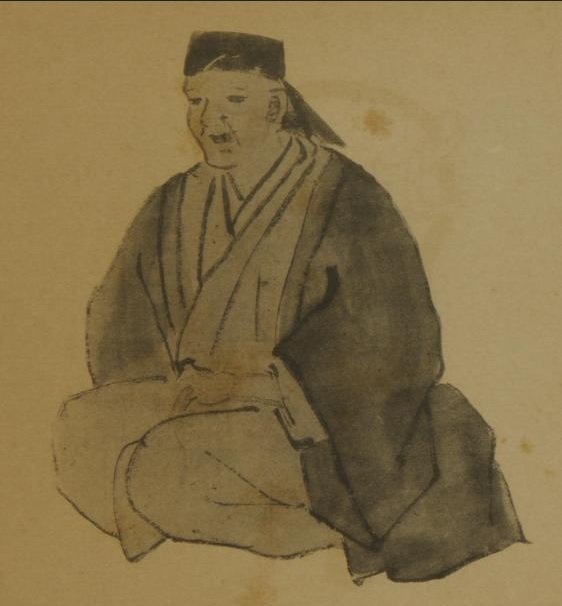
Issa Kobayashi
A representative haiku poet of the late Edo period, who left behind about 20,000 haiku
1763–1827
Haiku poet of the late Edo period (around 1750–1850). His real name was Yataro Kobayashi. He also used names including Ikyo, Kikumei, and Ungai. The first-born son of a farming family in Kashiwabara, Minochi District, Shinano Province Haiku poet of the late Edo period (around 1750–1850). His real name was Yataro Kobayashi. He also used names including Ikyo, Kikumei, and Ungai. The first-born son of a farming family in Kashiwabara, Minochi District, Shinano Province (currently Oaza Kashiwabara, Shinano-machi, Kamiminochi District, Nagano Prefecture). Losing his mother when he was 3 years old, he was raised by a stepmother from age 8. After disagreements with his stepmother, he left his hometown for Edo at the age of 14 to serve as an apprentice. Moving from one apprenticeship to another, he aspired to the path of haikai poetry, starting around his twenties. When he was about 25, he became a student of the Katsushika School of haikai founded by Sodo Yamaguchi, studying under Somaru Mizoguchi, Chikua Nirokuan, and others. At 37, he inherited the Nirokuan moniker from his teacher Chikua.
For the roughly six years from 1792 to 1798 following Chikua’s passing, he traveled through Saigoku (western Japan) and Kamigata (the region around Kyoto) to train himself in the art of haikai, authoring Kansei Kucho (“Kansei-Era Verses”) and Saigoku Kiko (“Journal of Travels through Saigoku”). Returning to his hometown of Kashiwabara at 51, he was maintaining a household at 52, but lost four children at early ages, then finally his wife, as well. Though he later remarried, the marriage ended in separation. Eventually he took a third wife. Late in life, his house burned to the ground, and he found temporary residence in the earthen-walled storehouse that had escaped the fire. In 1827, he died of palsy at the age of 65. Representative works include Chichi no Shuen Nikki (“The Final Days of My Father”), composed in diary form on the last days of his father’s life as he was dying of sudden illness, and Ora ga Haru (“My Spring”), a collection of haibun and haiku published posthumously, based on manuscripts he left behind.
Related People, Things and Events
Books
Related Works
Works
Institutions Holding Related Materials
小林一茶が火事で自宅の母屋を焼失した後に、移り住んだ土蔵。昭和32(1957)年に国史跡に指定。現在は、一茶が住んでいた当時の姿が復元されている。
小林一茶の故郷・信濃町柏原にある、一茶の生涯と文学を紹介する記念館。常設展示室では、一茶に関する資料や柏原宿の模型などが展示されているほか、江戸時代後期に建てられた宿場の民家を移築改装した民俗資料棟では、北信濃の民俗資料を展示。
『一茶全集第1巻』(信濃毎日新聞社)掲載の18,700句、『一茶発句総索引』(信濃毎日新聞社)掲載の追加198句を底本に、その後に発表された文献等により異形句を含み一茶の句21,000句以上収録。出典やキーワードで検索が可能。
References
- 日立デジタル平凡社,平凡社