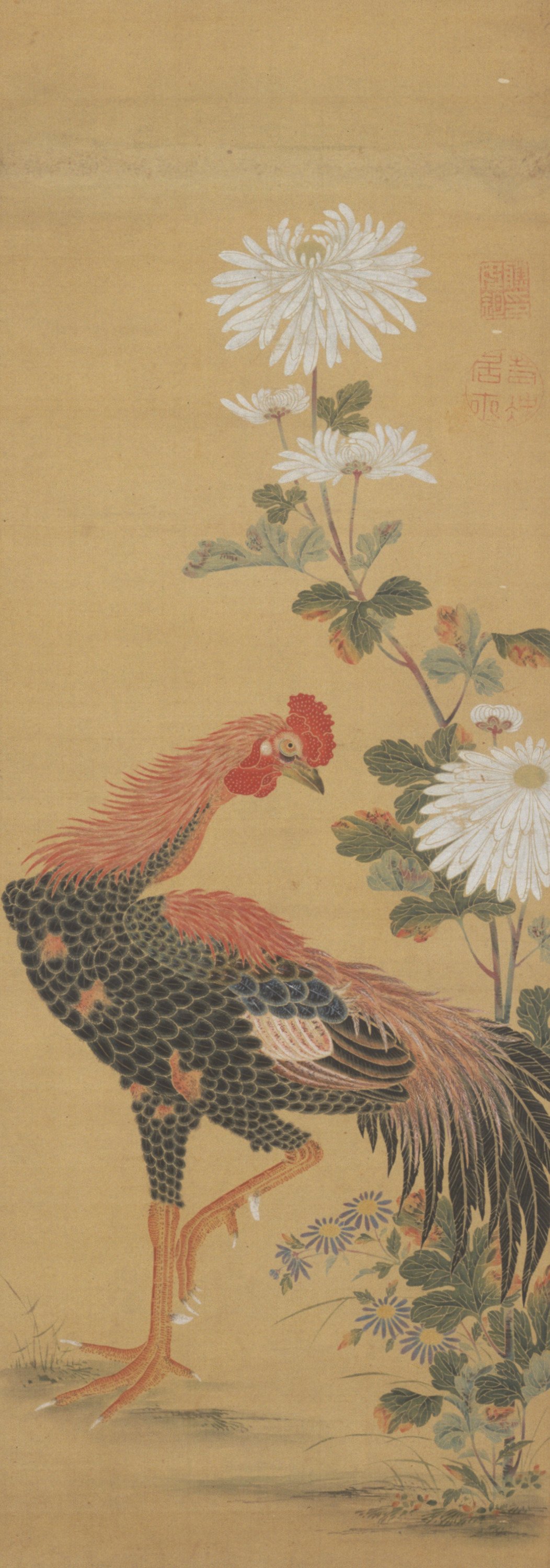
Yuzen Dyeing (Yuzenzome)
A pattern dyeing technique, developed and popularized since the middle of the Edo period, characterized by hand-painted and paste-resist dyeing; well-known types of Yuzen dyeing are Kyo Yuzen and Kaga Yuzen
Yuzen dyeing is a type of resist dyeing that makes use of patterns for creating colorful designs on cloth. Developed in the middle of the Edo period (1603-1867), it is said to be the idea of Miyazaki Yuzen, a fan painter in Kyoto. From around the mid-seventeenth century, this technique was further improved by integrating conventional techniques and became quite popular.
An early book on Yuzen dyeing is Yuzen hiinakata (Yuzen's Designs for Women's Kimono), published in 1688 and reprinted in 1695. The technique involves drawing on silk cloth the outline of a design such as a person, flowers and birds, etc., with a dye-resist paste containing glutinous rice as the main ingredient. Then dyes and pigments are applied to exposed cloth. Next, these colored portions are covered with a thick glue, and the ground color is applied with a brush. Finally, after drying, the glue is washed off. The advantages of Yuzen dyeing are that designs are drawn by hand and that dyes are applied by brush. These features make Yuzen dyeing a breakthrough in the history of dyeing in Japan.
Kyoto has been known for its Yuzen dyeing since traditional times. This dyeing method is also called Kamogawazome, Kamogawa being a river that runs through Kyoto. Items dyed in this manner are known as Kyo Yuzen, Kyo being the old name for Kyoto. This same dyeing method has also been passed down in Kaga Province (present-day Ishikawa Prefecture), and items produced there are called Kaga Yuzen.
From the Meiji era (1868-1912) on, chemical dyes were introduced into Yuzen dyeing. In addition, the technique of glue printing, which uses dye to which glue has been added, and the technique of pattern Yuzen were developed. Thanks to these developments, products more affordable for ordinary people have expanded the Yuzen market beyond that of traditional hand-painted Yuzen.
Related People, Things and Events
Books
Related Works
Hanging scrolls and folding screens dyed using the traditional Yuzen technique
Yuzen samples, stencils, etc.
Videos
Past Exhibitions
| Title | shusai | Place | open | close |
|---|---|---|---|---|
Institutions Holding Related Materials
As Japan’s representative museum, Tokyo National Museum collects, preserves, displays, and researches the cultural properties of Asia with a focus on Japan, and also provides educational programs.
The National Diet Library (NDL), founded in 1948, is the library which belongs to the Diet. The NDL assists the activities of the National Diet. The Library collects and conserves materials and information both from Japan and abroad, serving as a foundation of knowledge and culture and providing library services to administrative and judicial entities and Japanese citizens.
石川県金沢市にある。加賀友禅の実演のほか、試着、手作り体験などができる。
東京都青梅市にある。皇室衣装・江戸時代衣装・振袖等収集。
External Links
用語辞典が収められている。そのか着物の文様、着物のTPO、京友禅などについても詳しく解説している。
収蔵品は約15,000点。世界の染織品が多数コレクションされている。美術館収蔵品データベースでは染織に関する資料が公開されている。
文化学園服飾博物館所蔵の貴重な資料約600件をデジタル化し公開。国や地域、年代から検索することができる。
京都友禅協同組合のサイト。京友禅について詳しく紹介。京友禅制作に使用する道具を写真付きで解説している。
協同組合加賀染振興協会のサイト。加賀友禅の歴史や特徴、制作過程、ギャラリーなどあり。
東京手描友禅(東京友禅・江戸友禅)の由来を説明。染芸展の案内もあり。東京都工芸染色協同組合のサイト。
「美の壺」のダイジェスト。
「美の壺」のダイジェスト。
References
- 「友禅」、「加賀友禅」の項。
- 「友禅」の項。
- 日立デジタル平凡社,平凡社