Sadaie Fujiwara
Poet considered the best of Japan’s medieval period, who pursued an aesthetics of beauty in waka poetry
1162–1241
Poet of the late Heian (1156–1185) and early Kamakura (1185–1199) periods. A classical scholar. While his given name was officially Sadaie, it is often read as Teika, using Sino-Japanese readings for the characters. His father was Toshinari Fujiwara, a poet of the Mikohidari lineage. His mother, Bifukumon-in no Kaga, the daughter of Chikatada Fujiwara, served the Empress of retired Emperor Toba. His childhood name was Mitsusue. Upon being ennobled with the rank of Junior Fifth Rank, Lower Grade in 1166, he was renamed Suemitsu, and then shortly after, Sadaie. In 1175 he was appointed Jiju (Chamberlain), and in 1211, he was given the rank of Jusanmi (Junior Third Rank) and re-appointed Chamberlain at the age of 50. In 1214 he became a Sangi (State Councilor). While he reached the rank of Gon Chunagon (Acting Middle Counselor) in 1232 at the age of 71, he retired from the post in the tenth month of the same year and entered the Buddhist priesthood the following year. On August 20, 1241, he passed away at the age of 80. He was sometimes known as Kyogoku Chunagon and was given the Buddhist name Myojo.
While having been appointed Chamberlain at the age of 14, he was slow to rise in rank, losing the support of his father at an early age when his father left to join the priesthood, enduring the downfall of the Kujo family who he had served as Keishi (Household Steward) in his youth, and being plagued by a weak constitution from birth and an obstinate disposition. Receiving lessons from his father, as a poet he put his poetic talents to effective use from early on, participating in the Wakeikazuchi no Yashiro Uta-Awase poetry match for the first time in 1178 at the age of 17. He showed devotion to the art of waka poetry, with early achievements including his composition of Futamigaura Hyakushu (“Futami Bay Hundred-Poem Sequence”) in 1185 at the encouragement of the poet Saigyo and the selection of eight of his poems for the Senzai Wakashu (“Collection of a Thousand Years”) compiled by his father, Toshinari, in 1188. Sadaie strove for a new style with his poems, which were criticized by the old guard such as the Rokujo faction. In 1200, with the help of Toshinari’s influence, however, he came to participate in a hyakushu hundred-poem sequence event held by the Retired Emperor Gotoba, and his talent attracted the attention of Gotoba. After that, Sadaie would play an active central role in the poetry circles of the Imperial Palace. Selected as a compiler for the Shin Kokin Wakashu (“New Collection of Poems Ancient and Modern”), his reputation as a poet continued to grow.
Sadaie, who was aiming for a revival of dynastic waka poetry and culture, had a fervent interest in poetics as well, leaving behind a good number of essays and treatises on the subject. In Kindai Shuka (“Superior Poems from Recent Times”), he appraises his own poems as forms of yosei yoen (suggestiveness and fascinating style), and in Maigetsusho (“Monthly Notes”) as forms of ushin (conviction of feeling).
In his later years, he devoted efforts to researching Japanese classical literature and carried out transcriptions and revisions of many works, including Genji Monogatari (“Tale of Genji”) and Tosa Nikki (“Tosa Diary”). The kana orthography he used at this time forms the basis of the Teika kana-zukai (Sadaie kana orthography). After joining the Buddhist priesthood, he compiled the Shin Chokusen Wakashu (“New Imperial Waka Collection”) and put together the Ogura Hyakunin Isshu (“Classical Japanese Anthology of One Hundred Japanese Waka by One Hundred Poets”). For the 56 years when he was between the ages of 19 and 74 (1180–1235), he kept a minutely detailed diary known as Meigetsuki (“Record of the Clear Moon”), and his account of a journey accompanying retired Emperor Gotoba on an imperial visit to Kumano in 1201 during these years is called Kumano Goko-ki (“Record of the Imperial Visit to Kumano”). Shui Guso (“Meager Gleanings”) is one of the six personal collections of his poetry. Other notable works of his include Kenchu Mikkan (“Secret Comments on Kensho’s Annotations”), Hekiansho (“Notes on False Views”), and Genji Monogatari Okuiri (“Tale of Genji Endnotes”).
Related People, Things and Events
Books
Teika-bon (works transcribed or revised by Sadaie)
Related Works
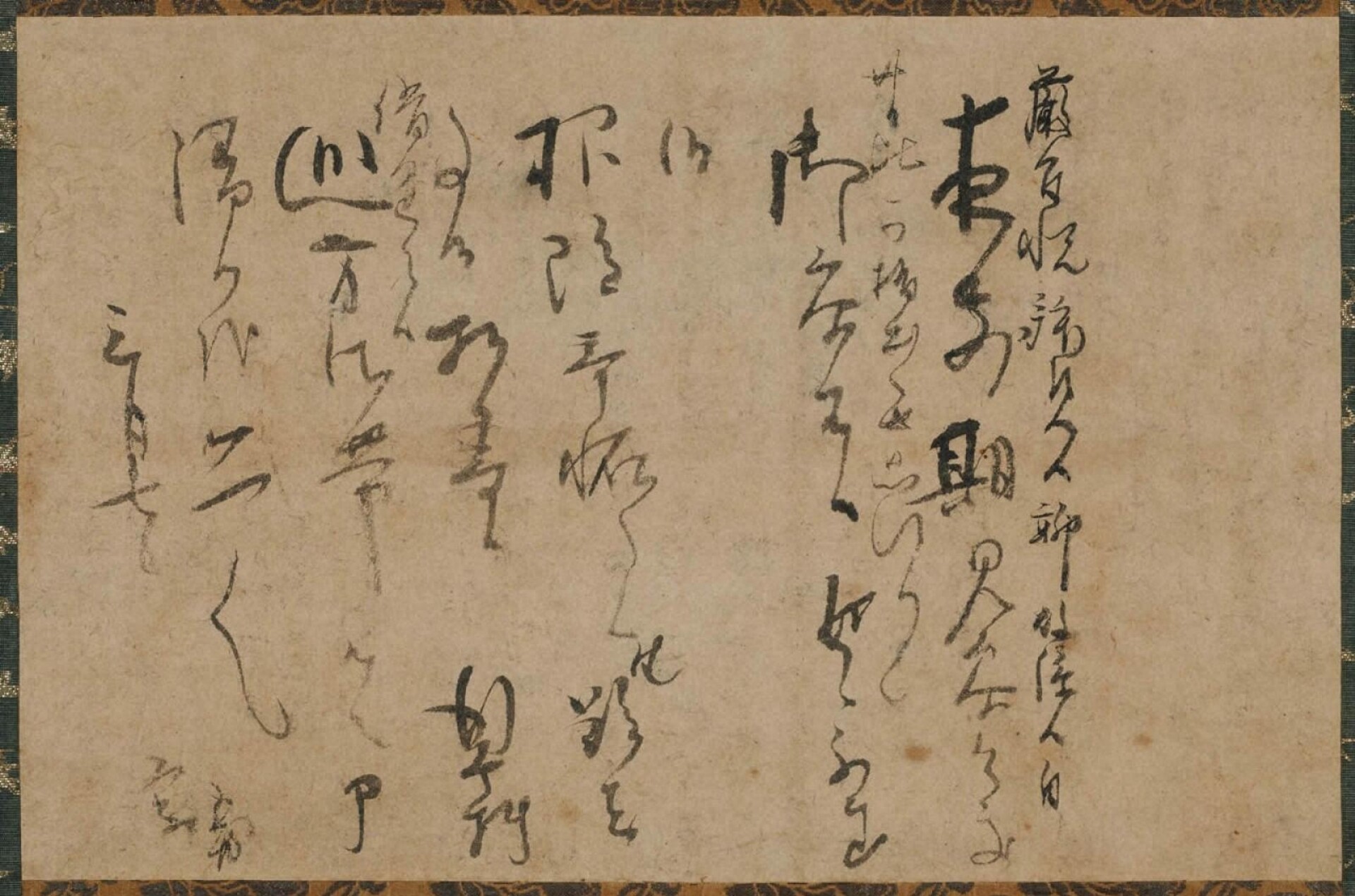
Letters and fragments
The world of Sadaie’s Meigetsuki (“Record of the Clear Moon”) diary
Videos
Past Exhibitions
| Title | shusai | Place | open | close |
|---|---|---|---|---|
Institutions Holding Related Materials
The National Diet Library (NDL), founded in 1948, is the library which belongs to the Diet. The NDL assists the activities of the National Diet. The Library collects and conserves materials and information both from Japan and abroad, serving as a foundation of knowledge and culture and providing library services to administrative and judicial entities and Japanese citizens.
As Japan’s representative museum, Tokyo National Museum collects, preserves, displays, and researches the cultural properties of Asia with a focus on Japan, and also provides educational programs.
Kyoto National Museum collects, preserves, displays, researches and provides educational programs focusing on cultural properties from Heian- through to Edo- period Japan, when the capital was located there.
Nara National Museum collects, preserves, displays, researches and provides educational programs about cultural properties with a focus on Buddhist art.
Kyushu National Museum explores how Japan’s history of cultural exchange with the rest of Asia has impacted the formation of its culture. To that end, we engage in the collection, preservation, exhibition, and research of cultural properties, in addition to providing educational outreach to the local community.
藤原定家筆の作品「紹巴切(後撰集 巻第20)」を所蔵している(センチュリー赤尾コレクション)。コレクションは随時公開されている。所在地は東京都港区。
京都府京都市右京区にある、百人一首の歴史などを伝えるミュージアム。
External Links
東京都世田谷区上野毛にある私立美術館・五島美術館のコレクション紹介。「小倉色紙」(伝藤原定家筆)を所蔵。
藤原定家の子孫であり、歌道の家として知られる冷泉家(上冷泉家)に伝わる古写本、建築、年中行事などの文化遺産を保存活用、冷泉流歌道を継承することを目的として設立された。定家の明月記の多くを蔵する。
References
- 集英社
- 久保田淳 [ほか] 著,集英社,久保田, 淳(1933-)||クボタ, ジュン <AU00198553> 秋山, 虔(1924-)||アキヤマ, ケン <AU00251308> 白畑, よし(1906-)||シラハタ, ヨシ <AU01038173> 目崎, 徳衛(1921-)||メザキ, トクエ <AU01047554>
- 五味文彦著,岩波書店,五味, 文彦(1946-)||ゴミ, フミヒコ <AU00189827>
- 稲村榮一 著,ミネルヴァ書房
- 堀田善衛著,新潮社,堀田, 善衛(1918-1998)||ホッタ, ヨシエ <AU01016762> 著
- 倉本一宏 監修,臨川書店
- [源通具, 藤原有家, 藤原定家, 藤原家隆, 藤原雅経] [撰],小林大輔 編,角川学芸出版,角川グループパブリッシング